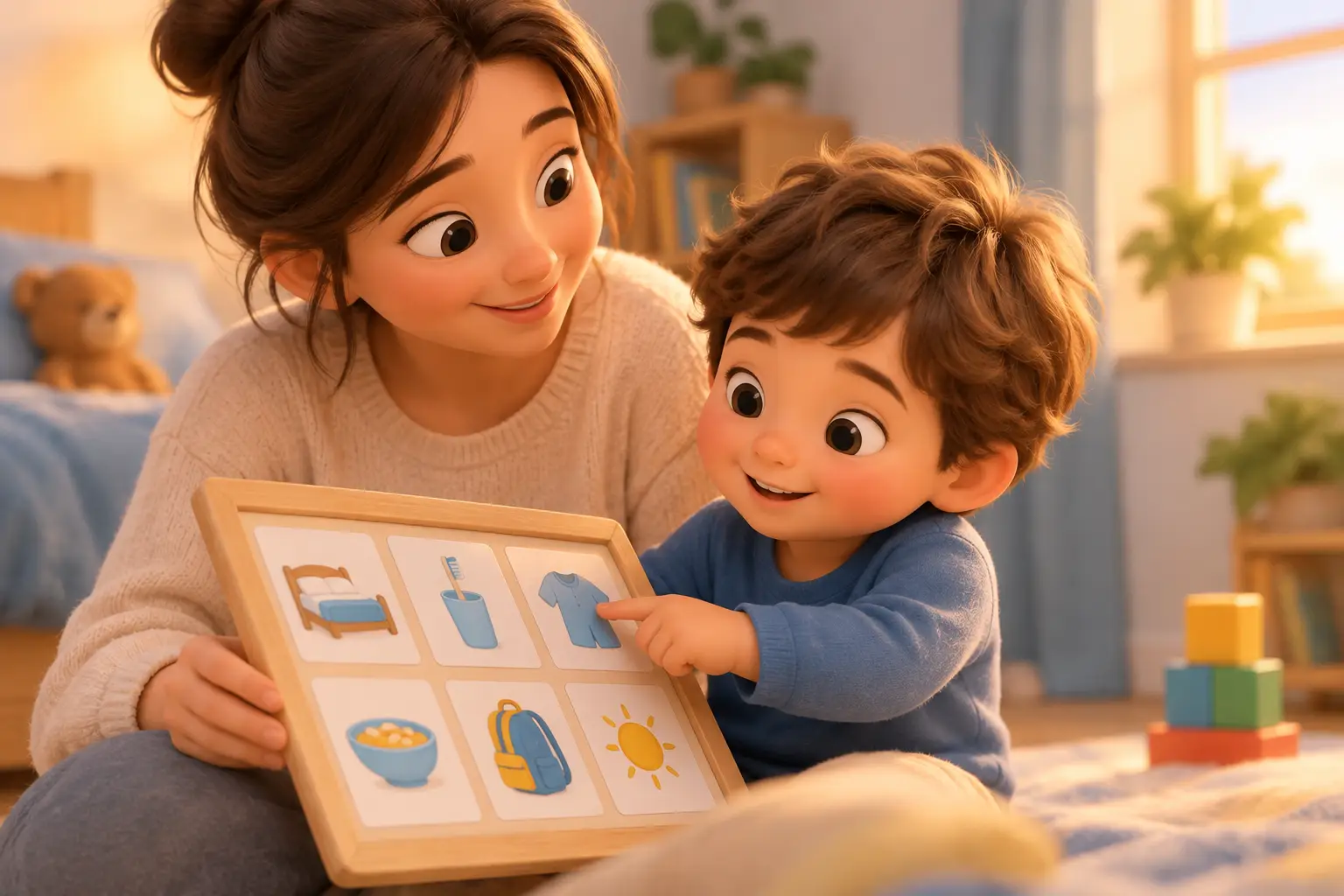
The moment before a preschooler asks, “What happens next?” is often a moment when they are looking for more than information. They may be tired, excited, worried, or simply trying to make sense of a busy day. Why do children need routines? Because knowing what comes next gives young children a small, steady place to stand.
For children ages 3 to 6, life is full of things they cannot control. Grown-ups choose when to leave the house, when dinner is served, and whether a favorite plan needs to change. A familiar rhythm will not make every hard moment disappear, but it can help a child feel held within the day. Breakfast, getting dressed, playtime, bath, stories, sleep - these gentle repeats say, “You are safe. We know what to do. We will get through this together.”
Why Do Children Need Routines for Emotional Safety?
Young children are still learning how to name feelings, wait for things, and recover from disappointment. Their brains are doing a great deal of growing, and transitions can feel especially big. A routine lowers some of the guesswork. When a child knows that a parent returns after preschool, that pajamas come after bath, or that a favorite song plays before bed, they do not have to spend as much energy wondering what will happen.
This predictability can be calming for children who are sensitive, anxious, or easily overwhelmed. It also supports children who seem carefree and energetic. Even a child who happily runs from one activity to the next benefits from a dependable landing place at the end of the day.
Routines are not about making childhood rigid. They are about offering a caring frame around ordinary moments. Within that frame, children can play, ask questions, have feelings, and slowly build confidence.
Familiar Steps Build Independence
A routine gives children meaningful chances to participate. At first, they may need a reminder for every step: shoes on, cup in the sink, toothbrush time. With repetition, those steps become more familiar. A child starts to carry their pajamas to the bathroom, choose a book for bedtime, or help place napkins on the table.
These small contributions matter. They tell a child, “I can do part of this.” Independence at this age does not mean leaving children to manage alone. It means offering simple responsibilities with nearby support. A grown-up might say, “First we put the blocks in the basket, then we wash hands,” and stay close while the child tries.
The goal is progress, not perfect cooperation. Some mornings, a child will put on their own socks. Other mornings, they may cry because the blue socks are in the wash. Both moments belong in real family life. The routine remains useful because it provides a familiar path back to connection.
Routines Make Transitions Less Jarring
Transitions are often where big feelings appear. Leaving the playground, turning off a show, getting into the car, or saying goodbye at school can be difficult because a child is being asked to stop one thing before they can fully picture the next.
A consistent sequence helps make that change easier to understand. Before leaving the park, you might use the same gentle pattern: one last slide, a goodbye wave to the swings, then hands held on the way to the car. Before bedtime, the order might be bath, pajamas, a drink of water, two books, a cuddle, and lights out.
The words do not need to be fancy. Simple repetition is powerful: “It is almost time to go. One more turn, then we say goodbye.” A child may still protest, and that is okay. A routine is not a trick for preventing every tear. It is a steady, kind way to guide a child through the tearful moment.
Small Rituals Can Carry Big Comfort
Rituals are the warm little details inside a routine. They might be a silly good-morning phrase, a song while washing hands, or a stuffed animal tucked beside a pillow each night. These repeated moments can become emotional anchors.
For a child with bedtime worries, a familiar story about a brave little character, followed by the same whispered goodnight, can make the room feel less uncertain. For a child who struggles with drop-off, a special hug or a simple phrase such as “I always come back” can offer reassurance. The ritual does not need to be elaborate to be meaningful. In fact, the easiest rituals to keep are often the ones children remember most fondly.
Routines Create Space for Connection
It is easy to think of routines as a way to move the day along faster. They can certainly make practical tasks feel more manageable. But their deeper value is often relational.
When children know the basic order of an evening, adults have more room to notice what is happening beneath the behavior. A child who stalls at toothbrushing may be tired after a full day. A child who suddenly refuses pajamas may be worried about tomorrow. Instead of rushing straight into a power struggle, a familiar routine can create a pause: “You do not want pajamas right now. That feels hard. We can take a breath, and then I will help you choose.”
Children learn emotional language through these repeated exchanges. They begin to understand that feelings can be noticed without taking over the whole evening. They also learn that limits can be gentle and steady at the same time.
How to Build a Routine That Feels Supportive
The best routine is not the busiest or most beautiful one. It is the one your family can return to, even on imperfect days. Start by choosing one part of the day that regularly feels rushed or difficult. Bedtime and morning departures are common places to begin.
Keep the sequence short and visible. For young children, three to five steps are usually easier to remember than a long checklist. You can say the steps out loud, draw simple pictures together, or use the same words each day. For example: “Breakfast, get dressed, brush teeth, shoes, out the door.”
Offer a small choice inside the routine when possible. A child may choose between the green cup and the yellow cup, or pick which two books to read. These choices give children a sense of agency without asking them to carry decisions that belong to adults.
Try to leave a little extra time around transitions. When every step is rushed, even a good routine can feel stressful. Five quiet minutes to cuddle after a story or look out the window before school can make a surprising difference.
Flexibility Is Part of a Healthy Routine
Children need predictability, but they also need to learn that plans can change and they will still be okay. A grandparent may visit, a family may travel, someone may get sick, or a late afternoon may turn dinner into takeout on the couch. These moments do not undo a routine.
When the usual plan changes, name it simply. “Tonight is different. We are having a quick dinner because we got home late. We will still have bath, books, and cuddles.” Keeping one or two familiar parts of the routine can help children feel grounded when the rest of the day is unusual.
If a routine has become a source of constant conflict, it may need adjusting. Perhaps bedtime begins too late, there are too many steps, or a child needs more warning before cleanup. The routine should support your family, not become another standard you feel pressured to meet.
When a Child Resists the Routine
Resistance does not mean the routine is failing. Children test limits because they are learning where the edges are, and they often push back most when they are hungry, tired, or seeking connection. Meet the feeling first when you can: “You wish we could keep playing. It is hard to stop.” Then calmly hold the next step: “It is time to clean up. I will help you start.”
Consistency matters, but so does compassion. There may be evenings when the child who usually falls asleep after two books needs an extra hug. There may be mornings when everyone needs to skip a step and get out the door. A loving routine has room for real life.
The quiet gift of a routine is not that every day looks the same. It is that, through all the ordinary changes and big feelings, your child learns there are caring hands to guide them toward what comes next. A familiar song, a shared story, and a patient goodnight can become a small promise they carry with them: tomorrow will come, and I will not face it alone.