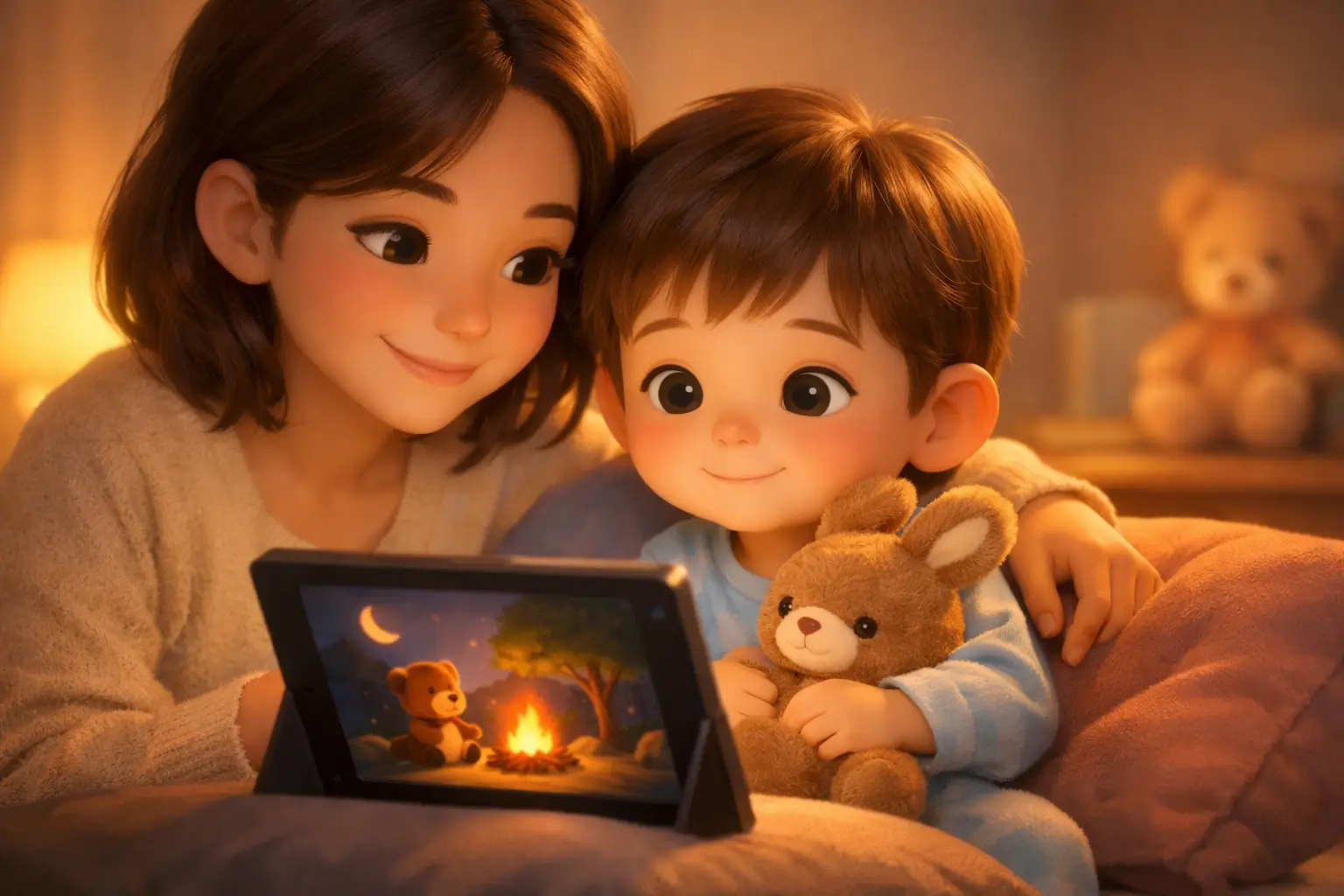
A child who has had a hard day does not always need a big lesson. Sometimes they need a small, familiar story: a bunny who feels left out, a bear who worries about the dark, or a friend who learns that mistakes can be mended. Calm storytelling videos can offer that quiet space. With gentle characters, unhurried moments, and feelings children recognize, they help make big emotions feel a little smaller.
For children ages 3 to 6, stories are more than entertainment. They are rehearsal. A child can watch a character take a deep breath, ask for help, or try again after a disappointment, then carry a piece of that practice into real life. The best calm videos do not rush children past a feeling. They sit beside it with warmth.
What makes a story video feel calm?
A calm video is not simply a video with soft music or quiet voices. Those details matter, but the emotional pace matters too. The story gives children time to understand what is happening. Characters speak kindly. A problem appears, but it is manageable. By the end, the child has seen care, connection, or a gentle next step.
For preschoolers, this pace can feel especially supportive. Their days are full of new expectations: sharing toys, joining a group, trying unfamiliar foods, saying goodbye at drop-off, and learning what to do when plans change. Even joyful days can hold a lot.
Calm storytelling makes room for the ordinary challenges that can feel enormous to a young child. It might show a character feeling nervous before a first swim lesson or sad when a block tower falls. The story does not need a dramatic villain or a noisy surprise to hold attention. Recognition is often what holds it. A child thinks, That happens to me, too.
A softer pace supports understanding
Young children are still learning to sort what they see, hear, and feel. Fast cuts, constant jokes, and high-stakes conflict can be exciting, but they may leave less room to follow the emotional thread of a story. A quieter pace lets a child notice a character's worried face, hear the words for a feeling, and see what comfort looks like.
This does not mean every screen experience must be hushed or serious. Children need laughter, movement, and silliness, too. It depends on the moment. A lively song may be just right for a morning dance break, while a gentle story may be a better fit after preschool, before bed, or during a season of big changes.
The goal is not to remove excitement from childhood. It is to give families another kind of media choice: one that helps a child settle, reflect, and feel understood.
How calm storytelling videos support emotional growth
Children learn emotional language slowly, through repetition and relationships. When a beloved character says, “I feel disappointed,” or “I am scared, but I can ask for help,” those words become easier for a child to borrow later.
A calm story can support several early social-emotional skills at once. It can help children recognize feelings in themselves and others, imagine another person's point of view, and see that a difficult moment does not last forever. It can also show repair: apologizing after hurt feelings, taking turns again after a conflict, or returning to play after a misunderstanding.
The message works best when it is simple. A 4-year-old does not need a complicated explanation of resilience. They may need to hear that it is okay to feel nervous, that a caring grown-up can help, and that trying one small step is brave.
Repetition builds a sense of safety
Adults sometimes worry that children want the same story too many times. Yet repetition is often part of how young children learn and feel secure. Knowing what comes next allows them to relax enough to notice more. On the tenth viewing, they may repeat a comforting line, point out a character's choice, or connect the story to something that happened at home.
That familiarity can be especially helpful around recurring worries. A child who feels uneasy at bedtime may find comfort in returning to a story where the night stays gentle, a trusted friend stays close, and morning arrives. The video does not erase the fear. It gives the child a familiar path through it.
At Cozy Pebble Stories, this kind of repeatable comfort is part of the heart of a story: a child-sized challenge, a caring connection, and a reminder that feelings can be held with kindness.
Choosing calm storytelling videos with care
Not every quiet-looking video is emotionally restful. Some stories use suspense, teasing, or sudden conflict in ways that may be difficult for a sensitive child. Parents and caregivers know their children best, and a quick preview can make a meaningful difference.
Look for stories with clear emotional cues and gentle resolution. It helps when the characters model respectful words, when mistakes are met with guidance rather than shame, and when the ending offers reassurance without pretending that every feeling disappears instantly.
Consider the visual experience as well. Softer colors, steady scenes, and expressive but not exaggerated faces can be easier for some children to take in. Music should support the story rather than compete with it. A calm voice can be comforting, especially when it leaves small pauses for children to absorb what they have heard.
There is no single perfect choice for every child. One child may love a little mystery as long as it ends warmly. Another may need stories with almost no tension at all. If your child starts to look away, becomes more wiggly, or asks to turn something off, that is useful information. It is okay to choose a different story.
Turning a video into a moment of connection
The most meaningful part of a calm story may happen after the screen goes dark. You do not need to turn every viewing into a lesson. A simple, gentle question is enough: “How do you think the little fox felt?” or “Have you ever felt that way?”
If your child does not want to talk, let that be okay. Some children process through play, a cuddle, or a quiet return to the story another day. You might hear them later use a character's words while building with blocks or getting ready for bed. That is still learning.
For children who enjoy conversation, keep the questions small and concrete. Ask what helped the character, what they might say to a sad friend, or what could make a worried moment feel cozier. Avoid pushing for a neat answer. Feelings are not a quiz, and children do not need to explain themselves perfectly to be heard.
A familiar story can also become part of a steady routine. Watching one short video after a busy afternoon may create a gentle bridge between school and home. Choosing a bedtime story together can signal that the day is slowing down. In these moments, the routine itself becomes reassuring: we pause, we listen, we come close.
The quiet power of being understood
Children do not need stories that promise they will never feel afraid, angry, lonely, or frustrated. They need stories that show those feelings are human and that support is nearby. When a character is met with patience, a child receives a quiet message: You deserve patience, too.
That message can stay with them long after the final scene. It may surface when they take a breath before trying again, offer a toy to a friend, or ask for one more hug at bedtime. Calm storytelling videos cannot solve every hard moment, but they can give families warm words, caring images, and small rituals to return to when those moments arrive.
And sometimes, on an ordinary evening, that is exactly what a child needs: a gentle story, a safe lap, and the feeling that no emotion has to be faced alone.