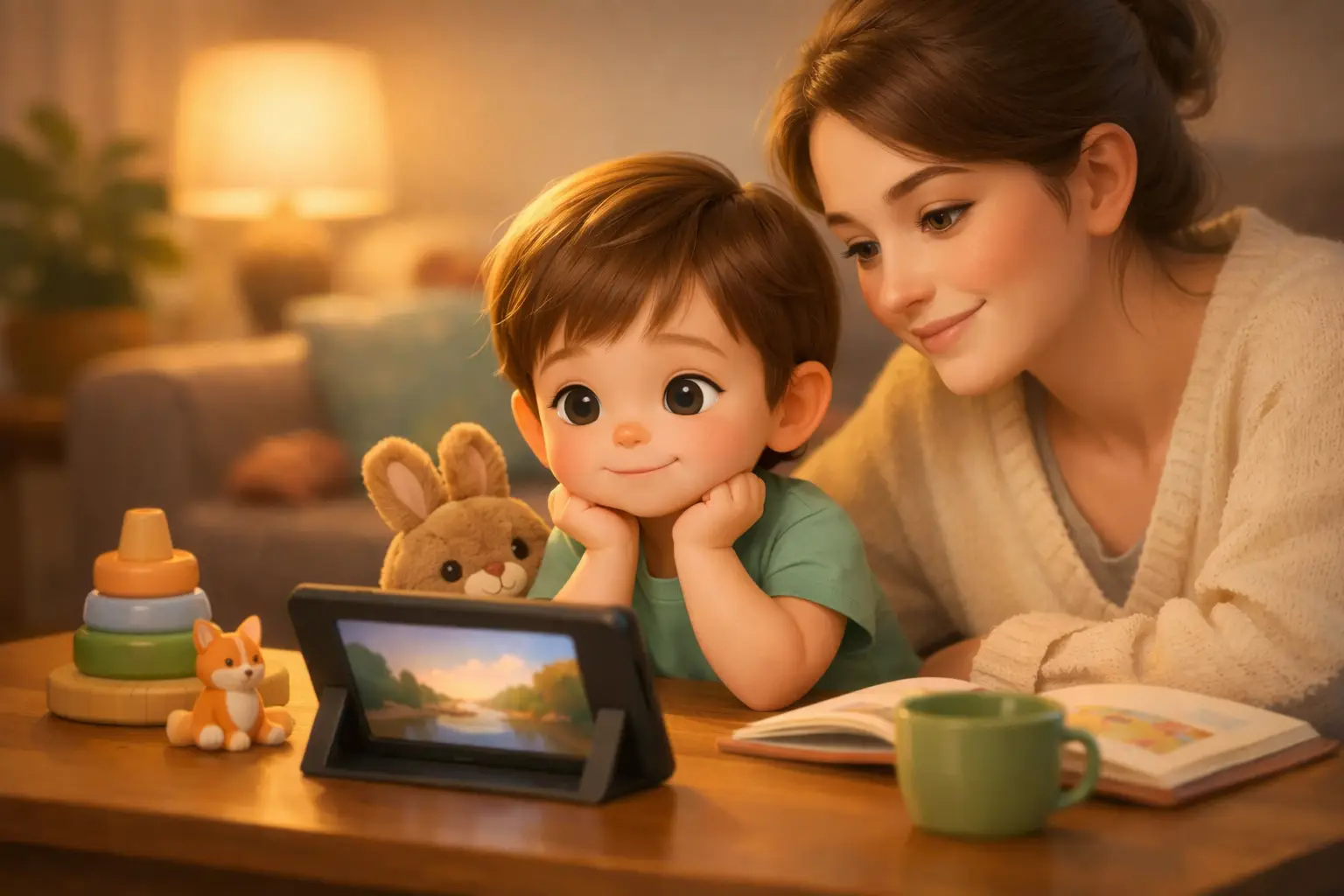
A preschooler may look perfectly happy while watching a fast, colorful show, then struggle when it is time to turn it off. They may become extra silly, tearful, restless, or unable to settle for dinner or bedtime. This is one reason parents ask what makes media non overstimulating. The answer is not simply whether a show is labeled educational, nor is it about finding perfectly quiet content. It is about choosing media that leaves a child feeling steady enough to return to their own day.
For children ages 3 to 6, media can be a lovely part of family life. A kind story can give a name to a worry. A familiar song can help with a hard transition. A gentle character can remind a child that mistakes happen and that caring people can help. The pace, sound, imagery, and emotional shape of that experience all matter.
What Makes Media Non-Overstimulating?
Non-overstimulating media gives a young child room to notice, feel, and understand what is happening. It does not constantly compete for their attention with rapid cuts, loud sound effects, bright flashing visuals, or one exciting surprise after another.
Think of the difference between a busy room where several people are talking at once and a cozy room where one trusted person is reading aloud. Both hold a child’s attention, but the second leaves more space for their nervous system to rest.
That does not mean calm media must be slow to the point of boredom. Children enjoy humor, adventure, music, and moments of excitement. The difference is that a gentle story has a caring rhythm. It lets a child follow one idea at a time, understand why a character feels upset, and experience a reassuring moment of repair.
A little suspense can be healthy when it is held safely. A character might feel nervous before trying something new, then receive encouragement and discover they can take one small brave step. What matters is that the tension is manageable, the story is clear, and comfort is not forgotten.
The Gentle Qualities to Look For
A pace children can follow
Fast editing can be exciting, but when scenes, jokes, and visual changes arrive every few seconds, a young child has little time to process them. A calmer program tends to stay with a moment long enough for children to understand it. They can see a character’s face, hear the problem, and watch what happens next.
This slower rhythm supports more than attention. It gives children opportunities to practice empathy. When a character pauses after hurting a friend’s feelings, a child can recognize the sadness and begin to understand what making things right might look like.
Sound that supports rather than startles
Sound has a powerful effect on little bodies. Sudden volume changes, constant background music, sharp sound effects, and frantic voices can make media feel more intense than parents realize.
Gentler media uses music and sound with purpose. A soft melody can signal comfort. A simple refrain can help a child remember a message. Quiet moments can make room for a child’s own thoughts. The goal is not silence at all times. It is sound that feels like part of the story rather than a demand to keep watching.
Visuals with breathing room
Young children are naturally drawn to bright colors and movement. Those qualities are not bad. But a screen filled with flashing lights, crowded backgrounds, exaggerated expressions, and constant motion can make it hard to know where to look.
Calm visual design usually has a clear focal point and a consistent style. Softer colors, simpler backgrounds, and unhurried movement can help children stay with the story. Watercolor-like scenes, for example, can feel inviting without asking the eyes to chase every detail.
One emotional idea at a time
A thoughtful children’s story does not need to solve every lesson in a single episode. In fact, children often learn best when one feeling or challenge is allowed to be the center of the story.
Perhaps a character is worried about the dark. Perhaps two friends need to share. Perhaps someone feels embarrassed after making a mistake. When the story stays with one understandable problem, children can connect it to their own lives. They do not just watch a lesson happen. They have a chance to feel it.
Warmth, repair, and a safe landing
Children’s media can include disagreement, disappointment, and fear. These are real parts of childhood, and avoiding them completely does not prepare children for them. What makes a story emotionally supportive is the way it handles those feelings.
Look for characters who listen, apologize, ask for help, and try again. Look for adults or friends who offer steady reassurance without pretending everything is easy. Most of all, look for a safe landing: a moment when the problem becomes smaller, connection returns, or the child is reminded that they are not alone.
Why Repetition Can Be So Comforting
Adults sometimes worry when a child asks for the same story or song again and again. Yet repetition is often a sign that something feels safe and meaningful. A familiar story lets children know what is coming. They can prepare for the scary part, join in with the comforting words, and enjoy the resolution with confidence.
Repeatable phrases are especially helpful when they offer emotional language a child can borrow later. A line such as “I can take a slow breath” or “I can ask for help” may become useful far beyond the screen or page.
The key is the feeling the repetition creates. Does your child seem settled and engaged? Do they sing along, talk about the character, or use the story in play? Those are encouraging signs that the media is becoming a gentle tool, not just a stream of stimulation.
Signs a Show or Song May Be Too Much
Every child has a different sensitivity level. One child may laugh at a lively cartoon and move on easily, while another may need a quieter choice. There is no need for guilt or rigid rules. Your child’s response is useful information.
Media may be too stimulating for your child if they have a harder time stopping than usual, become more dysregulated afterward, copy aggressive or frantic behavior, or seem unable to play independently once the screen is off. Trouble settling into a familiar routine can also be a clue, especially close to bedtime.
It is also helpful to notice your own experience. If you feel hurried, tense, or relieved when a program ends, the content may be carrying more intensity than you want in your home. Parents and caregivers are part of the emotional atmosphere, too.
Make Calm Media Work Better at Home
Even gentle content can feel like too much when it runs for a long time or appears during an already difficult moment. Context matters. A short, familiar story after preschool may feel comforting. The same story when a child is hungry, overtired, or already upset may not have the same effect.
Whenever you can, choose one episode, one song collection, or one book rather than letting content continue without a clear ending. A predictable stopping point helps children practice transitions. You might say, “When this story ends, we will put on our shoes,” or “After this song, we will choose a bedtime book.”
Watching together, even briefly, adds another layer of support. You do not have to explain every scene. A simple comment can be enough: “He looks worried,” or “She took a breath before she tried again.” These small moments help children connect what they see to their own feelings.
For bedtime, choose especially carefully. A familiar, low-conflict story, a quiet song, or a picture book often works better than a new adventure with cliffhangers or high-energy humor. The best bedtime media helps the body understand that the day is becoming softer and slower.
A Calmer Choice Is Still a Real Choice
Non-overstimulating media is not lesser entertainment. It can be funny, imaginative, musical, and full of heart. It simply respects the way young children are still learning to manage attention, big feelings, and transitions.
At Cozy Pebble Stories, that means creating room for kind characters, manageable problems, and the comforting reminder that courage can be small. A child does not need to be dazzled to be captivated. Often, the story that stays with them is the one that helps them feel understood.
When choosing the next show, song, or book, notice what happens after it ends. If your child seems more connected, more peaceful, or ready to carry a gentle phrase into their own day, you may have found something worth returning to.