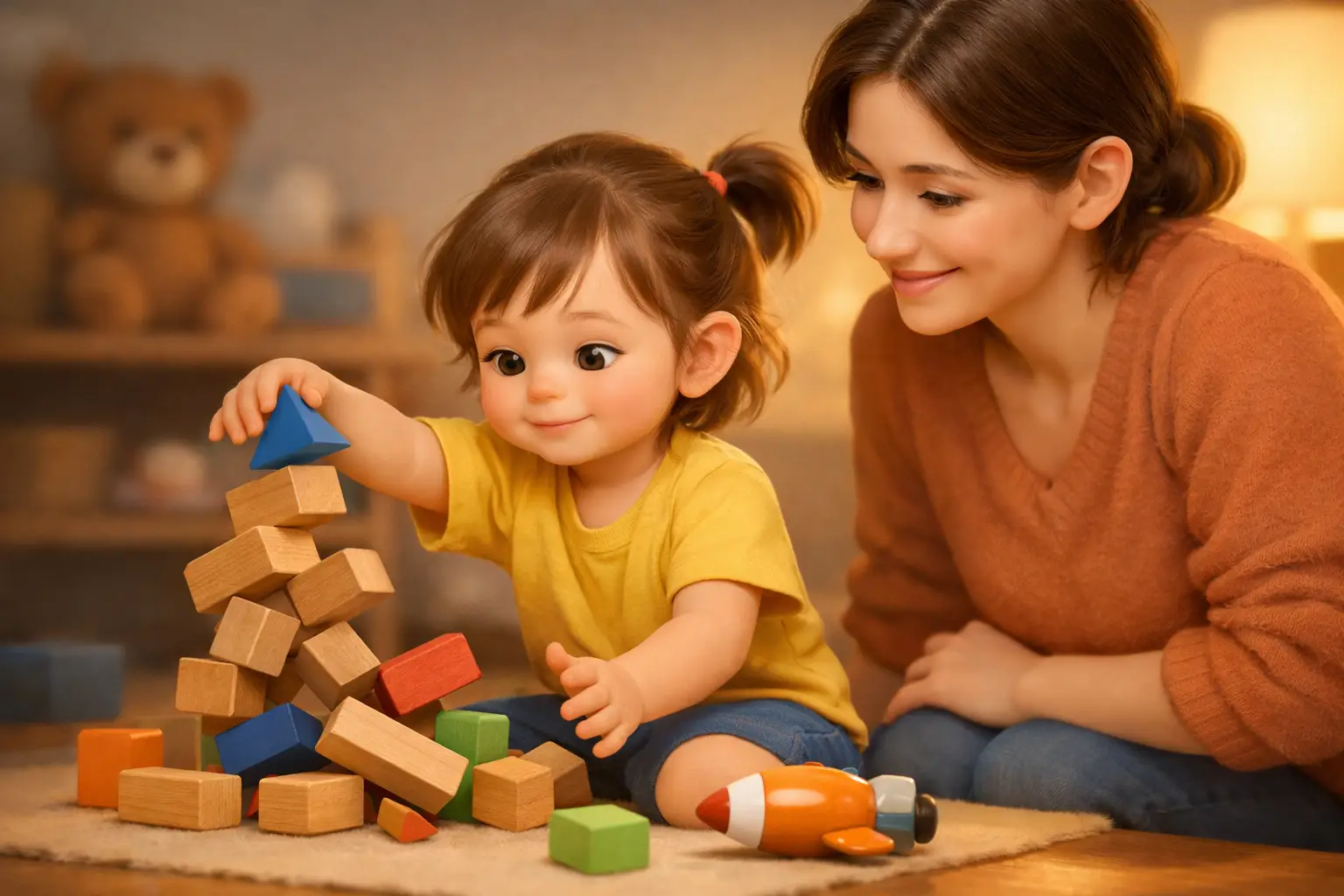
A block tower falls just as your child places the last piece on top. Their face crumples. The room suddenly feels very quiet. This is the tender, ordinary moment that stories about trying again can help hold. For children ages 3 to 6, a small setback can feel enormous. A gentle story gives that feeling a name, offers a path through it, and reminds a child that they do not have to get everything right the first time.
Trying again is not about pushing children to keep going when they are overwhelmed. It is about helping them discover that mistakes, wobbles, and do-overs can be safe. With time, support, and a little kindness, the hard thing may become possible - or at least feel less scary.
Why trying again can feel so big to little kids
Young children are learning many new skills at once. They are figuring out how to zip a coat, take turns, draw a circle, climb higher, use words when they are upset, and join a game already in progress. Adults may see these as everyday moments. To a preschooler, each one can carry the weight of a big test.
When a child cannot do something right away, they may not yet have the words for frustration. It can come out as tears, a loud “I can’t,” a tossed crayon, or a sudden wish to leave. This is not a sign that they are lazy or dramatic. Their feelings have simply become bigger than their coping tools in that moment.
Stories create a little breathing room. When a small bear cannot reach the berry bush, or a shy bird misses the branch on its first flight, children can watch the feeling from a comfortable distance. They can recognize, “That happened to me,” without having to explain themselves before they are ready.
A comforting story also makes room for an essential truth: trying again does not always mean succeeding right away. Sometimes the character rests, asks for help, changes the plan, or decides to return tomorrow. These are all forms of resilience. Children need permission to pause as much as they need encouragement to persist.
What stories about trying again can teach
The most helpful stories do not turn a mistake into a lecture. Instead, they let children feel the disappointment, then show a gentle next step. A character might take a deep breath, notice a friend's kind idea, or try one small piece of the problem instead of the whole thing.
This kind of storytelling supports a child’s emotional vocabulary. They begin to hear words such as frustrated, disappointed, worried, proud, and hopeful in a context they understand. Later, when their own sock will not stay on or their drawing does not match the picture in their mind, those words are easier to reach for.
Stories can also soften the belief that being good at something means doing it perfectly. A child who hears that the brave character needed three tries may feel less alone when they need three tries too. The lesson is not “never give up” at any cost. The lesson is, “You can be upset, you can get support, and you can choose a next step when you are ready.”
That message has a lasting warmth. It teaches children that their worth does not disappear when a task is hard. They are still loved when the tower falls. They are still capable when a new skill takes time.
The gentle shape of a trying-again story
For young children, a story about perseverance works best when the problem is familiar and manageable. The character may spill paint, lose a game, forget a line in a pretend show, or feel afraid to say hello. The stakes are small enough to feel safe, but real enough to matter.
First, the story lets the disappointment be true. The little fox can say, “I worked so hard,” and perhaps sit quietly beside the crooked kite. Skipping past that moment can make children feel as if their own sadness must be hurried away. Naming it with care tells them that hard feelings belong in the story too.
Next comes connection. A friend may sit nearby. A grown-up may offer a hand. Sometimes the character simply remembers a kind phrase. This matters because resilience is not usually a lonely achievement. Children build courage through steady relationships, repeated reassurance, and the experience of being supported while they learn.
Then the character chooses a small next step. Rather than suddenly becoming fearless, they might hold the paintbrush again, practice one note, or ask, “Can you show me?” The smallness is important. It gives children something they can imagine doing in their own lives.
Finally, a satisfying story honors the effort, not only the result. Perhaps the kite still does not fly far, but it lifts off the grass. Perhaps the character makes a new friend after several quiet hellos. The ending can feel hopeful without pretending every problem disappears neatly.
How to use these stories at home
A story becomes especially meaningful when it is gently woven into family life. You do not need to turn reading time into a lesson. A few calm words before, during, or after a book can help a child carry its comfort into the next day.
Before reading, you might say, “This character is learning something that feels hard.” This prepares your child without asking them to share anything personal. As you read, pause briefly when the character feels stuck: “Oh, that was disappointing.” Let the moment rest. Young children often need time to look at the picture and feel what the character feels.
Afterward, keep the question simple and optional. “What helped the bunny try one more time?” is often easier than “What would you do?” Your child may answer with a few words, point to a picture, or say nothing at all. All of those responses are okay.
The real value often appears later, in the middle of an ordinary struggle. When the puzzle piece will not fit, you can borrow the story’s language: “This feels like the bunny and the wiggly wheel. Should we take a little breath, ask for help, or try a different spot?” Familiar characters make emotional coaching feel less like correction and more like companionship.
Bedtime is a lovely time for these stories, especially for children who replay difficult moments after a busy day. Choose a calm pace and a reassuring ending. Avoid using the story to insist that your child must fix a problem before sleep. Instead, let it offer a softer promise: tomorrow is another chance to practice.
Choosing stories that truly feel supportive
Not every perseverance story will fit every child. Some children enjoy a silly, energetic tale about a grand mishap. Others, especially sensitive children, may need slower pacing and quieter pictures. It depends on what helps your child feel settled enough to stay with the character’s challenge.
Look for stories where the character’s feelings are treated with respect. The character should not be teased for crying, worrying, or needing help. Notice whether the grown-ups and friends offer guidance without taking over. A child learns something different from “You can do it alone” than from “I am here while you learn.”
It also helps when a book avoids tying success to praise alone. “You are so smart” can make some children worry that mistakes mean they are not smart after all. Warm, specific language is steadier: “You kept looking for another way,” “You noticed what changed,” or “You came back after resting.” These are the kinds of words children can begin to say to themselves.
At Cozy Pebble Stories, we believe quiet stories can do meaningful work. A soft character, a familiar problem, and a repeated phrase can become a child’s little pocket reminder when something does not go as planned.
The next time your child sighs, “I can’t do it,” you do not have to rush toward a solution. Sit close. Make room for the feeling. Then offer one gentle possibility: “Not yet is okay. We can try again when you are ready.”