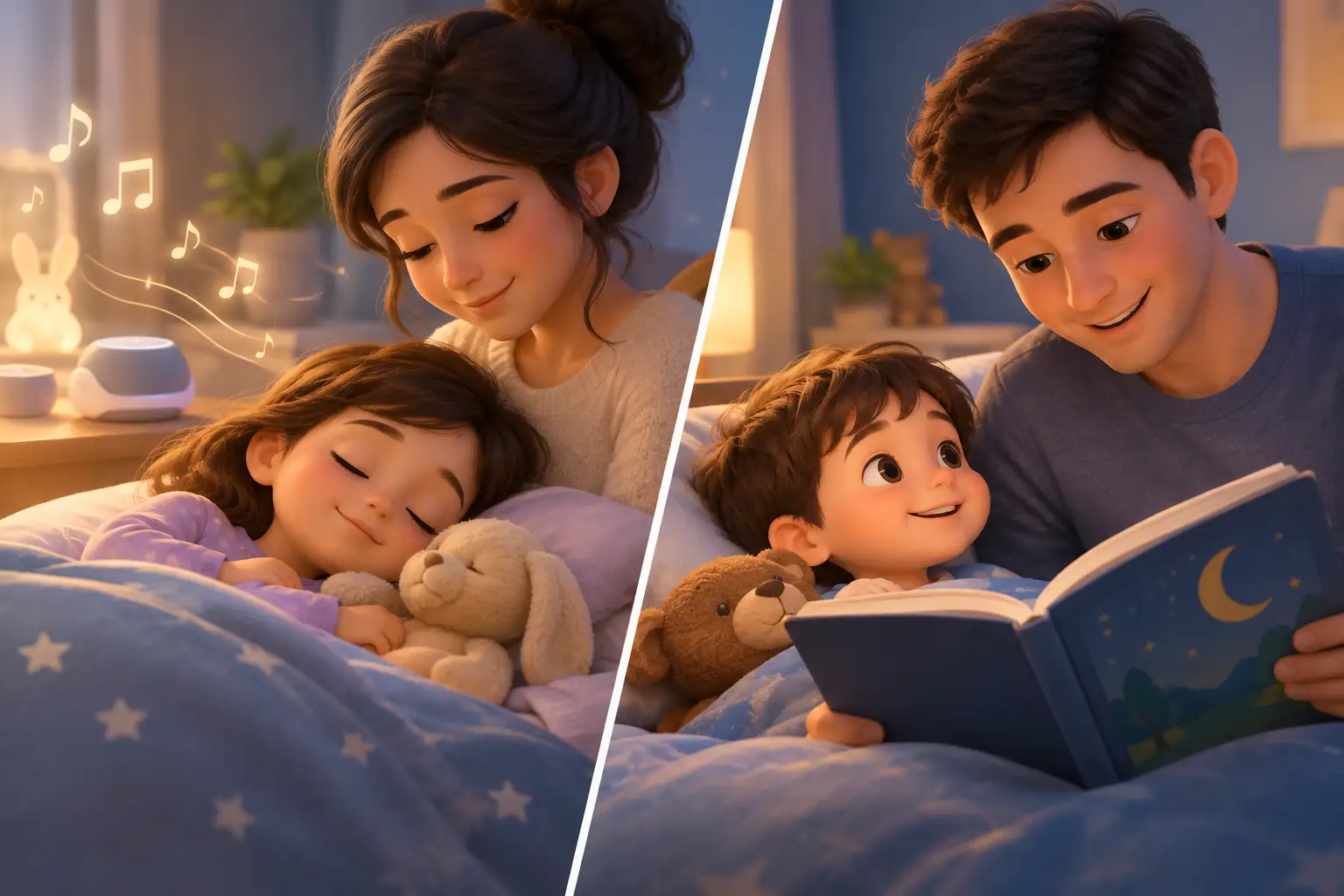
The question of lullaby music vs bedtime stories often comes up when a child is tired but not quite ready to let the day go. Perhaps they are asking for one more glass of water, worrying about a shadow on the wall, or holding tightly to a favorite stuffed animal. In those small, tender moments, the right kind of comfort can help a child feel safe enough to rest.
Both lullabies and stories can become loving parts of a bedtime routine. They simply do different jobs. Music can settle the body and create a familiar signal that sleep is near. Stories can help children make sense of feelings, revisit a reassuring idea, and borrow a little courage from a kind character.
Lullaby Music vs Bedtime Stories: The Gentle Difference
Lullaby music is often most helpful when a child needs less language and more calm. A slow melody, soft voice, and repeated words can lower the energy in the room without asking a child to think through a plot or answer a question. For preschoolers who are overstimulated, cranky, or already drifting toward sleep, that simplicity can be a gift.
The repetition matters. When children hear the same peaceful song night after night, it becomes familiar. Familiarity tells the nervous system, in its own quiet way, that this is a safe and expected moment. The room is dim. A caregiver is close. The song is known. Nothing new needs to happen.
Bedtime stories offer a different kind of comfort. A gentle story gives a child somewhere to place the feelings they carried through the day. Maybe a little bear worries about being apart from a parent. Maybe a shy bunny learns that mistakes do not make them less lovable. Maybe a small friend discovers that bravery can sound like, “Can you stay with me?”
For children ages 3 to 6, stories can give shape and words to experiences that otherwise feel big and confusing. They do not need a lesson delivered heavily. A warm character, a manageable problem, and a caring ending are often enough. Children may return to the same book because they are still practicing its emotional message.
When Lullaby Music May Be the Better Choice
Choose music when your child seems physically tired, emotionally full, or easily pulled back into play by conversation. A story may be too engaging on certain nights, especially if it is new, funny, or packed with pictures they want to discuss.
Lullabies can be especially useful after a busy day, a long car ride, a family gathering, or a bedtime that has already gone later than planned. The goal is not to entertain your child into sleep. It is to help the evening become smaller, slower, and softer.
Keep the music gentle and predictable. Songs with a steady, unhurried tempo tend to fit bedtime better than songs with sudden changes, loud instruments, or exciting lyrics. A familiar recording can work well, but many children also find comfort in hearing a caregiver sing imperfectly and sweetly. Your voice does not need to be polished to feel safe.
If your child has nighttime worries, a short lullaby can become a simple reassurance ritual. You might sing the same lines while tucking in the blanket or rubbing their back: “You are safe, you are loved, morning will come.” Over time, those words can become an emotional anchor they recognize even on harder nights.
When a Bedtime Story May Be the Better Choice
A story can be the better fit when your child needs connection before sleep. Some children have been waiting all day to talk, especially after preschool, a new social experience, or a moment of disappointment. Reading together gives them your attention without putting them on the spot.
Stories are also helpful when a child is working through a recurring feeling. If they are afraid of the dark, missing a parent during the night, struggling with friendship, or feeling nervous about trying something new, choose stories where those feelings appear gently. The best bedtime books do not make fear disappear in one page. They show that fear can be met with comfort, patience, and support.
Pay attention to the emotional temperature of the book. A story can be beautiful and still be too exciting for bedtime. Save adventures, silly surprises, and high-stakes conflict for earlier in the day if they leave your child wide awake. At night, look for calm pacing, warm relationships, and an ending that feels settled.
Rereading is not a failure of imagination. It is often how young children build security. When a child asks for the same story again, they may be enjoying the familiar language, but they may also be checking that the comforting ending is still there. Each reread says, “The character was cared for then, and I am cared for now.”
You Do Not Have to Choose Just One
For many families, the kindest answer is not music or stories. It is a small, repeatable rhythm that includes both.
You might begin with one short story while your child is still sitting up and able to listen. After the final page, turn off the main light, offer a cuddle or a few calm words, and play or sing one familiar lullaby. The story gives the day a gentle landing place. The music carries your child from listening into resting.
Keep the routine short enough that you can sustain it on tired nights. A complicated bedtime plan can create pressure for everyone. Even ten quiet minutes can hold a great deal of connection when they happen with consistency.
A simple sequence might look like pajamas, teeth, one book, one song, a goodnight phrase, and lights out. The order matters less than the feeling of predictability. Children often cooperate more easily when they know what comes next and know that closeness will not disappear the moment the book closes.
Let Your Child’s Needs Lead
There is no single bedtime tool that works for every child or every evening. Some children settle quickly with a song but become chatty after a book. Others need a story to release the worries they have been carrying before they can relax into music. A child’s needs can also change with age, developmental stages, family transitions, or a difficult week.
Watch for clues instead of chasing a perfect routine. If your child becomes more alert during music, try shortening it or singing just one verse. If books turn into lengthy negotiations, offer two preselected choices rather than opening the whole shelf. If they are upset, begin with comfort before asking them to listen to anything at all.
It can help to name what you notice in simple words: “Your body seems tired, but your thoughts are still busy.” Then offer a gentle choice: “Would you like our sleepy song, or one little story first?” Giving a small choice helps a child feel included while keeping the routine steady.
Building Emotional Safety Into Bedtime
The strongest bedtime routines are not built around getting a child to sleep on command. They are built around helping a child trust that bedtime is safe, feelings are welcome, and a loving adult will return in the morning.
That does not mean every night will be peaceful. Children will still stall, cry, ask questions, and have dreams that feel very real. You can hold a warm boundary while staying compassionate: “It is time to rest. I hear that you wish we could read more. We will have another story tomorrow.” Calm repetition is often more reassuring than a long explanation.
At Cozy Pebble Stories, we believe gentle stories and songs can make room for the feelings children cannot always explain yet. Whether you choose a lullaby, a picture book, or a little of both, the most meaningful part is the message underneath: you are not alone with your big feelings.
Tonight, choose what helps your child’s heart soften. One familiar page, one quiet melody, and one loving goodnight can become a small place of safety they carry with them long after the room grows dark.