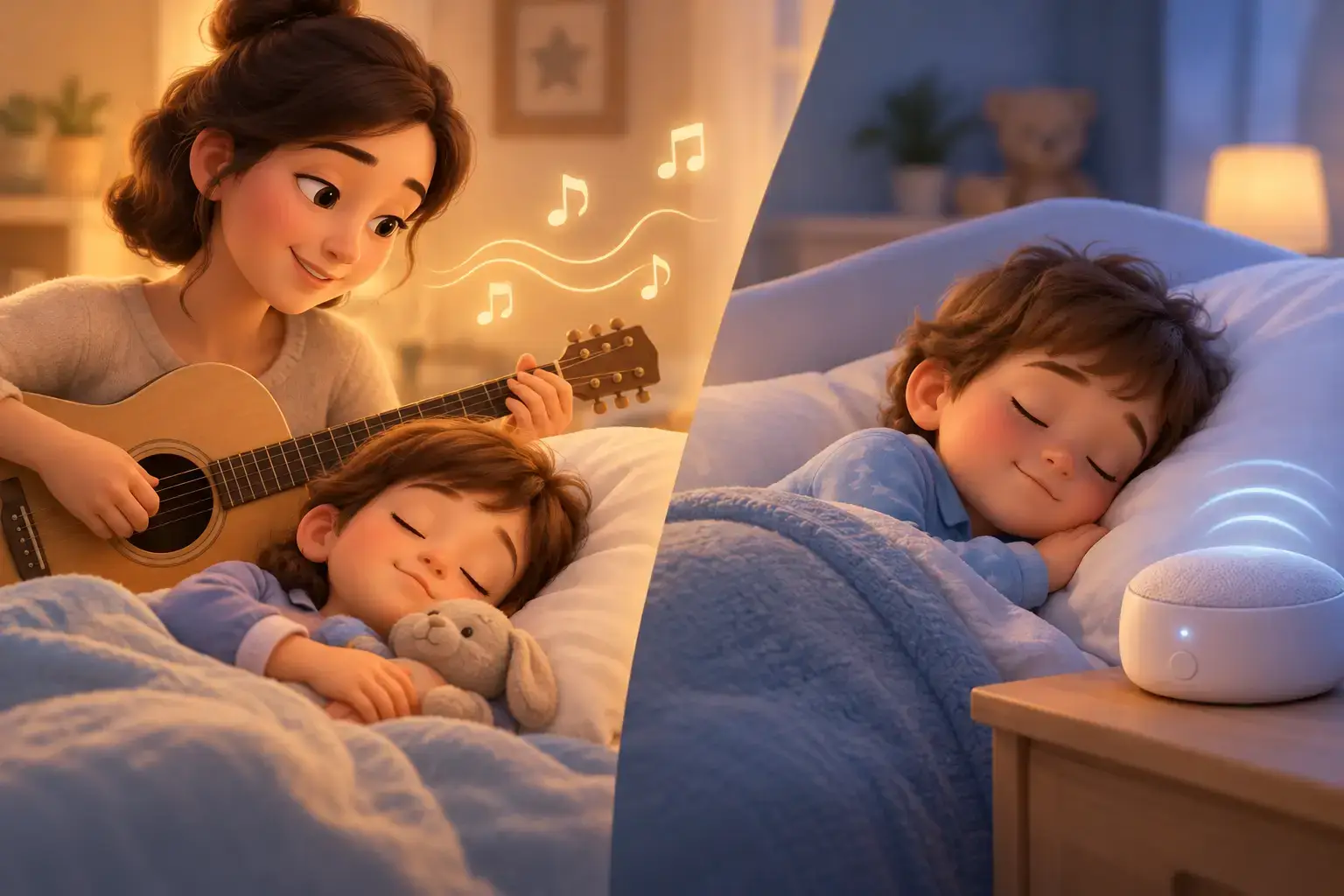
The question of lullabies versus white noise often comes up after a long bedtime: the pajamas are on, the lights are low, and your child is still thinking about the shadow in the corner or tomorrow’s big feelings. Both sounds can be comforting, but they offer comfort in different ways. The best choice is usually the one that helps your child feel safe, settled, and gently connected to you.
For children ages 3 to 6, bedtime is not only about falling asleep. It is also a daily moment of transition. The busy, bright outside world becomes quiet. A child who held it together through preschool, a playdate, or a new experience may finally have room for their worries to surface. A familiar sound can make that transition feel smaller and softer.
Lullabies versus white noise: the gentle difference
White noise is a steady, consistent sound, often similar to rainfall, a fan, soft static, or a low hum. It can help cover sudden household sounds, such as a sibling walking down the hall or a car passing outside. For some children, that predictable background sound feels like a cozy blanket around the room.
Lullabies are different. A gentle song carries rhythm, melody, and often loving words. A parent’s voice can offer more than sound alone. It says, in a quiet and repeatable way, “You are here. You are safe. I am nearby.” Even when a child does not need every word explained, they can feel the warmth and familiarity in the song.
Neither option is automatically better for every family. White noise may be especially helpful for a child who is easily distracted by little sounds. A lullaby may be more helpful for a child who needs connection after a hard day, feels nervous at night, or simply loves the comfort of a familiar routine.
When white noise may help
Some children settle best when the room has a soft, unchanging sound. White noise does not ask them to follow a story or listen for the next lyric. It simply creates a calm background that can make other noises less noticeable.
This can be useful if bedtime happens while the rest of the household is still awake. It may also help during travel, naps in an unfamiliar place, or seasons when neighbors, traffic, or early-morning birds seem especially loud.
Keep the sound low and place the device away from your child’s bed. It should feel like background sound, not something filling their ears. If your child needs the volume turned up high to settle, it may be worth checking for other disruptions in the bedtime routine, such as too much light, a room that feels too warm, or worries that need a few calm minutes of attention.
White noise can become a helpful sleep cue, especially when used consistently. Still, it does not have to run all night. Some families use a timer that fades after their child has had time to relax. Others leave it on at a low volume if it helps mask a noisy environment. There is room to notice what works without making bedtime feel like a complicated experiment.
When a lullaby may help more
A lullaby can turn bedtime into a small ritual of belonging. For preschoolers, repetition is reassuring. The same melody, sung in the same gentle way, tells their body and heart that the day is ending safely.
This matters when a child is carrying a big feeling. Perhaps they had trouble sharing at school, miss a grandparent, worry about a storm, or feel unsure about being apart overnight. You do not need a perfect speech to solve those feelings before sleep. A few kind words and a familiar song can be enough to let them know their feelings have a place.
Lullabies can also build emotional language. A simple song about resting, being loved, or trying again tomorrow gives children gentle words for experiences they are still learning to name. For a child who asks for “one more song,” the request may not be about delaying bedtime. It may be a quiet request for closeness.
That does not mean every lullaby needs to be sung live. A recorded song can become part of a comforting routine, too. But if you are available, your own voice has a special kind of steadiness. You do not need to sing beautifully. Children rarely care about polished notes. They remember the feeling of being sung to.
Keep songs simple and calm
At bedtime, choose music with a slow, gentle pace. A lively song can be joyful, but it may invite more dancing, more talking, and more energy when your child needs help winding down. Soft melodies, quiet voices, and familiar lyrics usually work best.
If your child wants to talk through the song, let there be a little space for that. You might say, “That worried feeling can rest for tonight. We can talk more in the morning.” This honors the feeling without opening a long, stimulating conversation just as sleep is arriving.
You can use both
For many families, the answer to lullabies versus white noise is not choosing one forever. A lullaby and low white noise can work beautifully together. You might sing one or two songs while your child is tucked in, then leave a quiet rain sound playing as you say goodnight.
This combination gives a child two kinds of comfort: connection first, then consistency. The song marks the loving end of the day. The steady sound supports the quiet that follows.
It can help to keep the pattern fairly predictable. For example, bedtime might include brushing teeth, choosing a book, naming one feeling from the day, singing the same short lullaby, and turning on the soft sound machine. The routine does not need to be long. In fact, a routine that takes ten peaceful minutes is often easier to keep than one that grows into an hour.
Follow your child’s cues, not a perfect rule
A child’s sleep needs can change. The child who once loved white noise may begin asking for songs after starting school. The child who wanted a parent to sing every night may go through a phase of preferring quiet. These changes are normal.
Notice what happens after you introduce a sound. Does your child’s body relax? Do they seem more worried, more alert, or more dependent on extra steps? Are they waking because the noise stopped, or are they waking for a separate reason? A few evenings of gentle observation can tell you more than a strict rule ever could.
It is also okay to set warm boundaries. If your child asks for six songs and you have time for two, you can say, “We can sing our two cozy songs, and then the room will be quiet for resting.” Consistency can feel loving when it is offered calmly.
Make room for the feeling underneath
No sound can replace support when a child is truly distressed. If nighttime fears are frequent or intense, if sleep changes suddenly, or if worries are affecting daytime life, a conversation with your child’s pediatrician can offer helpful guidance. Most bedtime worries are part of growing, but families do not have to carry bigger concerns alone.
For everyday wobbles, a soft bedtime sound can be a wonderful tool. Cozy Pebble Stories believes small, repeatable moments of comfort can help children practice courage in ways that feel manageable. A familiar song about being safe, or a quiet sound that makes the room feel less empty, can become one of those moments.
Tonight, choose the sound that helps your child’s shoulders soften. Sing the song they know by heart, turn on the gentle rain, or use both. What they may remember most is not which sound played, but that bedtime felt like a safe place to land.