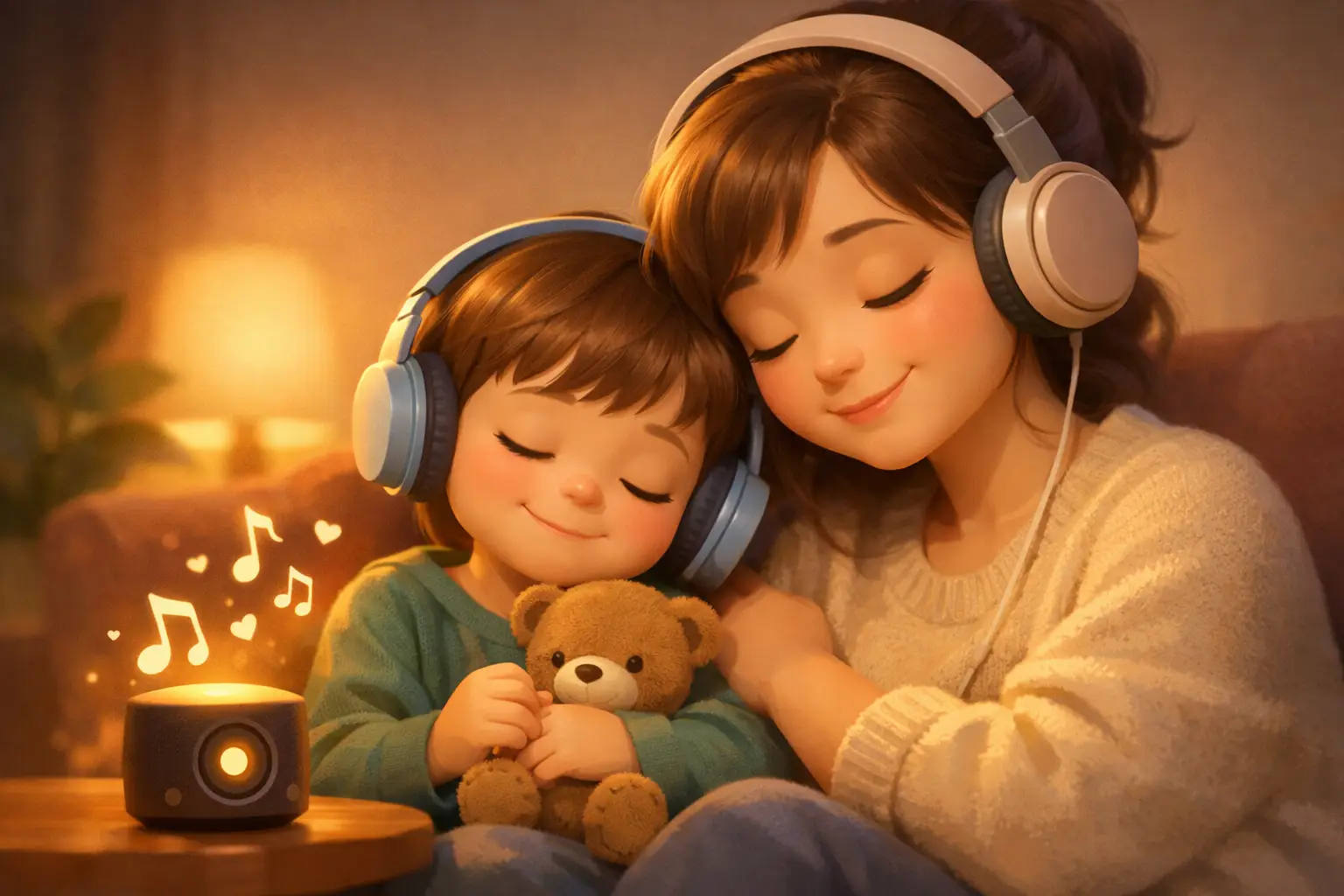
A child who cannot yet explain, “I’m disappointed because we had to leave the playground,” may still be able to sing, “It’s okay to feel sad.” That small moment matters. When a familiar melody carries the words, children can borrow language for feelings that are still too big, new, or tangled to name alone.
Kids feelings songs are not meant to make hard emotions disappear. They offer something gentler: a safe way to notice a feeling, put a name to it, and remember that a caring grown-up is nearby. For children ages 3 to 6, a simple song can become part of the bridge between a stormy moment and a calmer one.
Why music helps little children talk about feelings
Preschoolers learn through repetition, rhythm, and relationship. A short chorus heard again and again can settle into memory much more easily than a long explanation during a difficult moment. Later, when frustration rises or bedtime worries appear, the child may recall the song before they can recall a parent’s careful advice.
Music also creates a little bit of emotional distance. Singing about an angry bear, a worried bunny, or a child who misses a friend can feel safer than saying, “I am angry” right away. The feeling is still welcome, but it is held inside a story, a character, and a predictable tune. This gives children room to recognize themselves without feeling put on the spot.
The adult’s voice is part of the comfort, too. A song sung together says, “You do not have to carry this feeling by yourself.” Even if your child only hums, sways, or listens from your lap, they are practicing that important lesson.
What makes kids feelings songs truly supportive
Not every song about emotions will feel right for every child. Some children enjoy a lively movement song when they are upset. Others need a quieter tune with a slower pace. The best choice depends on your child’s temperament, the moment, and what helps their body feel safe.
Supportive songs usually share a few gentle qualities:
- They name one clear emotion, such as sadness, anger, worry, jealousy, or excitement.
- They reassure children that all feelings are allowed, while keeping boundaries around unsafe behavior.
- They use simple, repeatable words that a young child can remember.
- They offer a manageable next step, such as taking a breath, asking for a hug, resting, or using kind words.
- They leave space for comfort rather than demanding that a child cheer up quickly.
A helpful feelings song might say, “Anger can feel hot inside. We can stomp our feet, then breathe,” rather than telling a child they should not be angry. The difference is meaningful. Children need to know that feelings are not bad. What they do with those feelings is where gentle guidance belongs.
Be mindful of songs that turn fear, sadness, or anger into a joke. Humor can help some children release tension, but a sensitive child may hear that their feeling is silly or unwelcome. A calm song that respects the feeling first is often a better place to begin.
Use songs before the hard moment arrives
The easiest time to introduce a feelings song is not in the middle of a meltdown. Play or sing it during a peaceful part of the day: while getting dressed, driving home, building blocks, or settling in before bed. When the tune is already familiar, it can feel like a trusted friend during a tough moment.
Choose one or two songs for a particular season of life. If your child is struggling with goodbye at preschool, sing a simple song about missing someone and seeing them again. If evenings bring worries, choose a bedtime song that names the dark, the quiet house, and the safety of home. Repeating the same song for a week or two gives children the comfort of knowing what comes next.
You do not need to turn every song into a lesson. Sometimes it is enough to sing together. Other times, a small question can open a door: “That song says the fox felt worried. Have you ever felt a little worried?” If your child says no, changes the subject, or simply keeps playing, that is okay. Emotional learning is not a test.
How to use a song during a big feeling
When tears, anger, or fear are already present, start with connection rather than music. Get low, soften your voice, and name what you see. “You really wanted one more turn. It is hard to stop.” A child in distress may not be ready to sing, and asking them to perform can add pressure.
If they are receptive, hum a familiar line quietly or offer a choice: “Would you like our mad song, or would you like a hug?” Keep the song short. A single repeated phrase is often more useful than playing a full track while the child is overwhelmed.
For anger, a song can pair words with safe movement: pressing hands together, stomping slowly, or taking a big breath and letting it out. For sadness, the music may be softer, with words about crying, missing, and being cared for. For worry, a steady rhythm and a repeated reassurance can help: “I am safe. Grown-ups are near. This feeling will not stay forever.”
Do not expect a song to stop every hard moment. Sometimes a child needs to cry in your arms, sit quietly, or have space nearby. Music is a tool, not a switch. Its value may be in helping your child feel understood, even if the tears continue for a while.
Build a small feelings-song routine
A predictable routine gives emotional songs a home in family life. Try a brief check-in at breakfast, after preschool, or before bedtime. You might ask, “Which feeling visited you today?” Then sing a few lines that match the answer, or let your child choose from familiar favorites.
At bedtime, songs can gently close the day without pretending it was perfect. A child can sing about a mistake, a disagreement, or a scary thought, then hear that tomorrow is another chance. This is especially comforting for children who replay difficult moments once the room gets quiet.
You can also make a simple family song from your own repeated phrases. Keep it short and warm: “Big feelings come, big feelings go. We can breathe and take it slow.” Your child does not need a polished performance. They need a phrase they can hold onto.
At Cozy Pebble Stories, we believe the most comforting songs leave children with a feeling of being seen. The melody may fade, but the message can stay: my feelings make sense, I can ask for help, and I am loved while I learn.
Let the child lead sometimes
Children often show you what they need through the songs they request. The child who asks for the same worried song every night may be working through something quietly. The child who wants the angry song after every sibling disagreement may be practicing a new way to express frustration.
Listen without over-interpreting. You can reflect what you notice with simple words: “You picked the brave song again. It seems like that one feels good today.” This lets your child remain the expert on their own inner world.
It is also fine if a favorite song changes. Children grow quickly, and what once soothed them may later feel too babyish, too slow, or simply less interesting. Keep a few options available and follow their cues. Emotional support works best when it feels like an invitation, not an assignment.
The next time your child has a feeling too big for a full sentence, try offering a familiar tune before searching for the perfect words. Sit close, sing softly, and let the song remind both of you that even the biggest feelings can be met with patience, kindness, and care.