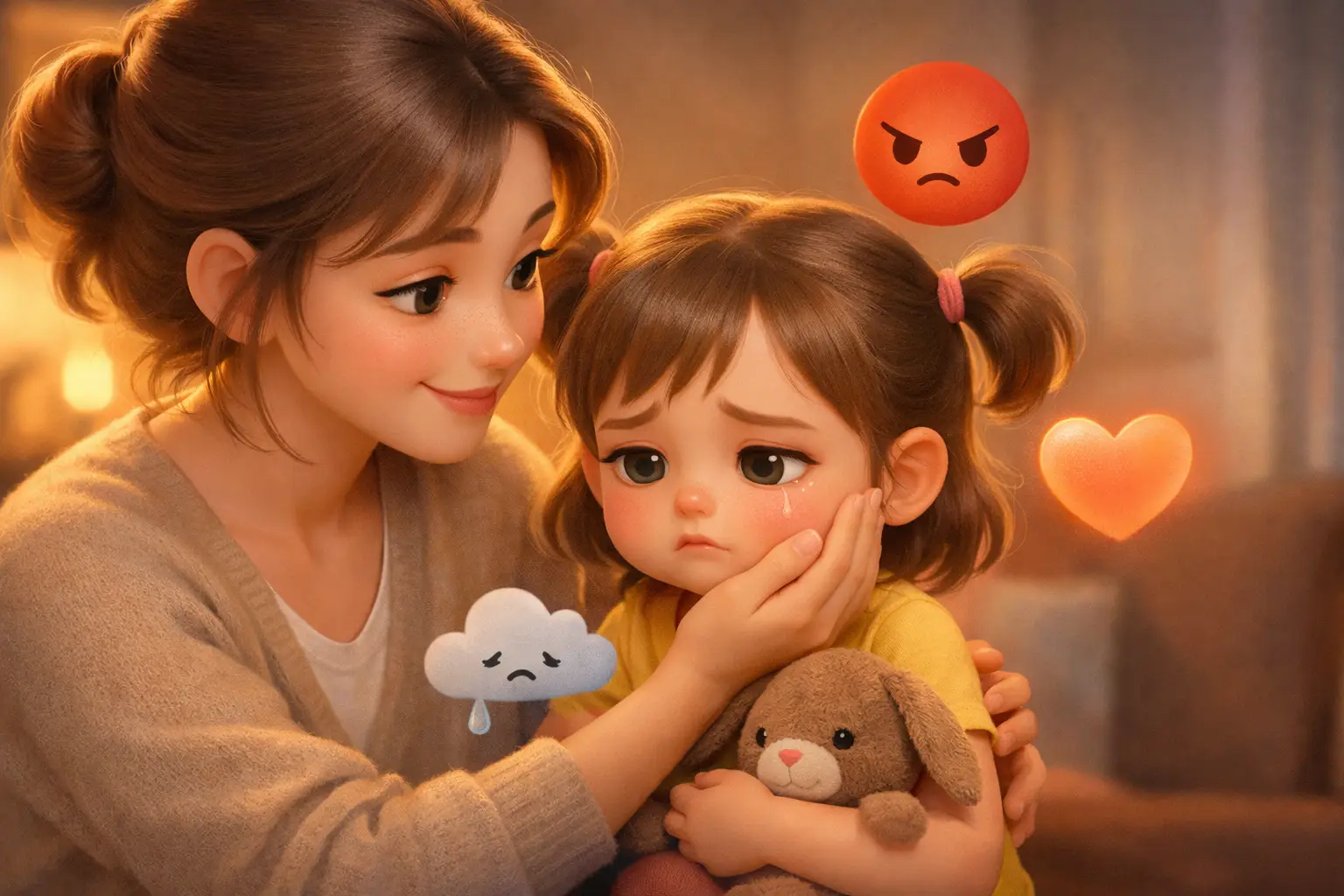
A cracker breaks in half. The blue cup is in the dishwasher. It is time to leave the playground just as your child has finally settled into a game. For an adult, these moments can seem small. For a toddler, they can feel enormous.
When you validate toddler emotions, you are not agreeing that every wish can be granted or allowing hurtful behavior. You are showing your child that their inner experience is real, noticed, and safe to share. That quiet message - “I see you” - helps make room for learning, calming, and reconnecting.
What It Means to Validate Toddler Emotions
Validation is the simple act of naming and accepting a feeling without trying to rush it away. It sounds like, “You are disappointed that the cracker broke,” or, “You really wanted to keep playing. Leaving feels hard.”
A validated feeling does not become bigger because it is acknowledged. More often, it begins to soften. Toddlers are still learning what feelings are, why they arrive so suddenly, and what to do when they fill their whole body. They borrow our calm before they can create much of their own.
This is different from giving in. You can say, “You are angry that it is time for bed,” while still holding the bedtime boundary. You can say, “You wanted that toy,” while helping your child wait for a turn. The feeling is welcome. The limit can remain.
That distinction matters. Children need both warmth and guidance. They need to know that anger, jealousy, fear, and disappointment are allowed feelings, even when hitting, throwing, or yelling at someone is not an allowed choice.
Why Small Moments Feel So Big
Toddlers have strong feelings and only a few tools for managing them. Hunger, tiredness, noise, a change in plans, or an unfamiliar place can make an ordinary frustration spill over quickly. A child who is crying over the “wrong” socks may not truly be upset only about socks. They may be tired, overwhelmed, or wishing for a little more control.
When we meet tears with “You’re fine” or “That’s nothing to cry about,” we usually mean to comfort. But a toddler may hear that their experience is confusing or unacceptable. They may cry harder because they still need help being understood.
A gentler response does not require long explanations. Young children often need fewer words, not more. A calm face, a soft voice, and one clear sentence can be enough: “You didn’t want the blocks to fall down. That was frustrating.”
A Gentle Way to Respond in the Moment
When your child is upset, begin by slowing down yourself. You do not have to solve every feeling immediately. Take one breath and come close, if your child welcomes closeness. Then try a simple three-part rhythm: notice, name, and stay near.
Notice what happened
Start with the event your child experienced. “Your tower fell.” “The dog barked loudly.” “Your friend took the shovel.” This shows that you were paying attention and helps connect the feeling to a clear moment.
Name the feeling, gently
Offer a likely emotion without insisting that you know exactly. “You seem scared,” “That looks frustrating,” or “I think you feel sad we had to say goodbye.” If your child corrects you, that is wonderful. They are practicing the language of their own inner world.
For toddlers, simple words work best: mad, sad, scared, worried, disappointed, jealous, excited, and tired. You can also name body clues: “Your fists are tight. Your body is telling me you are really angry.”
Stay close to the boundary
Then offer presence and a next step. “I won’t let you hit. I’m going to help keep everyone safe.” Or, “It is still time to go, and I can hold your hand while you feel sad.”
This may not stop the tears right away. That is okay. The goal is not a quick, quiet child. The goal is a child who learns, little by little, that big feelings can be felt safely and carried with support.
Words That Help a Toddler Feel Understood
It can be hard to find the right words when a child is crying in the grocery store or screaming from the car seat. A few familiar phrases can make those moments feel less lonely for both of you.
“You are having a hard time.”
“You really wish it could be different.”
“That surprised you.”
“It is okay to feel mad. I will help you stay safe.”
“You wanted to do it yourself.”
“I’m here with you while you cry.”
“You are safe. Your feeling will not last forever.”
Try to speak in a low, steady voice. If your child is very overwhelmed, wait to explain or problem-solve. A child in the middle of a storm cannot easily hear a lesson. Connection comes first. Teaching can come after the clouds begin to clear.
What Validation Is Not
Validating does not mean saying yes to every request. If your child is upset because they cannot have another cookie, you can be kind and firm: “You want more cookie. It is hard when the answer is no. We are all done with cookies.”
It also does not mean trying to make every disappointment disappear. Rescuing children from every hard feeling can accidentally teach them that sadness or frustration is too much to bear. With loving support, children can learn that they can survive a lost turn, a broken crayon, a rainy day, or a goodbye at preschool.
Validation is not a script you must perform perfectly, either. Some days you will be tired. Some days you may speak sharply and wish you had responded differently. Repair matters. You can return later and say, “You were so upset, and I got loud. I’m sorry. You deserved help with that big feeling.”
A repair teaches something beautiful: relationships can bend, apologize, and come back together.
When Your Toddler Rejects Comfort
Not every child wants a hug when upset. Some children need space, movement, or quiet before they can reconnect. You can validate without touching: “You don’t want a hug right now. I’ll sit close by.”
Offer choices that are small and manageable. “Would you like to stomp your feet or squeeze your pillow?” “Do you want me beside you or by the door?” Choices do not remove the boundary, but they can return a little sense of control to a child whose world feels suddenly too big.
If your toddler is throwing things, hitting, or trying to run into danger, lead with safety. Block the hit gently, move breakable items, or carry your child to a safer space if needed. Use few words: “I won’t let you throw the truck. You are very mad. I’m helping you be safe.” Once the body is calmer, you can offer another way to show the feeling.
Build Feeling Words When Everyone Is Calm
The easiest time to teach emotional language is not during a meltdown. Stories, songs, pretend play, and bedtime conversations give children a peaceful place to practice. A character who feels nervous before trying something new, misses a friend, or makes a mistake can help a child recognize feelings from a comfortable distance.
You might pause during a story and wonder aloud, “Her shoulders look droopy. Do you think she feels sad?” At bedtime, try a simple question: “Was there a happy part and a hard part of your day?” If your child does not answer, that is fine. Your calm curiosity still shows that feelings have a place in your home.
Repeating the same gentle phrases also helps. Children learn through hearing words again and again. Over time, “I’m mad,” may replace a thrown toy. “I miss Daddy,” may replace tears at the door. Progress is often quiet and gradual.
Let Your Calm Be the Soft Place to Land
You do not need perfect words to raise an emotionally secure child. You only need enough moments when your child learns that feelings are not frightening, love does not disappear when things get messy, and a caring grown-up can help them find their way back.
The next time a small disappointment brings very big tears, pause beside your child. Name what hurts. Hold the limit with kindness. Then let your steady presence say the rest: “Your feelings matter, and you do not have to carry them alone.”