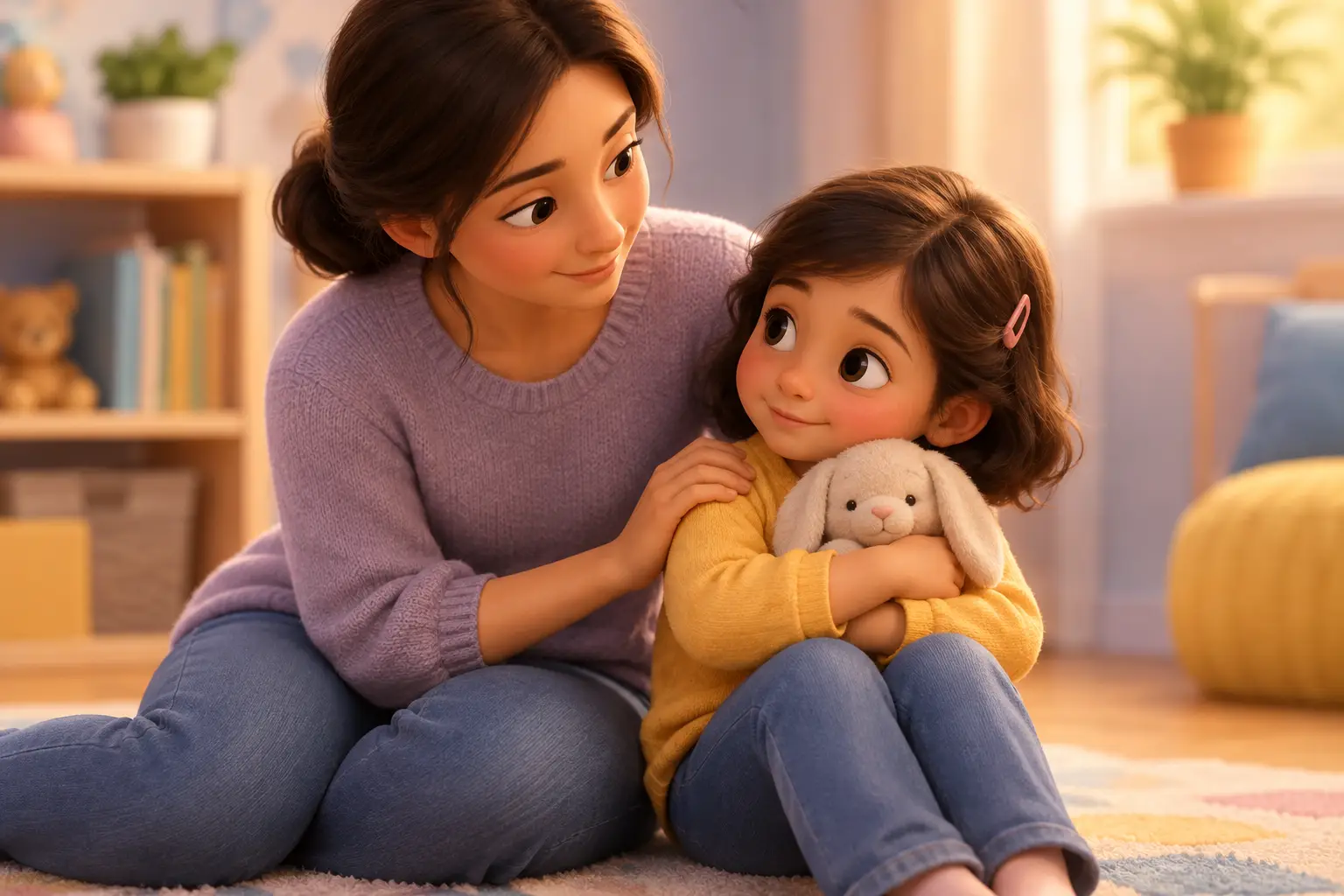
A preschooler may stand close to your leg at a birthday party, watch the other children from the edge of the playground, or go quiet when a friendly adult says hello. In those moments, it can be tempting to speak for them or urge them to join in. But to support shy preschoolers, the gentlest starting point is simple: let them know they are safe exactly where they are.
Shyness is not a problem to fix. For many children, it is a thoughtful way of taking in a new room, new people, or a new experience. With patient support, a child can grow more comfortable sharing their voice without feeling that they must become someone else.
What shyness can look like at preschool age
Preschoolers are still learning how to handle big feelings in small bodies. A child who is slow to warm up may hide behind a caregiver, whisper instead of speaking, avoid joining a group game, or need several visits before feeling comfortable in a new place. They may be chatty and playful at home, then very quiet at school or around relatives.
This can be especially confusing for adults because a child’s comfort may change from one setting to another. Being shy does not mean a child has nothing to say, does not want friends, or lacks confidence. Often, it means they need more time to observe, predict what will happen next, and feel connected.
Try to describe what you see without attaching a limiting label. Instead of saying, “She’s shy,” in front of your child, you might say, “Maya likes to watch for a little while before she plays,” or, “He is taking time to get comfortable.” These words leave room for growth while honoring who your child is today.
Support shy preschoolers without pushing them
Pressure can make a hard moment feel even bigger. A well-meaning “Go say hi!” or “Don’t be scared” may ask a child to perform before they feel ready. The goal is not to remove every uncomfortable feeling. It is to help your child learn that they can feel unsure and still take one small, manageable step.
Stay nearby when you can. At a playdate, sit on the floor beside your child rather than sending them across the room alone. At preschool drop-off, offer a calm, familiar goodbye ritual: a hug, a phrase, and a promise of when you will return. Predictability helps a child’s nervous system settle.
You can also give choices that are small enough to feel real. “Would you like to wave to Sam or say hello with me?” is easier than “Why won’t you talk?” A child may choose to wave, smile, or simply stay close. Each response is communication, and each can be met with warmth.
It is also okay if your child does not join every activity. There is a difference between offering an invitation and insisting on participation. A child who watches a group game today may be ready to stand nearby tomorrow. Gentle confidence grows through many safe experiences, not one big leap.
Use words that make room for feelings
Children borrow our language before they can find their own. When a new situation feels hard, name the feeling simply: “This room feels busy.” “You do not know everyone yet.” “Your body wants to stay close to me.”
Then add a steady message of support: “We can take our time.” “I will stay with you while you look.” “When you are ready, we can try one little thing.” These phrases do not promise that the feeling will disappear. They show your child that feelings can be carried with care.
Avoid calling a child rude, unfriendly, or antisocial because they do not answer right away. A quiet child may need processing time, especially when an adult is watching and waiting for a response. You can kindly bridge the moment by saying, “Ava is listening. She may want a minute,” and then move on naturally.
Make social moments smaller and more predictable
Large, noisy gatherings can be difficult for any preschooler, especially one who prefers time to warm up. When possible, begin with short, low-pressure chances to connect. One familiar child at the park may feel easier than a crowded birthday party. A 30-minute playdate can be more successful than an afternoon packed with activities.
Before an event, tell your child what to expect in a few clear sentences. Explain where you are going, who may be there, and what will happen first. You might say, “We are going to Liam’s house. We will take off our shoes, say hello to Liam’s dad, and then you can look at the train set with me.”
Pretend play can help too. Use stuffed animals to act out arriving at school, asking to play, or saying goodbye. Keep the scene gentle and brief. A teddy bear can practice, “Can I have a turn when you are done?” A bunny can feel nervous at the door, then find a teacher who smiles and helps. Rehearsal lets children meet a social challenge in the safety of play.
Stories and songs can offer the same kind of practice. A calm story about a character who takes a small brave step gives children a way to recognize themselves without feeling singled out. At Cozy Pebble Stories, this is why quiet courage matters as much as bold courage: sometimes bravery is a wave, a whisper, or walking into a room while holding a trusted hand.
Praise effort, not a louder personality
When your child does speak, join a game, or try something new, notice the effort with specific words. “You looked at your teacher and said good morning,” feels more meaningful than a broad “Good job.” It tells your child what they did and helps them remember that they can do it again.
Be careful not to make social behavior feel like a test. A child should not feel that adults are constantly measuring whether they talked enough, smiled enough, or made a friend fast enough. After a gathering, ask open, gentle questions: “What did you notice?” “Was there a part you liked?” “Would you want to do that again another day?”
Sometimes the answer will be no, and that is useful information. Perhaps the playdate was too long, the room was too loud, or your child needed a familiar activity nearby. Adjusting the setting is not giving in. It is helping your child practice in a space that fits their current needs.
Let your own calm lead the way
Children notice when adults feel worried about their quietness. If you apologize for your child or repeatedly prompt them in front of others, they may begin to believe something is wrong with them. A calm response sends a different message: “My child has their own pace, and I trust them.”
That does not mean ignoring opportunities for growth. You can gently encourage a next step, then accept the answer. Perhaps your child orders their own snack after you practice the words together. Perhaps they hand a drawing to a grandparent instead of explaining it aloud. These are meaningful bridges between staying silent and feeling ready to speak.
When extra support may help
Most shy preschoolers become more comfortable as they build familiarity, language, and trust. Still, it can help to check in with your child’s pediatrician or preschool teacher if fear regularly keeps them from playing, learning, speaking, separating from you, or enjoying everyday activities. Strong physical distress, long-lasting worry, or silence in settings where a child speaks freely at home can deserve thoughtful professional guidance.
Seeking support does not place a label on your child. It simply gives your family more tools. Teachers, pediatricians, and child development professionals can help you understand what is typical for your child and create a plan that feels kind and realistic.
Your preschooler does not need to be the loudest child in the room to belong there. Offer a steady hand, patient words, and chances to try again. Over time, the child who watches from your side may take a step forward, then another, carrying the quiet confidence that someone believed in them before they were ready to believe it themselves.