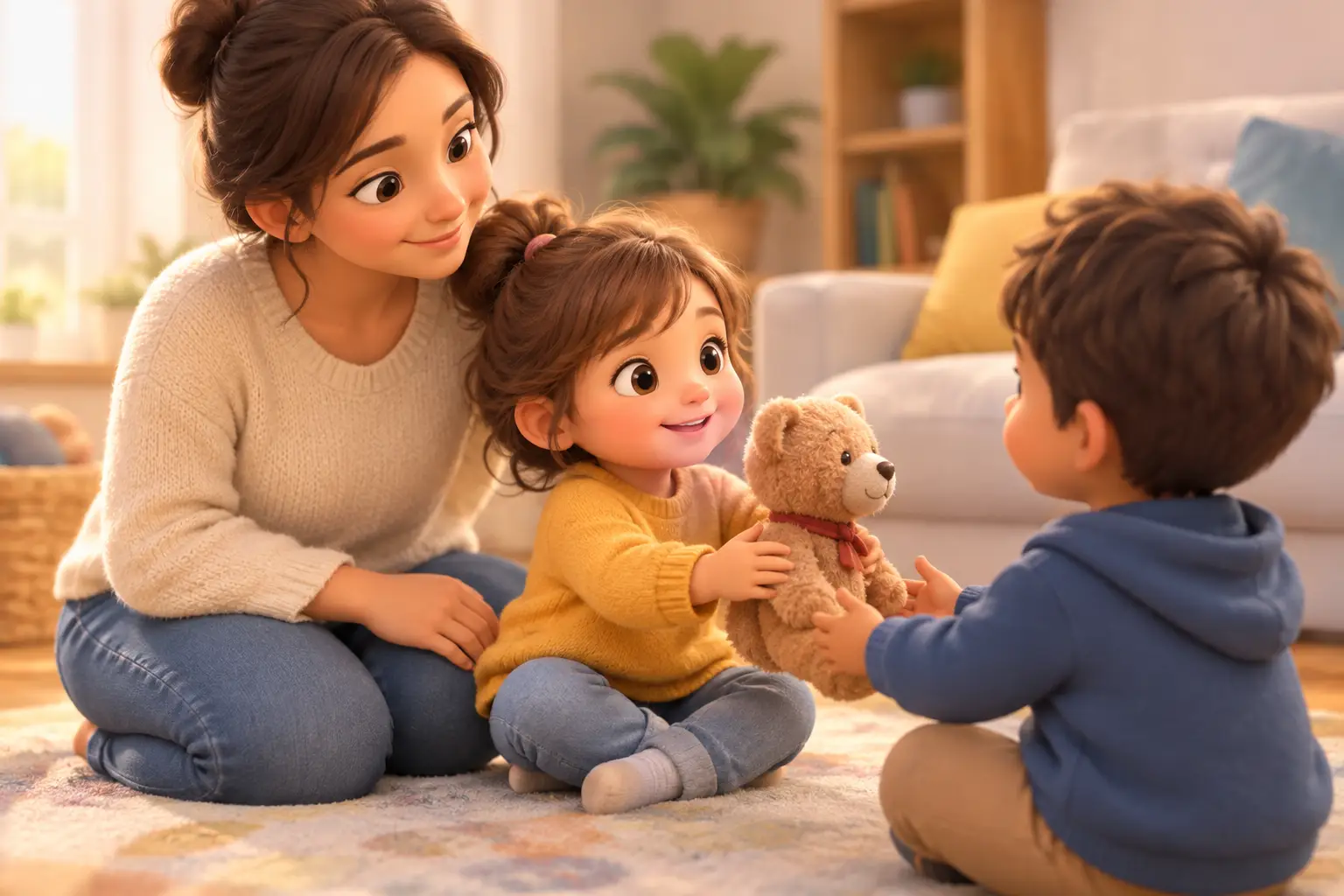
A child who hands over the blue crayon, pats a sad friend’s shoulder, or helps carry a dropped sock is learning something much bigger than good manners. They are learning that their choices can bring comfort to someone else. For families wondering how to practice daily kindness, the most meaningful place to begin is in the small, ordinary moments children already know.
For children ages 3 to 6, kindness is not usually an abstract idea. It is a warm voice, a turn with a favorite toy, a gentle hand, or a grown-up who notices when they are trying. Daily practice helps these moments become familiar. Over time, kindness can feel less like a rule and more like part of how a child moves through the world.
Begin With Connection, Not Correction
Young children are still learning to manage disappointment, tiredness, jealousy, and big wishes of their own. A child who grabs a toy or shouts at a sibling is not necessarily being unkind. Often, they are overwhelmed and need help finding a safer way to express what they feel.
Start by naming the feeling with calm, simple words. You might say, I can see you really wanted that truck. It is hard to wait. Then hold the boundary: We do not grab. Let’s try asking for a turn. This approach makes room for the child’s feeling while also protecting the other person.
When children feel understood, they are often more able to listen, repair, and try again. Kindness grows best in a home where children learn that feelings are welcome, even when certain actions are not.
How to Practice Daily Kindness in Small Moments
You do not need a large project, a reward chart, or a perfectly peaceful morning to teach kindness. Look for gentle opportunities already tucked into your day. The repetition is what gives these lessons their roots.
At breakfast, invite your child to help set a place for someone else. On the way outside, ask whether they would like to hold the door for a neighbor. During play, notice caring behavior out loud: You saw that your friend was looking for a block, and you helped them find one. That was thoughtful.
Specific praise is more helpful than a broad statement like good job. It tells children what they did and why it mattered. Try phrases such as, You made room for your sister on the couch, or, Your gentle voice helped Grandpa hear you. Children begin to connect their actions with another person’s experience.
It also helps to use the same few phrases often. A simple family language can be easy for preschoolers to remember: Kind hands. Kind words. Helping hearts. When a child is upset, short familiar phrases are easier to use than a long explanation.
Let Children See Kindness in Action
Children watch far more than they are told. They notice how adults speak when they are rushed, how they respond to mistakes, and whether they offer patience when someone needs extra time.
Let your child hear you practice kindness in ordinary ways. Thank the grocery clerk. Check on a friend who has had a hard day. Speak gently to yourself when you spill something or forget an appointment. You can say, I am frustrated, but I can slow down and try again. This shows that kindness includes the way we treat ourselves, too.
Modeling does not mean parents need to be calm every minute. No one is. What matters is repair. If you speak sharply, return when things are quieter and say, I was feeling stressed, and I used an unkind voice. I am sorry. I will try again. A child learns that kindness is not perfection. It is choosing to care, including after a difficult moment.
Use Stories to Make Caring Feel Understandable
A gentle story can give children words for moments that are hard to explain in real time. When a character feels left out, makes a mistake, or finds the courage to apologize, children can explore those feelings from a safe little distance.
After reading or listening together, keep the conversation soft and brief. Ask, How do you think the character felt when no one let them play? Or, What helped them feel better? There is no need to turn every story into a lesson. Sometimes simply pausing to wonder helps a child notice another person’s point of view.
Stories are especially useful before predictable challenges, such as starting preschool, welcoming a new sibling, or visiting a busy relative. A familiar character can remind a child that nervous feelings and kind choices can exist together. They can feel shy and still wave hello. They can feel angry and still use safe hands.
Make Space for Repair
Teaching kindness is not about expecting children to share every toy or apologize on command. Forced apologies can become empty words, especially when a child is still upset. First help them settle. Then guide them toward a repair that fits the moment.
A repair might be returning a toy, helping rebuild a knocked-over tower, bringing a tissue, drawing a small picture, or saying, Are you okay? Sometimes the kindest next step is giving the other child a little space. The goal is not to make a child feel ashamed. It is to help them understand that their actions matter and that relationships can be cared for after a bump.
You can offer choices: Your friend is crying because the tower fell. Would you like to help build it again, or would you like to ask if they need a hug? Choices give young children a sense of agency while keeping the focus on care.
Keep Kindness Realistic at Home
A kind home is not a home where children never argue. Siblings will compete. Children will say no. They will have days when every request feels too big. Kindness does not mean ignoring their needs to keep everyone else happy.
It is healthy to teach children that they can be kind and have boundaries. They may say, I am still using this. You can have it when I am done. They may not want a hug, even if someone is sad. They can offer a wave, a drawing, or simply a little room instead. Respecting these limits teaches children that care should feel safe, not forced.
It also depends on a child’s temperament. Some children are naturally eager to help but become worried about everyone else’s feelings. Others need more time and practice noticing what is happening around them. Meet your child where they are. A quiet child’s small wave or a cautious child’s offered toy can be a very real act of courage and kindness.
Create One Gentle Family Ritual
A simple ritual can keep kindness close without making it feel like another task. At bedtime, ask one small question: Who was kind to you today? Then, if your child is ready, ask: Were you kind to someone today?
Keep the tone curious, not evaluative. Some nights your child may remember sharing a snack. Other nights they may say no, or tell a long story about a puddle instead. That is all right. The ritual is an invitation to notice goodness, not a test to pass.
You might share your own answer first. I was kind to a stranger today when I let them go ahead of me in line. Children learn that kindness belongs to grown-ups, children, friends, and families alike. It is something we keep practicing together.
The smallest caring choice can become a steady little light in a child’s day. When you notice it, name it, and make room for another try tomorrow, you are helping your child build a lifelong habit of seeing others with a warm and helpful heart.