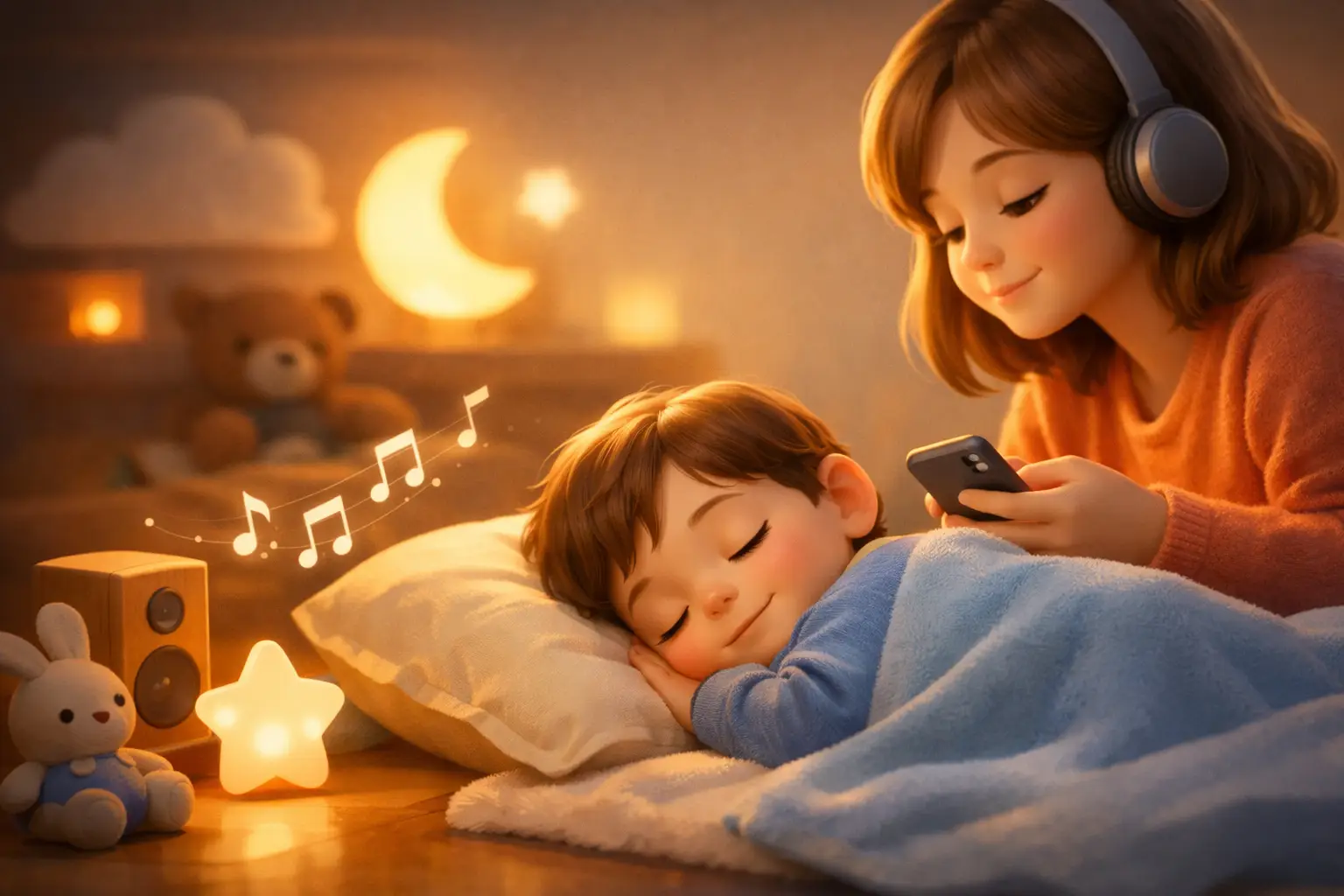
A preschooler may not fall asleep the moment the lights dim. They may wiggle, whisper, miss home, or need a little time to let a busy morning settle. The right music for preschool rest time cannot make every child nap, and it should not try to. What it can do is offer a soft, familiar signal: the room is safe, the busy part of the day is over, and it is okay to rest quietly.
For children ages 3 to 6, rest time is often less about sleep than transition. Gentle music can make that transition feel steadier, especially when it becomes part of the same caring routine each day.
Why calm music helps at rest time
Young children move through their days with their whole bodies. A morning may include sharing toys, learning new words, waiting for turns, managing disappointment, and feeling proud of something small. Even happy activity can be tiring. Rest time gives children a chance to pause before those feelings spill over into tears, silliness, or frustration.
Soft music gives the pause a shape. A slow, predictable melody can cover distracting hallway sounds without demanding attention. It also creates a gentle boundary between active play and quiet time. Over time, children begin to recognize the pattern: we put away our things, get cozy, hear this music, and let our bodies grow still.
This is especially helpful for children who do not nap. They still deserve a calm break, free from the pressure to perform sleep. Quiet rest helps them practice listening to their bodies, being comfortable with a little stillness, and respecting the needs of friends who may be sleeping nearby.
What music for preschool rest time should feel like
The best rest-time music is not simply music labeled “relaxing.” Think about how it feels in a child’s body. Does it invite a slower breath? Could it play in the background without pulling a child into singing, dancing, or following a story? Does it feel warm rather than lonely?
Usually, slower songs with a steady, unhurried rhythm work well. Gentle piano, soft acoustic guitar, light lullaby-style instrumentals, and quiet nature sounds can all be good choices. Music with simple lyrics can also be comforting when the words are familiar and reassuring. A repeated line about being safe, resting, or seeing one another after quiet time may help a child settle.
Volume matters as much as style. Rest-time music should sit in the background like a soft lamp, not fill every corner of the room. If adults need to raise their voices to speak over it, it is too loud. If children start calling out lyrics or bouncing along, the music may be too energetic for the moment.
Choose gentle over sleepy-sad
Calm does not need to feel gloomy. Some very slow music can sound heavy or melancholy, which may make a sensitive child feel more worried instead of more settled. Look for melodies that are peaceful but lightly hopeful - the musical feeling of being tucked in, not left alone.
For the same reason, be thoughtful with songs about separation, darkness, or sadness. Those themes can be meaningful at bedtime or during an intentional conversation, but they may not be the best background for a room full of children trying to rest.
Keep surprises to a minimum
Preschool rest time is not the ideal place for a playlist with sudden volume changes, booming percussion, advertisements, or a cheerful song that starts at the end of a quiet track. Abrupt shifts can wake sleeping children and unsettle those who were almost calm.
A short, carefully chosen playlist is often kinder than an endlessly changing stream. Familiarity is a strength here. Hearing the same few songs every day may feel repetitive to adults, but to children it can become a comforting ritual.
Build a rest-time routine around the music
Music works best when it supports a larger routine. Begin with a few quiet, repeatable steps: clean up, use the bathroom, choose a cot or cozy spot, and take a drink of water if needed. Then lower the lights, offer a brief loving phrase, and start the same first song.
The words you use can be simple: “Our bodies worked hard this morning. Now we are giving them a quiet rest.” For children who miss a parent or have trouble settling, try: “You are safe here. You do not have to sleep right away. You only need to rest your body and use a quiet voice.”
This kind of language gives children permission without creating a struggle. It also makes space for different needs. One child may fall asleep quickly. Another may lie awake, looking at the ceiling and listening. Both can be having a successful rest time.
A useful approach is to let the playlist last about as long as the settling period, then lower it further or turn it off once most children are calm. In some rooms, continuous soft instrumental music helps mask outside noise. In others, silence after the first 15 or 20 minutes is more restful. It depends on the group, the space, and how easily children are distracted.
When lyrics help and when they do not
Lyrics can provide emotional comfort, particularly for children who enjoy a familiar voice and simple reassurance. A gentle song about taking a breath, being held in someone’s thoughts, or resting after a full day can make big feelings feel smaller. Songs that name emotions softly can also support social-emotional learning without turning rest time into a lesson.
Still, lyrics are not right for every group. Some children listen closely to every word and become more alert. Others may sing along, which is sweet but not always restful for their neighbors. If that happens, save lyric-based songs for the beginning of the routine and switch to instrumental music once children are lying down.
At Cozy Pebble Stories, we believe comforting words can be a small hand to hold. During rest time, though, that hand should be gentle enough to let children drift into their own quiet thoughts.
Notice what your children are telling you
There is no single perfect playlist for every preschool classroom or home. Observe what happens over a week or two. Are children settling more easily? Are they talking less? Does one song consistently make the room brighter and calmer, while another leads to giggles or requests for more?
Pay attention to individual children, too. A child with sensory sensitivities may find even beautiful music distracting. That child may rest better with lower volume, a spot farther from the speaker, or no music at all. A child who feels anxious at separation may benefit from the gentle predictability of the same opening song every day.
If rest time is difficult, resist the urge to add more stimulation. More songs, louder sounds, or frequent changes usually make it harder to settle. Instead, simplify. Choose fewer tracks, lower the volume, soften the room, and keep your words calm and brief.
A small ritual children can carry with them
The deepest value of music for preschool rest time is not that it creates a perfectly quiet room. It is that it teaches children a tender truth: when life feels full, we can pause. We can listen for something gentle. We can let our bodies be still without needing to earn the rest.
A familiar melody may become part of a child’s inner comfort long after the preschool years. One day, they may hear a soft song before bed, after a hard afternoon, or while missing someone they love, and remember that quiet can be safe. That is a lovely gift to offer in the middle of an ordinary day.