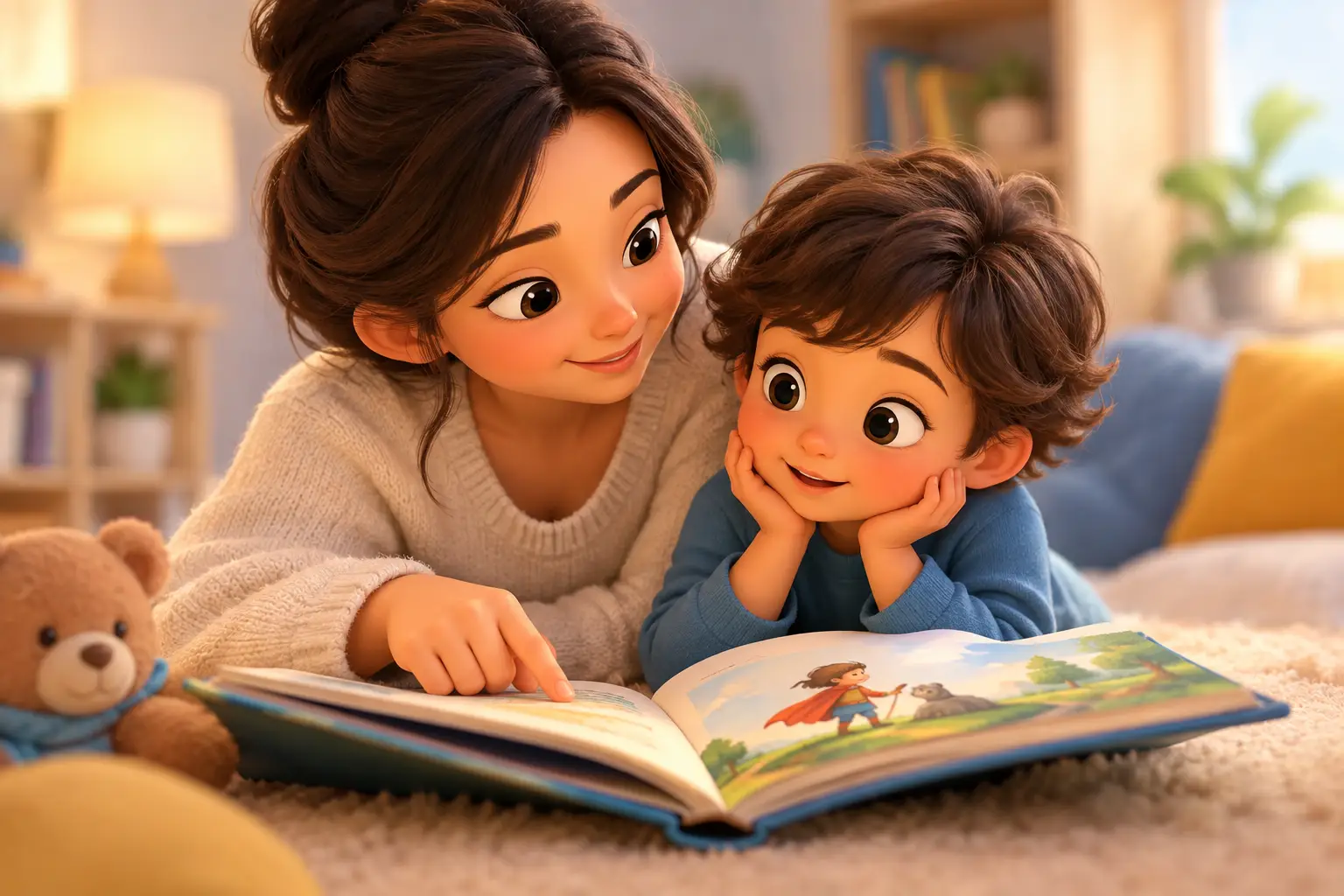
A spilled cup at breakfast can feel like a very big problem when you are four. So can a tower that will not stay up, a friend who wants the same toy, or a bedroom that seems extra dark at bedtime. Young children are still learning that problems can be faced one small step at a time. That is how stories teach problem solving: they give children a safe place to watch a challenge unfold, feel alongside a character, and imagine what might help next.
For children ages 3 to 6, problem solving is not usually about finding the fastest or most clever answer. It is about building the quiet inner habits that make solutions possible: noticing what happened, naming a feeling, pausing, asking for help, trying an idea, and trying again when the first idea does not work.
Stories Make Problems Feel Safe Enough to Explore
A real-life problem can arrive with tears, noise, and a child who is already overwhelmed. In a story, the same kind of challenge has a little breathing room. A child can watch a worried bunny lose her way, or a small bear feel left out of a game, while sitting close to a trusted grown-up. The problem belongs to the character, but the feelings may feel familiar.
That small bit of distance matters. When children are calm, they can take in more. They can notice what the character tries and what happens afterward. They can begin to understand that being upset does not mean they are stuck.
Gentle stories also make room for the truth that some problems do not disappear right away. A character may still miss a parent after they leave for work. A child in a story may not get the exact turn they wanted. But they can find comfort, make a plan, use kind words, or wait with support. This is an honest and reassuring lesson: a solution is not always a perfect ending. Sometimes it is a way to feel safer while moving through a hard moment.
How Stories Teach Problem Solving Step by Step
A well-shaped children’s story often follows the same simple path children can use in daily life. First, something goes wrong or feels hard. Then the character has a feeling. Next, they consider what to do, with help from a friend, caregiver, or their own growing courage. Finally, they learn something from the outcome.
This pattern gives children language for experiences that can otherwise feel confusing. Instead of only thinking, “I can’t do it,” a child may begin to recognize, “This is hard. I can take a breath. I can ask for help. I can try a different way.”
Repetition is especially helpful at this age. When a character says, “Let’s stop, think, and try,” more than once, the words become easy to remember. A child may repeat them while putting puzzle pieces together or when a sock feels impossible to turn right-side out. The story’s gentle phrase becomes a small tool they can carry into their day.
The best problem-solving stories do not rush past the feeling to deliver a lesson. If a character is frustrated, they are allowed to be frustrated. If they feel scared, someone does not tell them there is nothing to fear. Instead, the story can offer comfort first: a hand to hold, a cozy plan, a familiar song, or a kind voice. Children solve problems more readily when they feel understood.
Characters Show That There Can Be More Than One Answer
Preschoolers often see things in clear, all-or-nothing terms. The block tower fell, so building is over. A friend said no, so no one wants to play. A mistake happened, so they must be bad at the task. Stories can gently widen that view.
Imagine a little fox who wants to cross a muddy path to reach a picnic. At first, Fox tries to hop across and gets muddy paws. Fox might feel disappointed. Then a bird suggests looking for flat stones, while a turtle offers to walk slowly together. The answer is not that Fox should never feel disappointed or that the mud was silly. The answer is that Fox can pause, notice what did not work, and choose another idea.
This kind of story teaches flexible thinking without using grown-up language. Children see that a problem may have several possible paths. They also see that help is part of problem solving, not a sign of failure.
There is a helpful balance here. Stories should offer clear, manageable choices rather than too many possibilities. A three-year-old may learn most from watching a character choose between asking a grown-up, taking turns, or trying once more. Older children in the 5-to-6 range can begin to talk about why one choice felt kinder or worked better than another.
Feelings Are Part of the Solution
It can be tempting to treat feelings as a distraction from solving the problem. For young children, feelings are often the first part of the problem they need help with. A child who is angry about a broken crayon may not be ready to think of a solution until they have cried, cuddled, or heard, “That was disappointing. You really wanted to use that color.”
Stories give feelings a name and a shape. A character’s tummy may feel tight before joining a game. Their cheeks may feel warm after making a mistake. Their eyes may fill with tears when plans change. These details help children recognize themselves without being asked to explain everything at once.
When the character then takes a calming breath, finds a trusted helper, or uses words such as “Can I have a turn when you are done?” children learn that emotions and action can live together. They do not have to be perfectly calm before they begin. They only need enough support to take the next small step.
Bring the Story Into Everyday Moments
The learning becomes especially meaningful when a story is welcomed into ordinary family life. You do not need to turn every book into a lesson. A warm question or two is enough.
After reading, you might ask, “What was the hard part for the character?” or “What helped when they felt stuck?” For a child who is ready, try, “Have you ever had a problem like that?” If they do not want to answer, that is okay. Listening closely is still learning.
It can also help to notice a story connection later in the day. If your child grows frustrated with a zipper, you might say, “This feels a little like when Fox’s first idea did not work. Would you like to try slowly, or would you like help?” The goal is not to make children perform the lesson. It is to offer familiar words when their own big moment arrives.
Songs can support this, too. A short, repeatable line about breathing, asking, or trying again is easy to remember when a child is upset. Picture books, quiet story videos, and songs each offer a different doorway into the same gentle practice. At Cozy Pebble Stories, that kind of repeatable emotional language is part of creating comfort children can return to.
Choose Stories With Gentle, Useful Challenges
Not every story about a conflict teaches problem solving in the same way. For young children, look for challenges that are close to their world: sharing, waiting, making a mistake, feeling shy, missing someone, trying something new, or settling bedtime worries.
Stories are most supportive when the character’s response is believable. A child does not need a hero who fixes everything alone. They benefit from characters who take a breath, use words, accept comfort, repair a small mistake, or lean on a friend. The message becomes more trustworthy when the character needs time.
A calm pace is useful, too. Fast action can be entertaining, but a child may need a little space to notice the choice a character makes. In a softer story, a pause can become part of the teaching. The character stops. A friend listens. They look again. Then they decide what to do.
The next time a small problem lands in your child’s day, you do not need the perfect words or an instant fix. Sit nearby. Name what feels hard. Offer one manageable choice. Then remind them, gently, that like the brave little characters they know, they can take one small step and see what happens next.