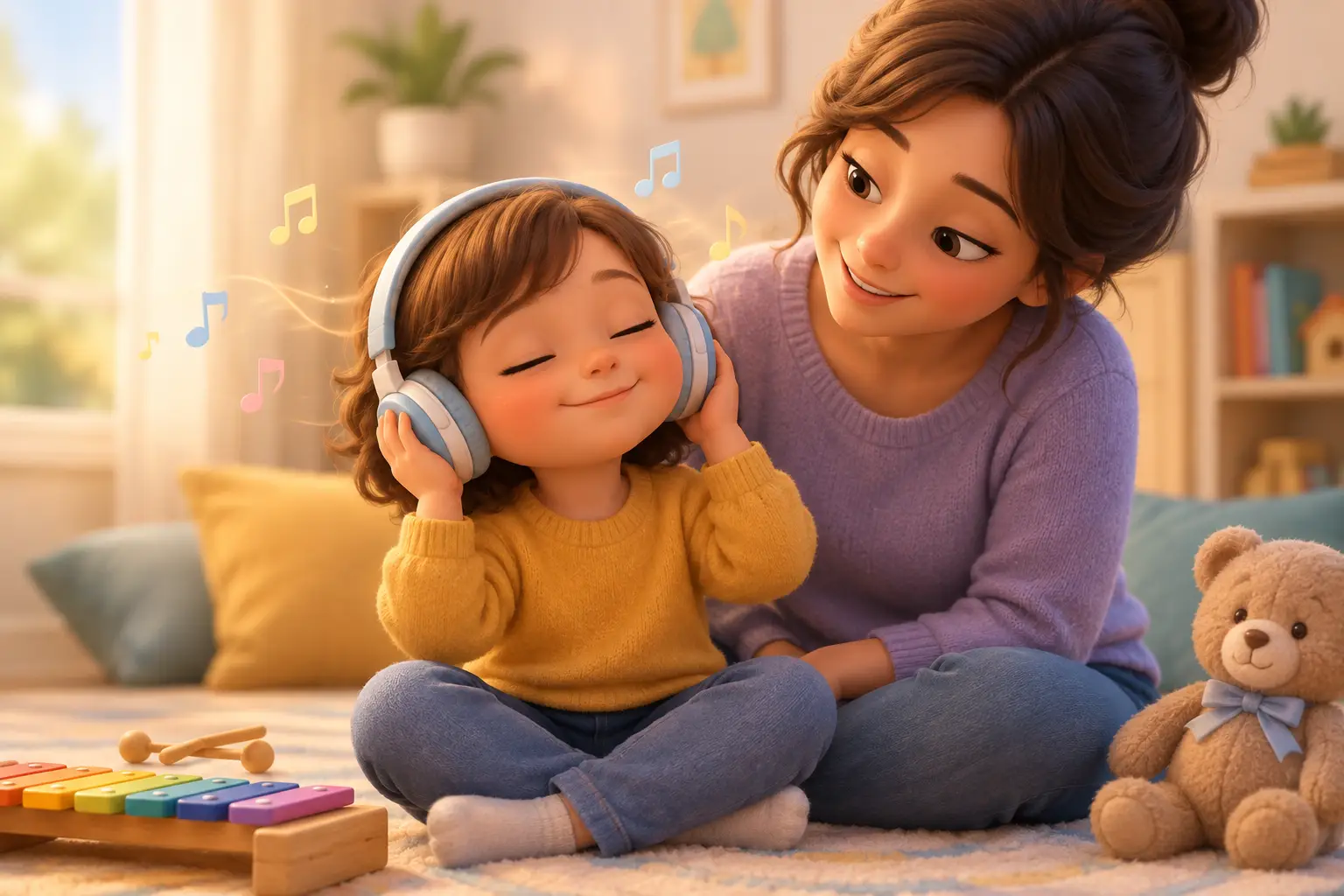
A preschooler may not have words for the tight feeling that arrives before a new classroom, the tears that follow a broken cracker, or the worry that appears when the lights go out. But they may be able to hum. They may clap along. They may sing, “I’m feeling sad,” long before they can explain why. So, can music help preschool emotions? Often, yes. A familiar, gentle song can give a child a safe way to notice a feeling, share it, and wait for it to soften.
Music is not a magic switch, and children do not need to be sung out of every hard moment. They need to feel seen first. Still, songs can be a warm companion during big feelings because they are predictable, repeatable, and easier for young children to hold onto than a long conversation.
How music can help preschool emotions
For children ages 3 to 6, feelings can move quickly. A child may go from cheerful to overwhelmed in the time it takes to put on one stubborn shoe. Their growing brains are learning to recognize emotions, manage impulses, and understand that a difficult feeling will not last forever.
Gentle music supports that learning in a few quiet ways. First, it gives feelings a name. Lyrics such as “mad,” “worried,” “lonely,” or “disappointed” help children connect an inner experience with language. That connection matters. A child who can say, “I’m frustrated,” has another option besides yelling, pushing, or shutting down.
Music also offers structure when a child feels unsettled. A song has a beginning, a middle, and an end. It repeats. The melody returns. For a young child whose emotions feel enormous and unpredictable, that steady pattern can feel reassuring. They begin to learn: this feeling is here, and it can change.
Finally, singing together builds connection. Your voice does not need to be polished or perfectly on key. What helps is the shared moment: sitting close, making eye contact, tapping a gentle rhythm, and letting your child know they do not have to carry the feeling alone.
Music gives children a safe distance from hard feelings
Some children will not want to talk directly about being scared, jealous, or angry. Yet they may gladly sing about a little bear who misses a friend or a bunny who feels nervous at bedtime. A character in a song creates a bit of space. The feeling belongs to the character first, which can make it easier for a child to recognize it in themselves.
Afterward, keep the conversation small and open. You might say, “That little bear had a worried feeling. Have you ever had one like that?” If your child says no, that is okay. There is no need to press. Listening to a song about emotions still plants gentle language they may use later.
The best kinds of music for big little feelings
Not every song will calm every child. Some preschoolers feel happier and more regulated after a silly, stompy song that lets them move their bodies. Others need a slower melody and a softer voice. The goal is not to make children quiet. It is to help them feel more connected to their bodies, their feelings, and a trusted adult.
When choosing music for emotional support, look for songs with simple words, a clear feeling, and an unhurried pace. Repeated lines are especially useful because children can join in without having to remember too much. Songs about taking breaths, trying again, missing someone, making mistakes, or feeling brave can become little emotional scripts for everyday life.
It also helps to choose music that does not rush to fix the feeling. A child who is sad does not always need a song that immediately turns cheerful. Sometimes a softer song that says, in effect, “Sad feelings are welcome here,” is the more comforting choice. Once a child feels understood, comfort and play often return on their own.
Be mindful of volume and stimulation, too. Fast edits, loud sound effects, and frantic musical cues can be fun, but they may not help a sensitive or overtired child settle. Calm music is not better in every situation, but it is often the kinder choice during transitions, illness, bedtime, or recovery from a busy day.
Simple ways to use songs at home
The most helpful music routines are usually the smallest ones. They do not require a special playlist or a perfect plan. What matters is using the same gentle cue often enough that your child begins to recognize it.
Start with a feeling check-in song
At breakfast, after preschool, or before bed, try a short tune with a familiar question: “How is your heart feeling today?” Offer a few choices - happy, sad, mad, worried, excited, or tired - and let your child point, whisper, sing, or simply listen.
If they choose a difficult feeling, resist the urge to talk them out of it. Try, “That makes sense. I’m here with you.” The song has done something valuable already: it made room for the truth.
Make transitions more predictable
Transitions are hard because preschoolers are often being asked to stop something they enjoy before they feel ready. A short cleanup song, shoe-on song, or goodbye song can soften that edge. It signals what comes next without relying on repeated instructions.
Keep the song consistent, and give your child a small role in it. They can ring a bell at the end, choose the final verse, or sing one key word. Participation gives children a little more agency when they cannot control the transition itself.
Use movement when feelings need somewhere to go
Anger and excitement are physical feelings. A child may need to stomp, shake, march, or press their hands together before they can listen to a calming song. You can try a brief movement song first, then follow it with slower breathing or rocking music.
This sequence respects what the body is saying. Asking a furious child to lie still may feel impossible. Inviting them to “stomp the grumps out” for one song can be more realistic, followed by, “Now let’s help our bodies rest.”
Create a bedtime song that belongs to your family
Bedtime worries often grow in the quiet. A simple, repeated goodnight song can become a dependable bridge between being together and falling asleep. Include comforting ideas your child can understand: loved ones are near, their body can rest, tomorrow will come, and they are safe in this moment.
Use the same song even on nights when sleep feels difficult. The goal is not to promise that every worry will disappear. It is to offer a familiar sound that says, “We know this part of the day. We can get through it together.”
What music cannot do on its own
Songs can support emotional growth, but they cannot replace responsive care. If your child is crying because they were hurt, frightened, or left out, start with comfort and attention. Music may come later, once they feel safer.
It is also wise to notice your child’s cues. A song that usually helps may irritate them on a particular day. They may want silence, a hug, or space instead. You can offer without insisting: “Would you like our calm song, or would you rather cuddle quietly?” Respecting that answer teaches emotional awareness, too.
If intense worries, sadness, anger, sleep struggles, or changes in behavior continue for weeks or interfere with daily life, speak with your child’s pediatrician or a qualified child mental health professional. Gentle songs are a lovely support, and asking for more support is loving as well.
Let the lesson live beyond the song
The real value of emotional music often appears after the music stops. Your child may use a lyric while waiting their turn: “I can try again.” They may hum the bedtime melody when they miss you at preschool. They may remember that a character in a story felt scared and still took one small step.
That is why stories and songs work so beautifully together. A tender character can show a child that feelings are part of being human, while a repeated melody helps the lesson stay close when they need it most. Cozy Pebble Stories is built around these small, comforting reminders: feelings can be big, help can be gentle, and bravery does not have to be loud.
The next time your child’s eyes fill with tears or their body buzzes with frustration, you do not need the perfect words. Sit nearby. Name what you see. Offer a familiar song if it feels welcome. Sometimes a soft melody is simply a hand to hold until the feeling becomes a little smaller.