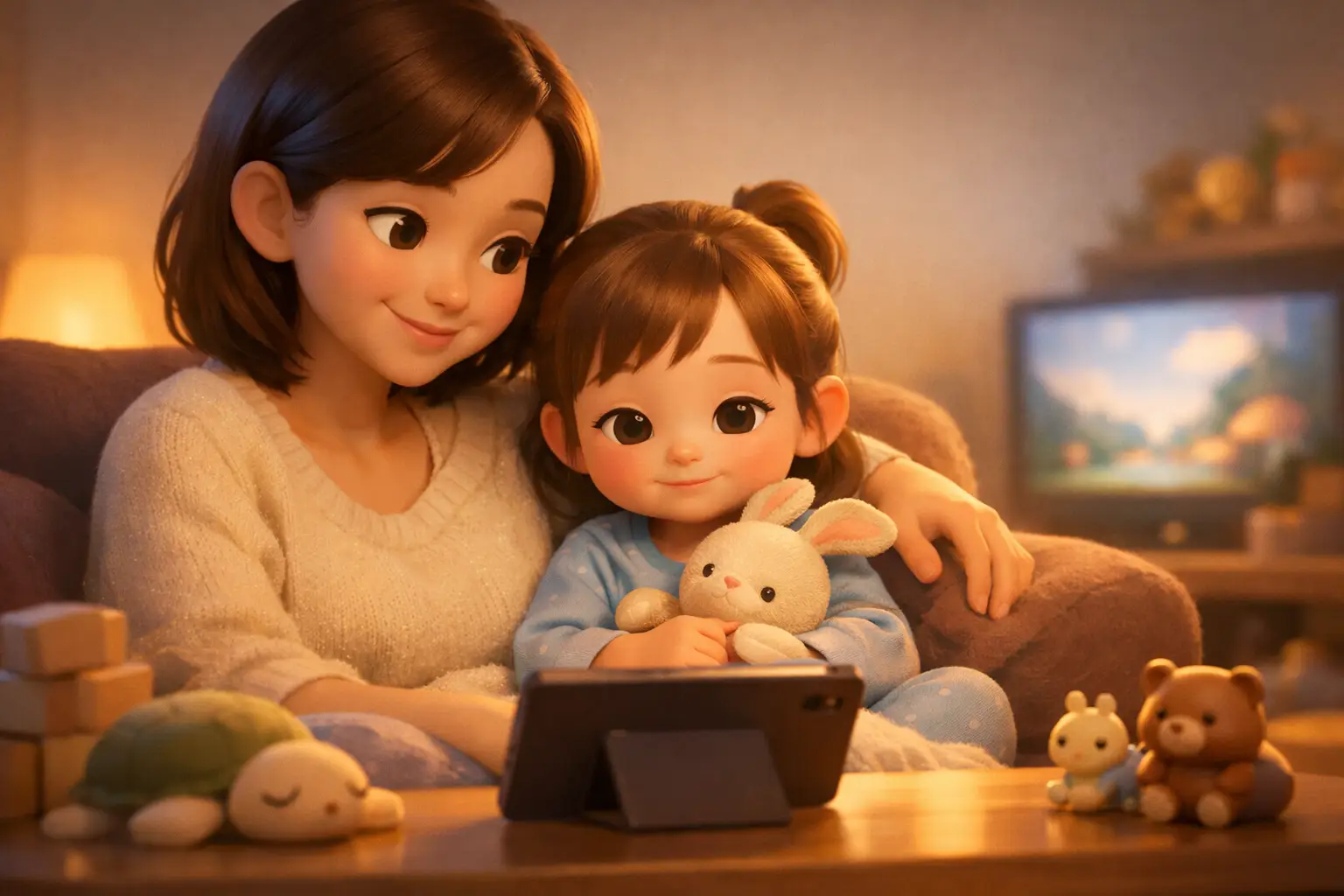
A child who has had a noisy, busy day does not always need more excitement. Sometimes they need a small, familiar story, a slow song, or a kind character who shows them that feeling worried, frustrated, or left out is something they can talk about. Calm entertainment for preschoolers can create that softer landing place, especially during the tender hours before rest, after preschool, or when big feelings have filled the room.
For children ages 3 to 6, entertainment is never only entertainment. The stories, music, and images they return to can give them words for feelings they have not yet learned to explain. A gentle rabbit who is nervous about the dark or a friend who makes a mistake and tries again can quietly say, “You are not alone.”
Why calm entertainment matters for young children
Preschoolers are learning how the world works while their feelings often arrive faster than their coping skills. They may move from laughing to crying in a moment, not because they are being difficult, but because their brains and bodies are still learning to manage excitement, disappointment, worry, and fatigue.
Fast, noisy media can be fun in small doses, and every family will make different choices. But content built around quick cuts, constant jokes, loud sound effects, and high-stakes conflict can leave some children more revved up than settled. This is especially true close to bedtime or after a full day of activity. A sensitive child may have trouble stepping away from the energy once the screen goes dark.
Calmer stories offer a different kind of engagement. They make room for pauses. They allow a child to notice a character’s face, listen to a repeated phrase, and see that a problem can be handled without shouting or rushing. The goal is not to make children passive or to avoid every hard feeling. It is to offer reassuring practice with feelings in a form they can understand.
What calm entertainment for preschoolers looks like
Gentle content is not simply content with a quiet soundtrack. It has an emotional pace that feels safe. A story may include a worry, a disagreement, or a moment of bravery, but it does not linger in fear or make conflict feel thrilling. The challenge is manageable, and the child can see care, repair, and comfort along the way.
Look for simple plots with one clear emotional thread. A preschooler can follow a character who is afraid to join a game, misses a parent, or worries about a thunderstorm. They may have a harder time with several storylines, rapid scene changes, or jokes that depend on sarcasm and grown-up references.
The visual style matters, too. Soft colors, uncluttered scenes, and expressive faces give children space to understand what they are seeing. This does not mean every program must look the same. Some children love bright color and silly songs. The helpful question is whether the overall experience leaves your child grounded, connected, and able to transition afterward.
Language is another quiet clue. Stories that name feelings without judgment can become useful family language. When a character says, “I feel nervous, but I can take one small step,” a child may later borrow that idea at the playground, at preschool drop-off, or in a dark hallway.
The best stories make room for repair
A calm story does not need a perfect main character. In fact, children often learn more from a character who grabs a toy, says something unkind, or gets overwhelmed, then receives patient guidance and makes amends. This shows children that mistakes are part of being human and that connection can be repaired.
The resolution should feel earned but not heavy. A hug, an apology, a deep breath, help from a friend, or trying again tomorrow are all meaningful endings for this age. These small moments teach resilience in a size that preschoolers can carry.
Choosing the right format for the moment
Different kinds of calm entertainment can serve different needs. A picture book invites closeness and conversation. Music can help with a transition when a child needs to move, clean up, or settle their body. A short illustrated video may give a caregiver a needed pause while still offering a gentle emotional message.
For bedtime, choose something predictable and low-stimulation. Familiar stories are especially helpful because children do not have to work hard to follow them. Knowing what comes next can feel like a cozy blanket. A quiet song with repeated words can also become a cue that the day is slowing down.
After preschool, some children need to talk before they can listen. Others need ten peaceful minutes beside a trusted adult before they are ready to share. Try offering a story without asking too many questions right away. You might sit together and say, “This one is about a little friend with a big feeling.” The story can open the door gently.
During independent play, calm audio stories and children’s music can be lovely companions. They give children something warm to listen to without requiring them to watch every moment. If your child is building with blocks, drawing, or cuddling a stuffed animal, audio may support imagination more easily than a screen.
At Cozy Pebble Stories, gentle stories, songs, and picture books are created with these quieter moments in mind: helping children feel seen while giving families simple words they can use together.
Create a calmer media rhythm at home
A peaceful media routine does not have to be strict or complicated. It works best when it fits the real shape of your family’s day. You might reserve a familiar story for the time after dinner, play one calming song while getting pajamas on, or choose a short video while you prepare a meal.
What matters most is the transition around the entertainment. Rather than turning something on and then ending it abruptly, give your child a gentle bridge. You could say, “We have time for one story, then we will turn it off and choose your bedtime book.” Repeating the same words helps young children know what to expect.
When possible, stay nearby for emotionally meaningful stories. You do not need to explain every lesson. A simple comment is enough: “He felt scared when the room was dark,” or “She asked for help. That was brave.” These small observations show your child that feelings are welcome in your home.
It is also okay if a child asks for the same song or story again and again. Repetition is one of the ways preschoolers learn. Each return gives them another chance to absorb the words, anticipate the comforting part, and make the message their own.
When calm does not mean quiet
Some children need a little movement before they can settle. If your preschooler is bouncing off the couch, a slow dance song, animal stretches, or a cheerful cleanup tune may work better than asking them to sit still for a story. Calm can include gentle movement. It means the activity helps the child come back to themselves rather than pushing them toward more frenzy.
Pay attention to your own child’s signals. If they become upset when a program ends, repeat intense dialogue during play, struggle to fall asleep, or seem more agitated afterward, that content may be too stimulating for that time of day. This is not a failure and does not mean the show is wrong for every child. It simply offers useful information about what your child needs.
You can also protect calm by keeping choices small. Offering two trusted stories or two songs is often easier than asking, “What do you want to watch?” A limited choice gives a young child some control without inviting an endless search for the next exciting thing.
Let stories become part of the conversation
The most lasting value of gentle entertainment often happens after it ends. A child may not answer, “How did that story make you feel?” But they might whisper, “I get scared like the bear,” while brushing their teeth. They might bring up a character’s brave choice the next morning. Listen for those small openings.
You can answer with warmth instead of a lesson: “That makes sense. Sometimes dark rooms feel big.” Then offer connection, a practical comfort, or simply your presence. Children do not need perfect words from us. They need to learn that their feelings can be held safely.
Tonight, choose one small piece of entertainment that leaves your child softer than it found them. Sit close if you can, let the familiar words settle in, and trust that a gentle story can make room for a gentle moment together.