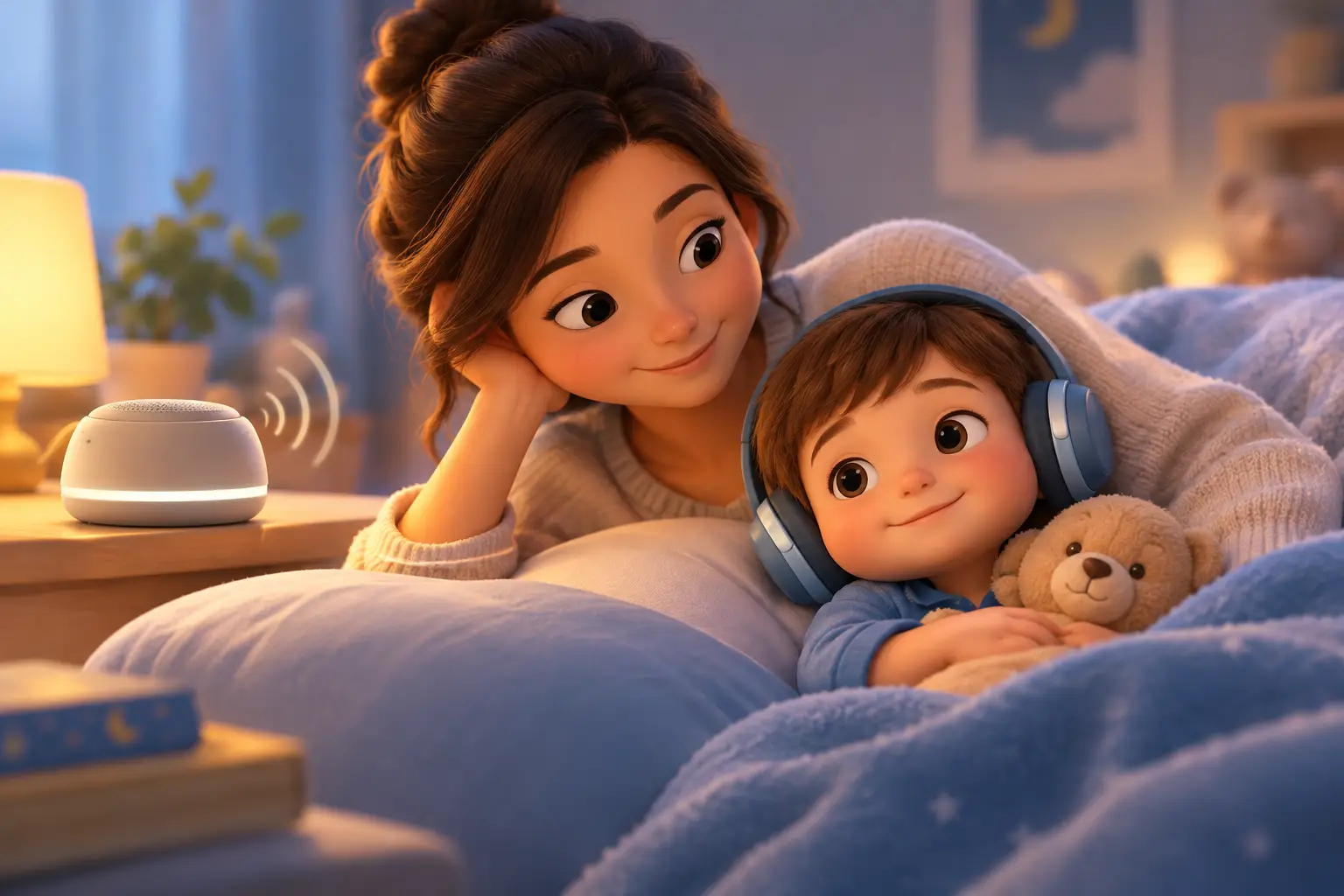
A child who keeps calling for one more glass of water may not need a better sleep sound. They may need a little help carrying the feelings that showed up after the lights went out. When parents consider audio stories versus white noise, the most helpful question is not which one is best for every child. It is what kind of comfort this child needs tonight.
Both can have a gentle place in a bedtime routine. White noise can soften distracting household sounds and make a room feel steady. A calm story can offer connection, familiar language, and a small way to name worries before sleep. The right choice often depends on your child’s age, temperament, and the reason bedtime feels hard.
Audio Stories Versus White Noise: The Key Difference
White noise is a consistent, nonverbal sound. It might be a soft fan-like hum, rainfall, or another even sound that stays mostly the same from beginning to end. Its job is simple: to create a predictable background and reduce the sharp noises that can pull a child back to alertness.
An audio story asks for a different kind of attention. Even a very gentle one has characters, feelings, a beginning, and a comforting ending. For children ages 3 to 6, that can be meaningful. Preschoolers are learning that feelings have names, that problems can be worked through, and that they are not alone when something feels big.
Neither option is a shortcut that makes every child fall asleep quickly. White noise may help a child who is bothered by a sibling moving around, a barking dog, or traffic outside. A story may help a child whose mind is busy with a dark hallway, a hard moment at school, or missing a parent after the day is over.
When White Noise May Be the Better Fit
White noise can be especially useful when the sleep environment itself is the problem. Some children notice every small sound. They may stir when a dishwasher clicks on or when someone walks down the hall. A steady, low background sound can make those changes less noticeable and give the room a dependable rhythm.
It can also be a good choice for a child who becomes more alert when listening to words. Some children want to know what happens next, even in the softest story. If your child asks questions, giggles, repeats favorite lines, or seems to stay awake to follow the plot, a simple sound may be more settling at the very end of the routine.
Keep the volume low and place the sound source away from your child’s bed. The goal is a quiet cushion around sleep, not a sound that fills the room or competes with rest. If you use white noise regularly, it can become a familiar cue: pajamas, toothbrush, cuddles, then the same gentle sound.
When Audio Stories Can Offer More Comfort
A peaceful story can do something white noise cannot: it can meet a child in the world of imagination and emotion. When a character feels nervous, makes a mistake, misses a friend, or finds courage with a little help, a young listener can quietly recognize their own experience.
That recognition matters. Young children do not always say, “I am worried about tomorrow,” or “I felt left out today.” They may become clingy, resist bedtime, or suddenly need a parent to stay nearby. A story gives them safe words for feelings before they have all the words themselves.
The most restful bedtime stories tend to be short, slow, and emotionally secure. Look for warm voices, simple language, gentle pacing, and a clear sense that the character is cared for. Stories with loud surprises, complicated plots, or cliffhangers can be fun at another time of day, but they may make it harder for a tired child to settle.
At Cozy Pebble Stories, this is the heart of a gentle story: a child can spend a few quiet minutes beside a character who faces a manageable feeling, receives care, and finds a soft place to land.
Stories are not only for falling asleep
Audio stories can be especially helpful before sleep rather than during the entire night. Think of them as part of the bridge between a busy day and a quiet room. A child can listen while snuggling with a caregiver, then turn the story off once the familiar goodnight routine begins.
This creates space for a small conversation without pressure. You might say, “That little fox felt worried, too,” or “I wonder what helped the bear feel brave.” If your child only nods, that is okay. The story has already offered a safe opening.
How to Choose for Your Child Tonight
Start by noticing what seems to be keeping your child awake. If outside sounds or household noise are the issue, try white noise. If your child is talking about monsters, friendship trouble, or a moment that felt scary, a gentle audio story may offer the reassurance they are seeking.
It also helps to watch what happens after listening. A good bedtime support should leave your child calmer, not more energized. If stories lead to requests for another and another, move them earlier in the routine or choose a shorter recording. If white noise feels impersonal to a child who wants closeness, add a few minutes of cuddling, a familiar song, or a simple repeated goodnight phrase before you leave the room.
Consistency often matters more than finding a perfect sound. Children feel safer when bedtime has a shape they can recognize. For example, you might use an audio story after bath time, share one brief thought about the day, then switch to white noise when it is time to sleep. This approach gives your child emotional connection and a steady sleep cue without asking them to keep listening once they are drowsy.
Can You Use Both?
Yes. For many families, the question is not audio stories versus white noise as an either-or choice. The two can work together when they have different jobs.
A story can help a child slow down emotionally. White noise can help the room stay calm afterward. Try keeping the story separate from sleep itself: listen together in a cozy chair or while tucked into bed, say goodnight after it ends, and then use a low, consistent sound if your child benefits from it.
A timer can be useful for recorded stories, especially if your child falls asleep with headphones-free listening from a device across the room. Avoid leaving a phone or tablet within reach at bedtime. The warm connection of the story matters more than a screen, and a dark, simple sleep space helps protect the calm you have created.
Let Your Child’s Response Lead
There is no need to force a bedtime tool because it worked for another family. Some children settle beautifully with the sound of rain. Others need to hear that a small character was afraid, asked for help, and was still safe. A child’s needs may even change from week to week.
Offer comfort in a simple, predictable way, then give it time. The best bedtime support is the one that helps your child feel safe enough to rest - and reminds them, night after night, that big feelings can be held gently.