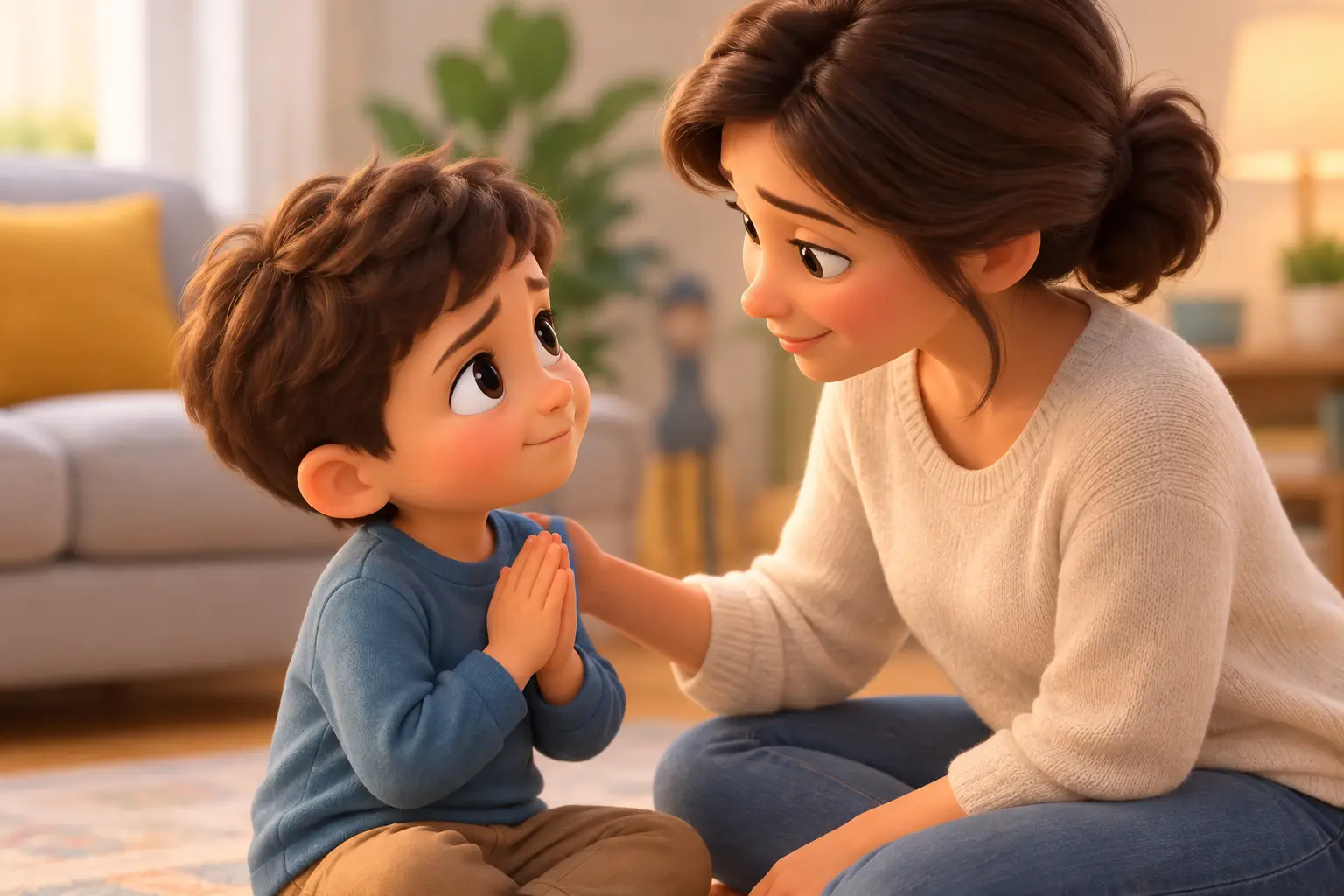
A spilled block tower. A grabbed crayon. A friend who is suddenly crying at the playroom door. These small childhood moments can bring big feelings for everyone nearby. This teaching apologies guide offers a gentler path than simply asking a child to say, “I’m sorry.” For children ages 3 to 6, an apology is not a magic phrase. It is a slow, caring lesson about noticing hurt, taking responsibility, and helping a relationship feel safe again.
Why “Say Sorry” Is Only the Beginning
When a child is upset, embarrassed, or still angry, being told to apologize right away can feel like one more demand. They may mumble the words without understanding them, refuse and become more overwhelmed, or say sorry simply to make the moment end. None of these responses mean a child is unkind. They usually mean their body and feelings need support first.
A meaningful apology has several little steps tucked inside it. A child needs to recognize what happened, understand that another person was affected, and believe they can help make things better. Those are growing skills. Preschoolers are still learning to see beyond their own strong feelings, especially when they are tired, hungry, excited, or disappointed.
The goal is not perfect manners on command. The goal is to help children learn, over many ordinary moments, that mistakes can be faced with honesty and care. A child who learns this feels safer admitting, “I did it,” and safer trusting that love and connection can return after a hard moment.
Start With Calm, Not the Apology
Before talking about repair, help your child come back to a calmer place. Get low, soften your voice, and name what you see: “You really wanted that truck. It was hard to wait.” This does not excuse grabbing or hitting. It helps your child feel understood enough to listen.
Then gently hold the boundary. You might say, “I won’t let you grab toys from Sam. Grabbing hurt Sam’s hand.” Both messages can be true at once: your child’s wish matters, and another child’s body matters too.
If your child is crying, yelling, or hiding their face, pause. A rushed apology rarely teaches much. Stay close if they want you nearby, offer a sip of water or a quiet corner, and return to the situation when their breathing and voice have settled. Sometimes that takes two minutes. Sometimes it takes longer. Repair can wait until a child is ready to participate.
Use simple words for the hurt
Young children do best with clear, concrete language. Instead of asking, “Do you understand why that was inappropriate?” try, “When the blocks fell, Maya looked sad. She worked hard on her tower.”
Avoid labeling your child as bad, mean, or naughty. Labels can make a mistake feel like a fixed part of who they are. Describe the action instead: “You threw the puzzle piece,” or “You said words that hurt.” This leaves room for the hopeful truth: “You can help make it better.”
A Teaching Apologies Guide: Four Gentle Parts
Children do not need a long speech. A short, repeatable pattern gives them something steady to practice. In time, these words can become familiar, like putting on a coat before going outside.
- Notice what happened. Help your child name the action: “I knocked down your tower,” or “I took your marker.” Keep it truthful and specific.
- Name the impact. Offer language for the other person’s experience: “That made you sad,” or “That hurt your arm.” A child may not be able to guess this alone yet, and that is okay.
- Offer an apology. “I’m sorry I knocked down your tower” is warmer and clearer than a quick, floating “Sorry.” If your child can only manage “sorry” at first, accept that small step and model the fuller words yourself.
- Try to repair. Ask, “What could help now?” Repair might mean helping rebuild the tower, bringing over a tissue, giving space, returning a toy, or choosing kinder words next time. The other child gets a say, too. They may not want a hug, and they do not have to forgive right away.
You can put the pattern into a few child-friendly sentences: “I did ____. It hurt you. I’m sorry. Can I help?” Not every moment needs every sentence. A child who has bumped someone by accident may only need to check, “Are you okay?” A child who repeatedly shoved after being told to stop may need a more careful repair and extra support practicing a different choice.
Let Children Choose a Safe Way to Repair
Some children can speak their apology easily. Others need time, a whisper in a caregiver’s ear, or a drawing they can hand to a friend. For a shy or deeply sensitive child, forcing eye contact or a public apology can add shame without building empathy.
You can offer choices while keeping the expectation of repair: “Would you like to tell Leo you’re sorry, draw him a picture, or help me rebuild his road?” Choices give a child a little control, but they should not erase the responsibility to address the harm.
A repair should also fit the moment. If a child spills another child’s snack, helping clean up is meaningful. If they say, “You can’t play,” they may practice a kinder invitation later. Buying a treat or giving a big gift is usually less helpful than a simple, connected action. Children learn that repairing relationships is about care, not paying their way out of a mistake.
Practice When Nobody Is Hurt
The easiest time to teach an apology is not in the middle of tears. Use stuffed animals, dolls, or favorite story characters during a calm afternoon. Let Bear grab Bunny’s paintbrush. Then wonder aloud: “Oh, Bunny looks upset. What happened? What could Bear do now?”
Keep it playful and brief. Your child might suggest a silly repair, such as giving Bunny ten cookies. Welcome the idea, then gently bring it back to connection: “Bunny may like a cookie. First, should Bear give the paintbrush back and check if Bunny is okay?”
Role-play is especially helpful for common struggles: waiting for a turn, using gentle hands, knocking something over, or shouting when disappointed. Practice the words your child can use instead: “Can I have a turn when you’re done?” “I’m mad. I need help.” “I didn’t mean to bump you.” Rehearsing these phrases gives a child something to reach for when feelings grow big.
Let Your Child See You Repair, Too
Children notice how adults handle mistakes. If you speak sharply during a rushed morning, you can come back and say, “I used a loud voice. That felt scary, and I’m sorry. Next time I will take a breath and use a calmer voice.”
This is not about asking a child to take care of your feelings. It is about showing that grown-ups make mistakes, own them, and work to do better. When appropriate, add a repair: “Would it help if we had a quiet cuddle before we leave?” Your child learns that apologies are not a performance for little people. They are part of family life.
When a Child Will Not Apologize
A refusal can feel awkward, especially when another family is waiting. Take a breath. You can protect the other child and model accountability without turning the moment into a struggle.
Try saying, “You’re not ready to use apology words yet. I will help make this safe. We need to give the truck back, and we can check on Ava.” Then speak directly to the hurt child: “I’m sorry that happened. Ava is getting help learning gentle hands.”
Later, when your child is calm, return to it with curiosity. “What made saying sorry feel hard?” They may be angry, worried their friend will stay mad, or simply unsure what to say. Listen before teaching. A child who feels heard is more likely to try again.
If the same behavior happens often, look beneath it. Your child may need more help with transitions, sharing, sensory overload, sleep, or finding words for frustration. An apology matters, but prevention matters too. Supporting the need underneath can reduce the number of painful moments that require repair.
A warm apology is a skill children grow into, one small moment at a time. When we make room for calm, honesty, and a caring next step, we teach something deeper than polite words: even after a mistake, there is a way back to each other.