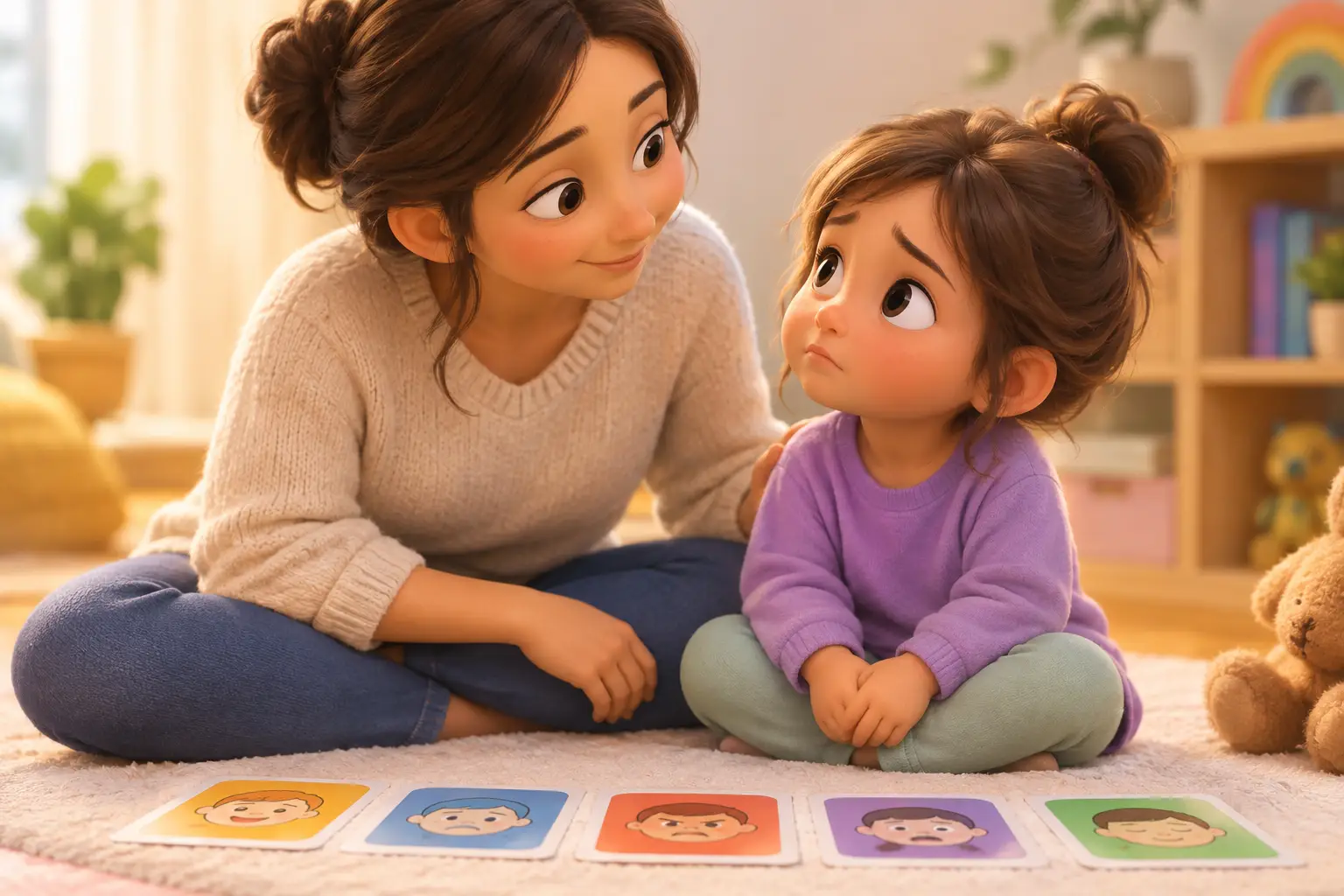
A block tower falls just before breakfast, and suddenly your child is crying as though the whole morning has gone wrong. This is where examples of preschool emotion coaching can be especially helpful. You do not need a perfect script or a quick fix. A few calm, kind words can help a young child feel seen while they learn that feelings can be big without being scary.
Emotion coaching is the practice of noticing a child’s feeling, putting gentle language around it, accepting the feeling, and guiding the next safe step. For preschoolers, that often means fewer words, a calm voice, and plenty of patience. Their brains are still learning how to pause, explain, and recover. Your steady presence does much of the teaching.
What emotion coaching sounds like with preschoolers
A child does not need to be talked out of a feeling. They need help moving through it. Saying, “You’re fine,” may come from love, but it can leave a child alone with a feeling that does not feel fine at all. Instead, try to name what you see: “You look disappointed. You worked hard on that tower.”
This does not mean every wish is granted or every behavior is allowed. Feelings are always welcome; hurting, throwing, or yelling at someone is not. Emotion coaching holds both truths warmly: “You are very angry that it is time to leave. I will not let you hit. I’m right here while we get our shoes on.”
The goal is not to make tears disappear. It is to help your child build a small bridge from a hard moment to a safer, steadier one.
7 gentle examples of preschool emotion coaching
1. When a child melts down after a small disappointment
Your child wanted the blue cup, but it is in the dishwasher. Their face crumples, and they shove the red cup away.
You might say, “You really wanted the blue cup. It is hard when something you were expecting is not available.” Pause for a moment. Then offer a simple choice: “Would you like the red cup or the green cup today?”
The choice will not always stop the tears, and that is okay. You have named the disappointment without treating it as silly. Over time, your child learns that disappointments hurt, but they can be carried.
2. When frustration turns into throwing
A puzzle piece will not fit. Your child throws it across the room and yells.
Get close and keep your voice low: “You are frustrated. That piece was not going where you wanted it to go.” Then set the boundary clearly: “Puzzles are not for throwing. I won’t let you throw the pieces.”
After the first wave has softened, show the next step. “Let’s put the piece beside the puzzle and take one slow breath. Do you want help turning it, or would you like to try another piece?” Helping is not the same as taking over. Sometimes a child needs a brief reset before they can try again.
3. When a child is afraid at bedtime
A preschooler may call for you again and again, worried about shadows, noises, or being alone. Telling them there is nothing to fear may be factually true, but it does not always calm the fear inside their body.
Try: “That shadow looks spooky to you. Nighttime can feel different when the room is quiet.” You can offer comfort while keeping the routine predictable: “Let’s check the room together once, tuck in your stuffed bunny, and choose our cozy words: ‘I am safe. My grown-up is near. Morning will come.’”
A familiar picture book, a gentle song, or a repeated goodnight phrase can become a comforting cue. The aim is reassurance, not a long search for every possible worry. If fears are frequent or growing stronger, extra support from your child’s pediatrician can be a caring next step.
4. When two children want the same toy
Preschoolers are still learning that another child’s turn is not the end of their own. If your child grabs a truck from a sibling or friend, begin with the feeling before correcting the action: “You wanted that truck so much. Waiting feels hard.”
Then hold the limit: “I won’t let you grab it from Maya.” Stay nearby and offer language they can borrow: “You can say, ‘Can I have a turn when you are done?’” If the other child is willing, use a short timer or choose another truck together.
Do not expect a polished apology while your child is still upset. First help them settle. A repair can come later: returning the toy, checking whether their friend is okay, or trying the words again. That is how empathy becomes something a child practices, not just something they are told to feel.
5. When separation at drop-off feels impossible
At preschool or with a trusted caregiver, your child may cling tightly and cry when it is time to say goodbye. It can be tempting to slip away, especially when you are running late. A predictable, loving goodbye is usually kinder.
You might say, “You wish I could stay. Saying goodbye feels hard today.” Then name the plan simply: “Ms. Ana will help you with the play dough. I will come back after snack and outside play.” Offer a hug, repeat the same brief goodbye ritual, and leave when you say you will.
Long negotiations can make separation harder, but rushing away without a goodbye can weaken trust. Every child is different, so work with the teacher if distress lasts a long time or happens daily. Consistency matters more than making the goodbye completely tear-free.
6. When your child feels ashamed after a mistake
Milk spills. A drawing gets torn. Your child looks at you, waiting to see whether the mistake means they are in trouble.
Try a soft response: “Oh, the milk spilled. That can feel upsetting.” Then move toward repair: “Spills happen. We can clean it up together.” Give your child a small job, such as holding a towel or placing the torn drawing on the table for tape.
Avoid rushing to say, “It’s okay,” if your child is still sad about what happened. You can make room for the feeling and still show that mistakes are manageable. “You loved that drawing. You are sad it tore. Let’s see what we can mend.” This is a quiet lesson in resilience.
7. When anger shows up after a hard day
Some children hold themselves together away from home, then unravel the minute they walk through the door. They may cry over a snack, refuse a simple request, or snap at a sibling. Rather than assuming they are being difficult, consider whether they are tired, hungry, overstimulated, or carrying feelings they could not express earlier.
You might say, “Your body looks all worn out. You had a big day, and now everything feels extra hard.” Offer connection before questions: a snack, a cuddle, quiet coloring, or sitting close while you make dinner.
Later, when your child is calm, you can gently wonder together: “Was there a hard part of school today?” They may have a full story, a few words, or no answer at all. The invitation itself tells them home is a safe place for every feeling.
A simple rhythm to remember
When emotions rise, think: notice, name, limit, and guide. Notice what your child may be feeling. Name it in plain language. Set a calm limit if needed. Then guide one small next step, such as breathing, asking for help, taking space, repairing harm, or trying again.
Keep your sentences short when your child is flooded. “You’re mad. I’m here. I won’t let you hit.” Save explanations for later. A child who is sobbing or raging cannot take in a long lesson, even when the lesson is loving.
It also helps to practice feeling words during peaceful moments. While reading a story, you can wonder, “How do you think the little bear feels when no one picks him for the game?” When listening to a gentle song, notice whether the music sounds sleepy, hopeful, or brave. Stories give children a little emotional distance, making hard feelings easier to recognize before they are in the middle of one.
You will not respond perfectly every time. Some days you may feel rushed, tired, or overwhelmed by your child’s big emotions. If your voice gets sharp, repair matters: “I was frustrated, and I spoke too loudly. I’m sorry. Let’s try again.” Children learn as much from being lovingly reconnected with as they do from being calmly guided.
The next time your preschooler’s feelings fill the room, you do not have to make them smaller right away. Sit nearby, offer a few steady words, and let your child feel the comfort of being understood. That quiet moment can become a memory their growing heart carries forward.