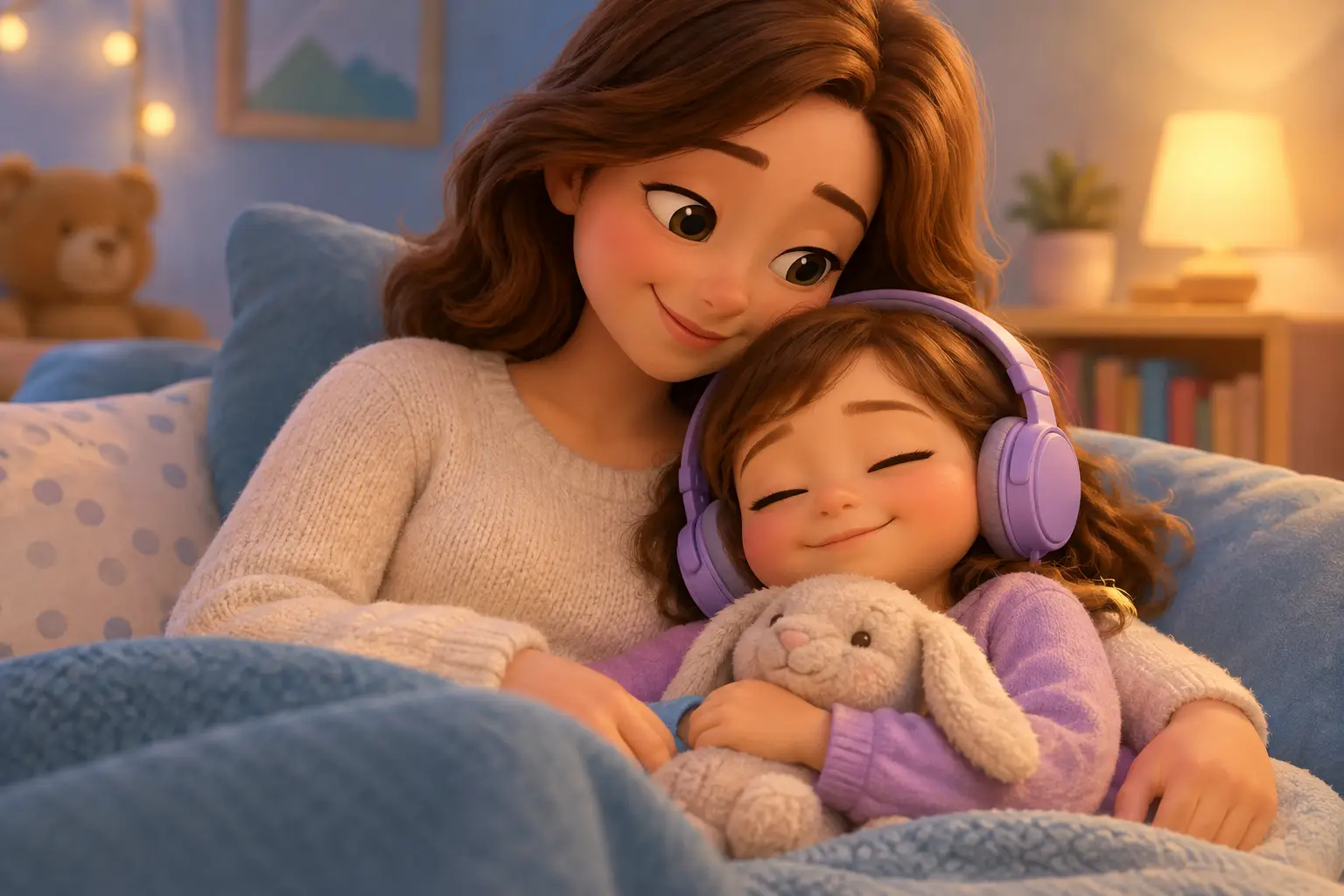
A song can reach a child before a long explanation can. When tears are close, a room feels too busy, or bedtime worries begin to grow, the top songs for sensitive kids offer something small but powerful: a familiar place to rest.
For children ages 3 to 6, the best songs are not always the quietest ones. They are predictable, kind, and easy to sing again. Their words make room for feelings without asking a child to rush past them. A favorite song can become a little ritual of connection: a parent nearby, a steady melody, and the comforting reminder that big feelings can be held.
What Makes a Song Feel Safe for a Sensitive Child?
Sensitive children often notice more than adults realize. A sudden key change, a booming chorus, a sad lyric, or even a hurried beat can feel like a lot. That does not mean they need only sleepy music. It means they may do best with songs that have a gentle pace, clear words, and a familiar shape.
Look for music with repetition and a warm emotional message. Songs about friendship, belonging, wonder, and everyday courage can help children put language to experiences they are still learning to understand. It also helps when the song leaves a little space. A child may want to hum, cuddle, sway, or simply listen quietly.
Every child is different, of course. One child may find a cheerful song reassuring, while another feels calmer with a soft lullaby. Preview new music when you can, especially if your child is easily startled by loud sounds or becomes worried by emotional lyrics.
12 Top Songs for Sensitive Kids
These gentle choices work well for quiet mornings, car rides, moments after a hard goodbye, or the wind-down before sleep. You do not need to play them all at once. A small group of familiar favorites often feels more comforting than a long, changing playlist.
- “Twinkle, Twinkle, Little Star”
Its slow melody and simple, repeating words make this a steady bedtime favorite. The images of stars and night can feel cozy when paired with a night-light, a cuddle, or a reminder that a grown-up is close by.
- “A Beautiful Day in the Neighborhood” by Fred Rogers
This song offers a gentle welcome exactly as a child is. Its message is simple and deeply reassuring: you belong here. It can be especially lovely after preschool or during a moment when your child needs to reconnect.
- “The Rainbow Connection” by Kermit
For imaginative children, this soft song honors wonder without becoming too busy. It gives daydreamers something beautiful to hold onto and invites peaceful conversation about wishes, rainbows, and what they hope for.
- “What a Wonderful World” by Louis Armstrong
A calm choice for noticing small goodnesses, this song can turn a walk or a quiet afternoon into a gentle game of observation. Point out the trees, clouds, colors, and friendly faces your child sees around them.
- “Three Little Birds” by Bob Marley
The repeated reassurance in this song can be comforting for children who worry. The original recording has a relaxed rhythm, though it may feel more lively than a lullaby for some children. Try it during the day rather than right before sleep.
- “Skidamarink”
This playful classic is full of affection and works beautifully as a family ritual. Add a hand on the heart, a hug, or your child’s name at the end. Repeating loving words can be especially grounding after a difficult moment.
- “The More We Get Together”
Friendship can feel exciting and confusing for young children. This familiar song gives a simple, hopeful picture of being together and caring for one another. It is a sweet choice before a playdate or after talking through a friendship bump.
- “You Are My Sunshine”
The first verse is warm, simple, and easy to sing softly. Because later verses can feel sad or confusing for preschoolers, many families choose to sing only the familiar first verse. That is a good reminder that you can shape songs to fit your child’s needs.
- “If You’re Happy and You Know It”
This song becomes much more useful when happiness is not the only feeling invited in. Try gentle new verses: “If you’re worried and you know it, take a breath,” or “If you’re angry and you know it, stomp your feet.” The goal is not to make a feeling disappear. It is to show that every feeling can have a safe way out.
- “Somewhere Over the Rainbow” by Israel Kamakawiwo’ole
With its soft ukulele and unhurried pace, this version can settle a busy room. It is especially fitting for quiet drawing, resting after a full day, or easing into a bedtime routine. If the lyrics bring up questions, let them be simple ones: “What do you think a rainbow place would be like?”
- “This Little Light of Mine”
A child who feels shy, uncertain, or left out may enjoy the quiet confidence in this song. Keep the experience low-pressure. Your child does not need to sing loudly or perform. A whisper, a hum, or a tiny finger light can be enough.
- “Hush Little Baby”
Many children respond to the rocking rhythm of a traditional lullaby. The promises in some versions may feel overly specific, so it is perfectly fine to make up your own comforting lines. Try, “Hush little one, you are safe tonight. I am right here, and we’ll be all right.”
Use Songs as Gentle Emotional Tools
The music matters, but the moment around it matters too. A song is most soothing when it is not used to shut a feeling down. If your child is crying, begin with connection: “That was hard. I’m here.” Then offer music as company, not a command. You might say, “Would you like our cozy song while we sit together?”
For worries, choose one short song and make it part of a repeatable routine. Play it while pajamas go on, while stuffed animals get tucked in, or while you take three slow breaths together. Familiarity helps children know what comes next, which can make a big feeling feel smaller.
For anger or frustration, a slightly more active song may help. Swaying, clapping softly, or stomping on a pillow can move energy through the body without shame. Then, once your child has settled, return to quieter music or a few peaceful minutes together.
Build a Small Playlist That Grows With Your Child
A sensitive child does not need endless choices. In fact, too many options can make listening feel less restful. Start with three to five songs: one for waking up, one for connection, one for big feelings, and one for bedtime. Let your child help choose, even if their choice surprises you.
Pay attention to what happens after each song. Do their shoulders soften? Do they ask to hear it again? Do they become more upset, energetic, or worried? There is no wrong response. You are simply learning their musical language.
At Cozy Pebble Stories, we believe gentle songs can become small companions in a child’s day. The right melody will not solve every hard moment, and it does not need to. Sometimes it is enough for a child to hear a familiar tune, feel a loving hand nearby, and remember that their tender heart has a safe place to be.