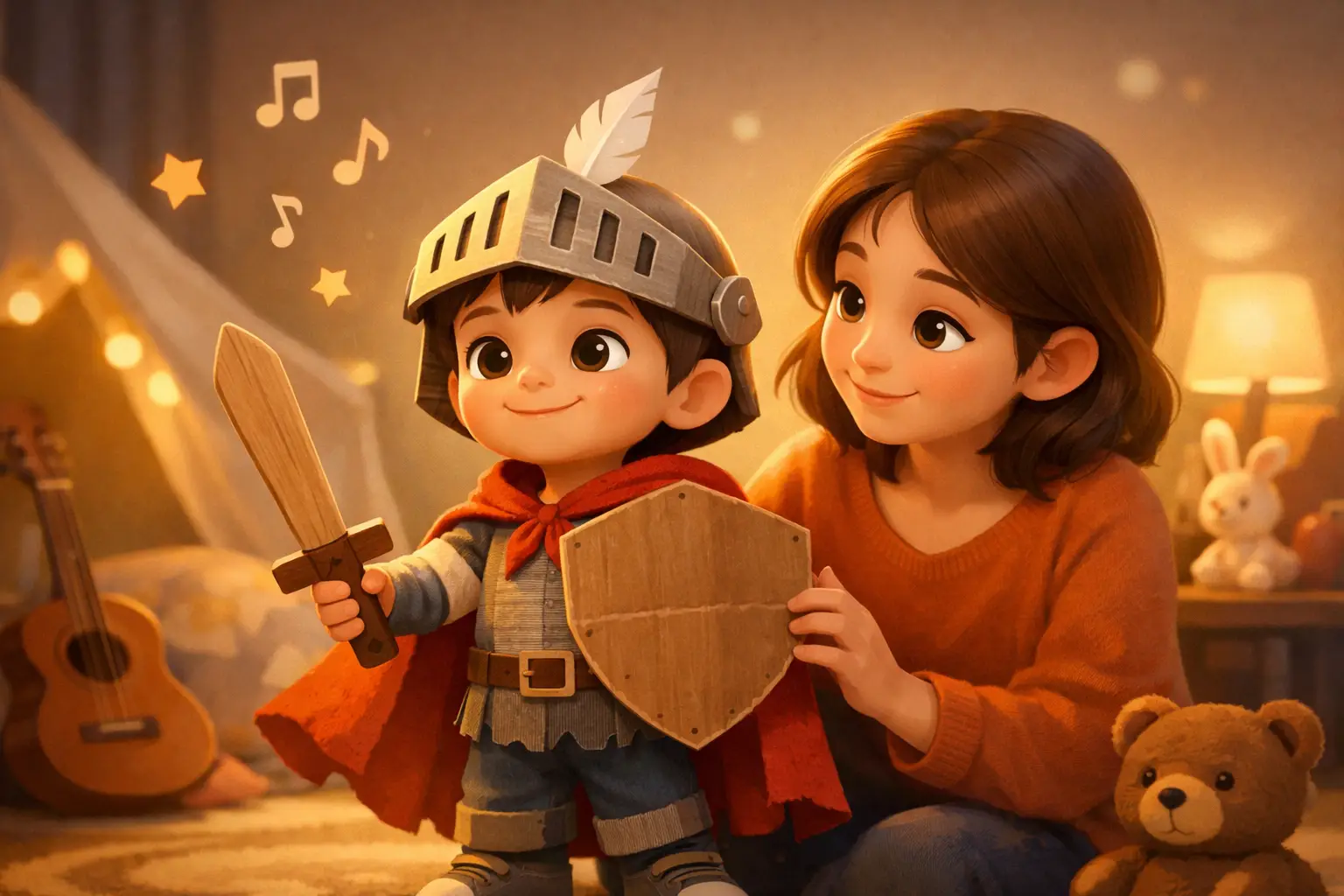
A child standing at the classroom door, climbing onto a new playground structure, or listening to thunder at bedtime may look small from the outside. Inside, though, the feeling can be very big. Gentle songs about being brave give children simple words for that moment: “I feel nervous, and I can still take one small step.”
For children ages 3 to 6, bravery songs work best when they do not pretend fear has disappeared. The most comforting songs make room for wobbly knees, caring friends, and trying again. They remind children that being brave can mean asking for help, taking a breath, or holding a grown-up’s hand.
What bravery sounds like to a young child
Adults often picture bravery as something bold and dramatic. Preschoolers usually meet it in quieter places: saying hello, going to the dentist, waiting for their turn, sleeping in their own room, or trying something that did not work yesterday.
That is why a helpful bravery song is not always a song with the word “brave” in its title. A song about friendship, curiosity, perseverance, or feeling safe can carry the same message. The best choice depends on what your child is facing. A child worried about a first swim lesson may need a cheerful song about trying. A child who misses a parent at preschool may need a softer song about being connected, even when someone is not right beside them.
12 songs about being brave to share together
These songs offer different shades of courage. A few are lively and confidence-building; others are quieter and better for a snuggle, a car ride, or a calm moment before a new experience. As always, preview a song first. The right version, volume, and setting matter just as much as the message.
- “Try Everything” from Zootopia is a bright choice for children who are discouraged after a mistake. Its central idea is wonderfully simple: falling down does not mean a child has failed. They can get up, learn, and try again. It can be especially helpful before a new activity where perfection is not the goal.
- “How Far I’ll Go” from Moana speaks to the pull between wanting to stay where things feel safe and feeling curious about what comes next. Some of its story themes are bigger than preschool life, but children often connect with the gentle wish to explore. Talk afterward about one new thing your child is ready to try.
- “The Bare Necessities” from The Jungle Book brings a relaxed kind of courage. It is not about pushing through fear. Instead, it helps children slow down and remember that they can be safe, cared for, and present in the moment. This is a lovely pick for children who become overwhelmed by too much anticipation.
- “You’ve Got a Friend in Me” from Toy Story reminds little listeners that courage grows with connection. A child may not yet believe, “I can do this alone,” and they do not have to. The message can become, “I can do this because someone kind is with me, or cheering for me.”
- “Count on Me” by Bruno Mars is a warm friendship song that helps children understand both sides of support. They can ask for help when they are scared, and they can offer comfort when a friend feels scared. Its steady, friendly feeling makes it useful for conversations about preschool friendships.
- “Three Little Birds” by Bob Marley has a soothing rhythm that many families enjoy during anxious moments. Its reassurance can help a child settle, especially when paired with a grown-up’s calm presence. If your child needs their worry to be fully heard first, name it before playing the song: “Thunder sounds loud. I am here with you.”
- “A Million Dreams” from The Greatest Showman can invite imagination and hope. The song is most useful when you bring its message down to child size. Rather than asking about a million dreams, ask, “What would you like to learn or make someday?” A brave dream can be as small as riding a scooter without help.
- “Go the Distance” from Hercules is a strong perseverance song for children who enjoy a bigger, more triumphant sound. It may fit best for a daytime confidence boost rather than bedtime, since its energy can feel exciting. Use it to celebrate effort after a child has kept going through something hard.
- “Brave” by Sara Bareilles offers an encouraging message about using your voice. For young children, you can focus on everyday examples: telling a teacher they need help, saying “stop” when play feels too rough, or sharing an idea during circle time. The song’s adult pop style may suit family dance time more than a quiet wind-down.
- “The Climb” by Miley Cyrus centers on continuing even when the path feels difficult. Its lyrics can open a gentle conversation about practice. Children do not have to love the tricky part of learning, but they can notice the little ways they are growing.
- “Rainbow” by Kacey Musgraves is a tender option for a child who has had a hard day. Its message is less about charging forward and more about remembering that difficult feelings can pass. This can be a beautiful song to play after tears, disappointment, or a conflict with a friend.
- A simple original “I Can Try” song can be the most powerful choice of all. Cozy Pebble Stories is built around the idea that repeatable, gentle words help children carry emotional lessons into real life. A short refrain such as “I can take a breath, I can try, I can ask for help” becomes easy for a child to remember when they need it most.
How to use a brave song when the moment is real
A playlist is not a magic fix for fear, and children do not need to be sung out of their feelings. Begin by noticing what is true: “You feel unsure about going into the party.” Then offer support: “We can walk in together.” A song can come next, as a small companion rather than a distraction.
For a new or challenging event, play one familiar song before leaving home. Keep the routine simple. You might cuddle for a minute, choose the song, take three slow breaths, and decide on one small brave step. At the dentist, that step may be sitting in the waiting room. At preschool, it may be hanging up a backpack. Small steps count.
Afterward, return to the song and name what happened. Instead of saying, “See? There was nothing to worry about,” try, “You felt worried, and you went in anyway. I saw you hold my hand and take a breath.” This helps children understand that bravery and fear can live in the same moment.
Build a playlist that feels safe, not pushy
For this age group, a short playlist is usually more helpful than a long one. Four or five familiar songs can become an emotional routine, while too many choices may feel overstimulating. Include a mix: one song for trying, one for friendship, one for calm, and one that makes your child want to move.
Pay attention to your child’s response. Some children feel stronger with a big chorus; others need a quiet melody and a parent nearby. A song that works beautifully for one child may feel too intense, too fast, or too grown-up for another. There is no need to force a favorite.
You can also make the words personal. Pause after a line and ask, “What is your brave thing today?” Keep the answer small and pressure-free. Maybe it is tasting a new food. Maybe it is telling Grandma goodbye without tears. Maybe it is simply saying, “I am scared,” so someone can help.
Bravery does not have to sound loud. Sometimes it sounds like a soft voice saying, “Stay with me,” then taking one more little step.