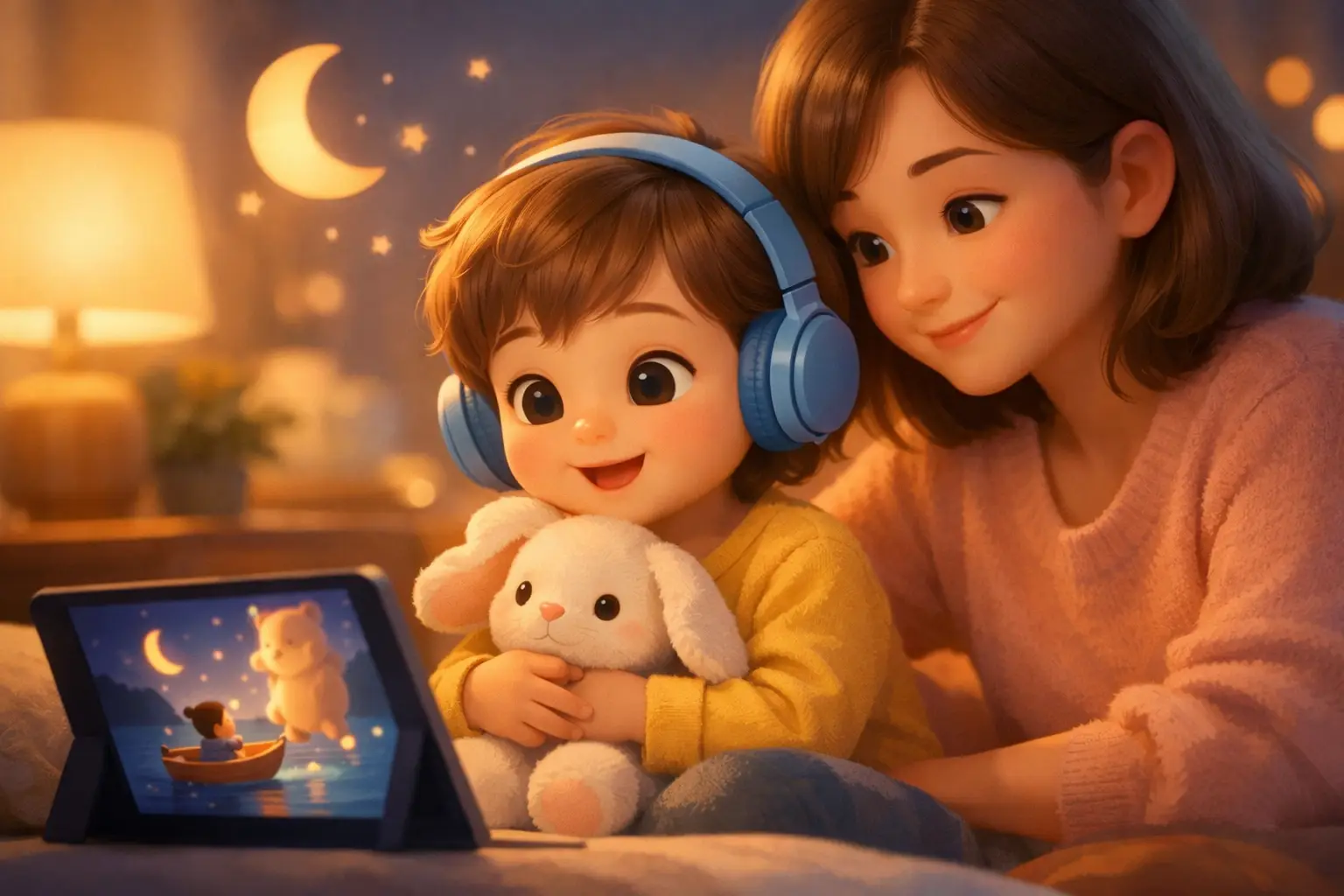
The hard part is not finding kids' videos. The hard part is finding ones that leave your child softer, steadier, and more settled than they were before. That is why calm kids YouTube stories matter so much for families with young children. When a story is gentle in pace, kind in tone, and simple enough to follow, it can do more than fill time. It can help a child feel safe.
For children ages 3 to 6, stories often become part of how they understand their own inner world. A character who feels shy at preschool, nervous at bedtime, or sad after a mistake gives a child something very useful - a mirror. Instead of being rushed past a feeling, they get to sit with it in a way that feels manageable. For many parents, that is the difference between screen time that drains the room and screen time that brings everyone back down to earth.
What makes calm kids YouTube stories different
Not every quiet-looking video is truly calming. Some move quickly, switch scenes often, or use bright sound effects that keep a child's body alert even while the voice sounds sweet. Truly calming stories tend to be slower in a very intentional way. They allow pauses. They use music gently, if at all. They keep the plot simple enough that a preschooler does not have to work hard just to keep up.
The emotional tone matters just as much as the visuals. A calm story does not need to avoid every hard feeling. In fact, it usually works better when a character faces something real - fear of the dark, friendship worries, frustration, missing a parent - and then receives comfort, support, or a small path forward. Children often feel most relaxed when a story says, in effect, you can have big feelings and still be okay.
There is also a difference between low-energy content and nourishing content. A video can be slow and still feel empty. The best story videos offer children something to hold onto: a reassuring phrase, a warm character, a predictable rhythm, or a gentle lesson they can remember later. That is what helps a story linger after the screen is off.
Why young children respond so well to gentle story videos
Preschoolers and early elementary kids are still learning how to name feelings, wait through discomfort, and make sense of everyday worries. They do not always need a big explanation. Often, they need repetition, warmth, and a story that brings a problem down to child size.
That is one reason story-based videos can be so helpful. A child who resists talking about their own fears may talk easily about a rabbit who feels nervous before bed or a bear who worries after making a mistake. The story creates enough distance to feel safe, but not so much distance that the lesson disappears. It lets children practice emotional understanding without feeling put on the spot.
The format can also support routine. Many families use calm stories during quiet time, after preschool, or as part of the bedtime wind-down. That predictability helps. When children know what kind of experience is coming, their bodies often begin settling before the story even starts. The screen itself is not magically soothing. The combination of familiar pacing, emotional safety, and routine is what makes the difference.
Still, it depends on the child. Some children relax best with narration only. Others need soft illustrations and expressive characters to stay engaged. Sensitive children may be soothed by a story that names feelings directly, while other children prefer lighter plots with emotional lessons tucked inside. Calm is not one-size-fits-all.
What parents should look for in calm kids YouTube stories
A good starting point is pacing. If a story feels rushed to you, it will probably feel rushed to your child too. Gentle storytelling gives children enough time to listen, look, and absorb. It does not constantly push for excitement.
It also helps to notice how the story handles conflict. Young children do not need content with no problems at all. They benefit from seeing manageable problems resolved with kindness, patience, repair, or courage. The key is proportion. If the tension rises too high, or if the story leans on fear to keep attention, it may not support the calm experience you were hoping for.
Language is another clue. Reassuring narration tends to use clear, simple words and a steady tone. Repetition can be especially comforting for ages 3 to 6 because it helps children predict what comes next. Familiar lines like "It's okay to feel worried" or "We can try again together" become emotional anchors over time.
Visual style matters more than many adults expect. Soft colors, uncluttered scenes, and character expressions that are easy to read can all help reduce cognitive overload. Watercolor-inspired visuals, hand-drawn textures, and quiet movement often feel especially welcoming because they leave room for the child rather than demanding constant attention. That is part of why brands like Cozy Pebble Stories focus so carefully on the overall emotional feel, not only the plot.
When story videos help most
One of the best uses for calm story content is the transition between parts of the day. The after-school or post-daycare stretch can be especially tender. Children are tired, full of feelings, and sometimes not ready to talk yet. A gentle story can offer a soft landing before dinner, bath, or play.
Bedtime is another natural fit, though not every YouTube story works well before sleep. Some stories are emotionally rich but still a little too stimulating late at night. For bedtime, the sweetest choices are usually the simplest ones: slower narration, lower volume, few surprises, and endings that feel safe and complete.
Calm kids YouTube stories can also support children after hard moments. Maybe there was a tough goodbye in the morning, a conflict with a sibling, or a meltdown over something small that felt huge. A carefully chosen story can help a child reset without asking them to process everything verbally right away. It should not replace connection, of course. But it can be a gentle bridge back to connection.
What calm stories can teach without feeling like a lesson
The most helpful stories for young children rarely sound like lectures. They teach by showing. A character takes a breath, asks for help, apologizes, waits, tries again, or discovers that being brave does not mean being unafraid. These are small moments, but they stay with children because they are tied to emotion.
That is where calm storytelling becomes more than a quiet activity. It becomes practice. Children learn that mistakes can be repaired. They learn that friendship includes misunderstandings. They learn that fear gets smaller when someone stays close. They learn that feelings move.
For parents, this can make later conversations easier. Instead of starting from scratch, you can return to the story. "Remember when the little fox felt worried too?" That shared reference point is gentle, and it often works better than direct correction or pressure. The story does some of the heavy lifting.
There are trade-offs, of course. Very subtle stories may not hold every child's attention, especially if they are already used to fast-cut entertainment. That does not mean calm content is the wrong fit. It may just mean it takes time for a child to adjust to a slower rhythm. In many homes, the shift works best when adults present the story as part of a cozy routine rather than as a competing form of excitement.
Choosing stories that feel safe for your family
Parents know their child best, and that matters more than any trend. A story that one child finds comforting may feel boring or even unsettling to another. It is worth previewing videos when you can, not from a place of perfection, but from a place of care.
Notice your child's body after the story ends. Do they seem quieter, more connected, and easier to guide into the next part of the day? Or do they seem jumpy, cranky, or stuck on the screen? The answer will tell you more than the thumbnail ever could.
Gentle media works best when it supports what children need most: emotional safety, simple language, and the feeling that hard moments can be met with warmth. A calm story will not solve every bedtime struggle or every big feeling. But sometimes it gives a child just enough comfort to exhale, lean in, and believe that things can feel okay again.
If you are choosing screen time for a young child, that is a meaningful standard to keep. Not just whether a video is quiet, but whether it helps your child feel held.