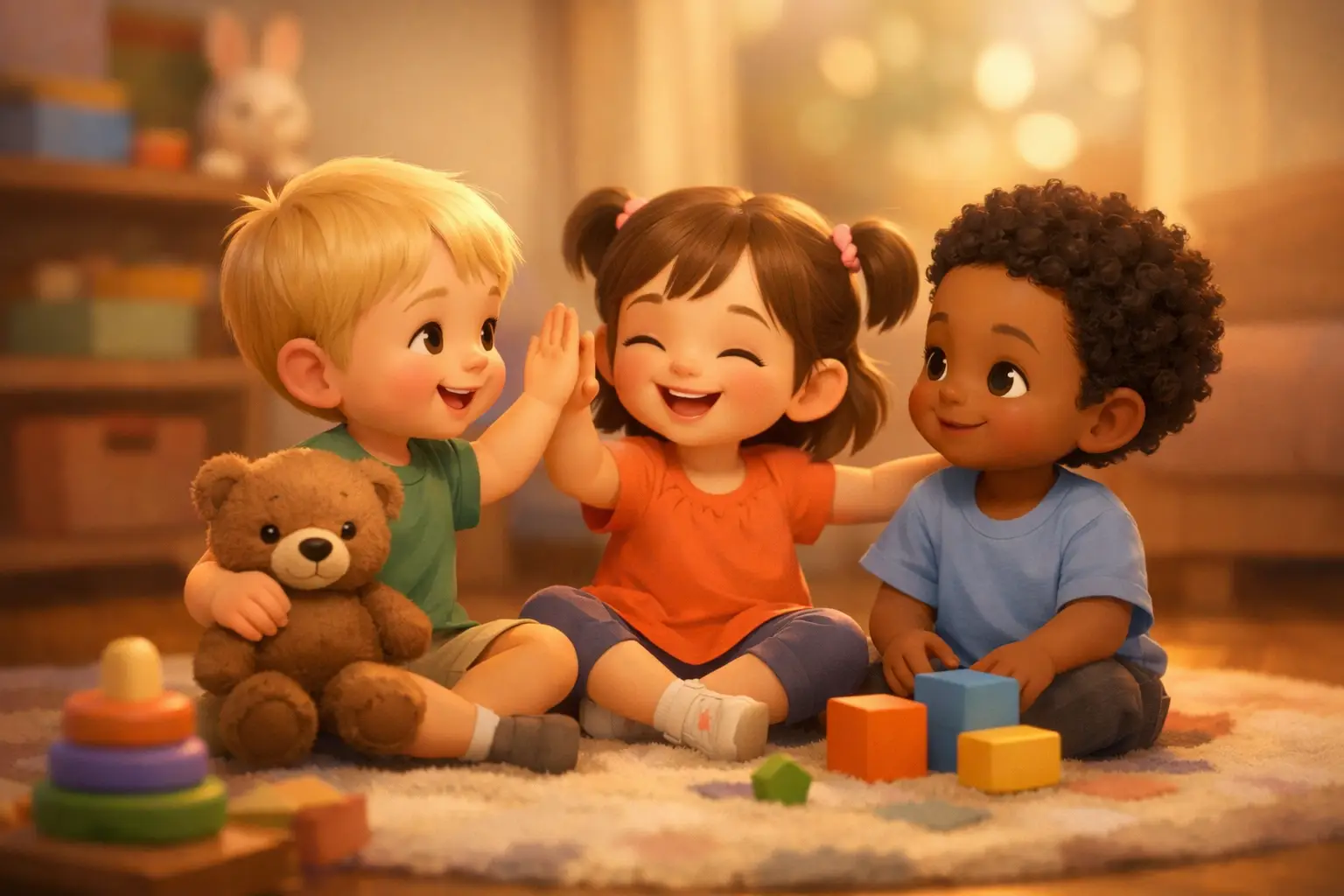
A preschooler offering half a cracker, saving a seat on the rug, or calling out a friend’s name across the playground may seem like a small moment. But those moments hold a great deal of meaning. If you have ever wondered why are friendships important for preschoolers, the short answer is this: friendship helps young children feel safe, seen, and connected while they learn how to be with other people.
At this age, friendship does not usually look polished or steady. Preschoolers may adore a friend one minute and argue over a toy the next. That does not mean the friendship is shallow. It means they are practicing. In those early back-and-forth moments, children begin building skills that support emotional health, communication, and confidence for years to come.
Why are friendships important for preschoolers emotionally?
For young children, the world can feel big and unpredictable. A familiar friend can make a classroom feel warmer, a birthday party feel less overwhelming, and a new activity feel easier to try. Friendship gives preschoolers a sense of belonging, and belonging is deeply calming.
When a child hears, "Come play with me," they receive a simple but powerful message: you are wanted here. That feeling matters. It helps children grow trust in themselves and in other people. It can also soften some of the daily bumps of early childhood, like separating from a parent in the morning or joining a group activity.
Friendships also help children name and manage feelings. A preschooler may notice that their friend looks sad when left out, excited when it is their turn, or frustrated when blocks fall down. These little observations are the early roots of empathy. Children begin to understand that other people have feelings too, and that their own actions can comfort, hurt, include, or repair.
This does not happen all at once. Some children are naturally social, while others are slower to warm up. Some are talkative, and some connect quietly through parallel play or shared routines. Friendship can still be meaningful in all of those forms.
Friendship helps preschoolers learn social rules without a lecture
Preschoolers are still figuring out how relationships work. They are learning when to wait, how to take turns, what to do when someone says no, and how to rejoin after a disagreement. Adults teach these lessons directly, of course, but friendship gives children a living place to practice them.
A child who wants the same shovel as a friend has to face a real social problem. A child who accidentally knocks over a friend’s tower has a real chance to notice the other child’s reaction and try to make it better. These are not just manners lessons. They are early experiences with cooperation, repair, and trust.
This is one reason pretend play with peers can be so rich. In a game of house, store, or puppies, children negotiate roles, share ideas, and stretch their imaginations together. They learn that play works better when everyone has a place in it. They also learn that another child may have a different idea, and that both ideas can sometimes fit.
That kind of learning is slow, uneven, and very normal. Preschool friendships often involve tears, big feelings, and repeated reminders. The messiness is part of the process.
Why friendships matter for language and learning
Friendship is not only about feelings. It also supports learning in very practical ways. Young children talk differently with peers than they do with adults. With friends, they experiment. They ask questions, repeat funny phrases, invent rules, and narrate what they are doing. That kind of playful language builds communication skills.
Children also learn by watching one another. A preschooler may try a new puzzle because a friend is doing it. They may join a song more confidently after hearing another child sing. They may attempt a harder climbing structure because someone they trust is already up there smiling.
In this way, friendship can gently widen a child’s world. It invites curiosity and courage. For some children, especially those who are cautious in new settings, a friend becomes a bridge to participation.
It is worth saying that not every preschooler needs a large group. One steady connection can be enough to support growth. Some children are happiest with one special friend, while others move easily among many playmates. What matters more than popularity is whether a child has chances to feel connected and practice healthy social exchange.
Why are friendships important for preschoolers during hard moments?
Hard moments are part of preschool life. A child may feel left out, lose a game, miss a parent, or struggle with transitions. Friendship does not erase those experiences, but it can make them feel smaller and more manageable.
A caring peer can offer comfort in very child-sized ways: sitting nearby, sharing a toy, holding hands in line, or saying, "You can play with me." These gestures may look simple to adults, yet they can carry deep reassurance. Children begin to learn that support does not only come from grown-ups. Safe connection can exist with peers too.
That lesson helps build resilience. A resilient child is not a child who never gets upset. It is a child who slowly learns, "I can have a hard feeling, and I can still find my way back." Friendship can be part of that return.
There are trade-offs, of course. Close friendships can also bring disappointment. Preschoolers may feel jealous, possessive, or confused when a friend plays with someone else. Those feelings are real and often tender. But with gentle guidance, they become opportunities to learn flexibility, boundaries, and repair.
What if a preschooler struggles to make friends?
This is a common worry, and it deserves a soft answer. Not every child makes friends quickly. Some need more time to observe. Some are overwhelmed by noise or group settings. Some are still developing the language or impulse control that makes play easier.
A child who is not forming fast friendships is not failing. They may simply need support that matches who they are. Often, the most helpful approach is to focus less on getting a child to be outgoing and more on helping them feel secure.
That might mean arranging shorter playdates with one calm child instead of expecting easy success in a crowded room. It might mean practicing simple phrases such as "Can I play too?" or "Do you want to build with me?" It might mean noticing the child they watch from across the room and gently helping them join in.
Adults can also model friendship in everyday language. You might say, "Mia looks sad. I wonder if she needs space or a kind word," or "You and Leo both want the truck. Let’s find a way to solve it together." These small moments help children connect actions with feelings.
Stories and songs can help too, especially for children who learn best through repetition and imagination. Gentle, emotionally clear media can give preschoolers words for friendship, conflict, apology, and belonging before they need them in real life. That is part of why calm, caring storytelling matters so much in the early years.
How parents can support healthy preschool friendships
The goal is not to manage every interaction. It is to create conditions where friendship can grow. Children do best when adults stay nearby, notice patterns, and offer support without taking over too quickly.
It helps to keep expectations realistic. Preschool friendship is often sincere but changeable. "Best friends" can shift from week to week. Arguments are common. So are reunions five minutes later. Rather than looking for perfect harmony, look for signs of growth: shared joy, increasing empathy, more flexible play, and small efforts to repair after conflict.
It also helps to protect unhurried play. Friendships deepen when children have enough time to settle into pretend games, solve little disagreements, and enjoy one another without constant rushing. Overscheduled days can make that harder.
Most of all, children benefit when the adults around them treat friendship as something worth tending. When you speak kindly about others, make space for connection, and respond gently to social struggles, you show your child that relationships are important and safe to practice.
At Cozy Pebble Stories, we believe children grow best in the presence of warmth, repetition, and gentle guidance. Friendship fits beautifully into that picture. It is one of the quiet ways children learn that feelings can be shared, mistakes can be repaired, and the world feels softer when someone meets you in it.
If your preschooler is learning how to make a friend, keep going gently. A shared laugh over blocks, a shy wave, a hand offered at the right moment - these small beginnings are doing bigger work than they seem.