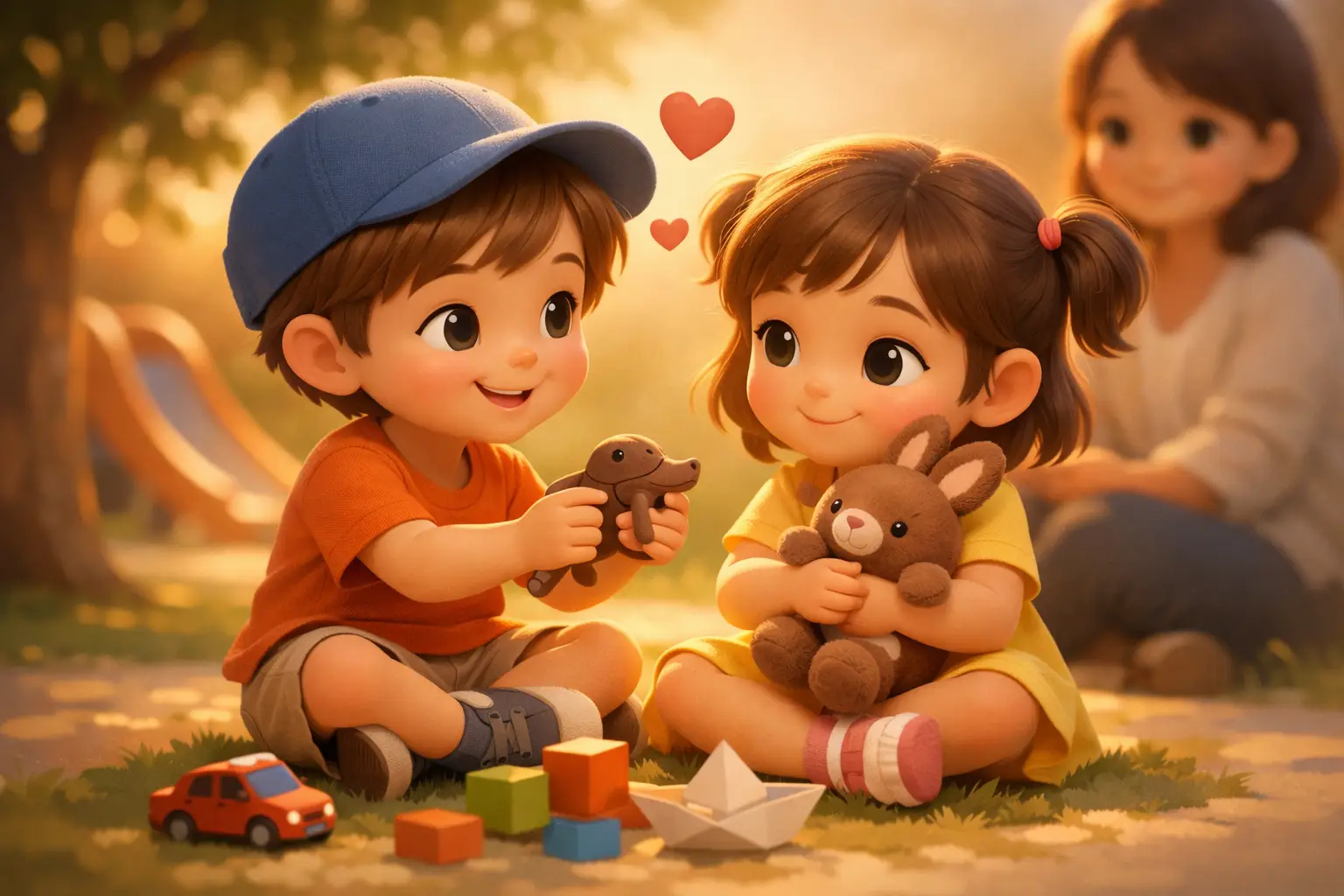
A child comes home from preschool and says, "Mia is my best friend." The next day, that same child says, "Mia is not my friend anymore." For parents, that quick change can feel confusing. But if you have ever wondered what is a friendship for kids, the answer is often much simpler, softer, and more changeable than adult friendship.
For young children, friendship usually begins with comfort, play, and connection. A friend is often the child who sits nearby at snack time, shares the blocks, giggles at the same silly game, or offers a hand when something feels hard. At ages 3 to 6, friendship is not usually built on deep loyalty or long conversations. It grows through small, repeated moments that help a child feel seen, safe, and happy.
What is a friendship for kids, really?
In early childhood, friendship is less about labels and more about experience. A friend is someone a child enjoys being with. That may sound simple, but it carries a lot of emotional meaning. When a young child feels welcomed into play, listened to, or included in a game, they begin learning one of life’s biggest lessons: relationships can feel good.
At this age, children are still learning how to take turns, read social cues, and manage disappointment. So friendship may look uneven at times. One child may want to play chase while the other wants to build a tower. One may grab a toy and then feel sorry a few minutes later. That does not always mean the friendship is unhealthy. It often means both children are still practicing how to be with another person.
Friendship for kids is also tied closely to routine. Young children feel secure when they know what to expect. Seeing the same classmate every day, hearing the same hello song, or building the same pretend bakery together can strengthen a sense of closeness. Repetition matters. It helps friendship feel familiar, and familiar often feels safe.
How young children understand friendship
Adults often think of friendship in terms of trust, support, shared values, and mutual effort. Young children are only beginning to grow those skills. Their understanding of friendship is more immediate.
A preschooler may define a friend as someone who plays with me. A kindergartener might add someone who is nice to me. Those early definitions are not shallow. They are developmentally right. Before children can understand more layered ideas like compromise or emotional reciprocity, they first need to feel what simple connection is like.
This is one reason young children may call many people their friend. They are not being careless with the word. They are practicing belonging. If another child smiles, joins in, or shares a moment of fun, that can feel like friendship.
It is also why friendship troubles can feel so big to little kids. If a classmate says, "You can’t play," a child may not hear that as one hard moment. They may hear it as, "I do not belong." Their reaction may seem larger than the event, but their feelings are real.
What healthy friendship looks like in ages 3 to 6
Healthy friendship at this age does not mean perfect behavior. It means there is enough kindness, repair, and shared joy for the relationship to feel safe most of the time.
A healthy friendship may look like two children taking turns, even if they still need reminders. It may look like one child saving a spot at the table. It may sound like, "You can be the doctor and I’ll be the puppy." It can even include small conflicts, followed by simple repair, like returning a toy or saying, "You can have it when I’m done."
Kindness matters, but so does flexibility. Young children are learning that other people have different ideas, feelings, and wishes. Friendship gives them a gentle place to practice. Some days they do this beautifully. Some days they do not. Both are part of the learning.
It also helps to remember that not every friendship will look warm and talkative. Some children connect through active play. Others connect by sitting side by side and drawing. Sensitive children may take longer to warm up and may prefer one steady friend over a larger group. That is okay too.
Why friendship matters so much in early childhood
Friendship gives children more than company. It helps shape emotional growth.
When children play with friends, they begin learning how to wait, notice, respond, and recover. They discover that another child might feel sad, proud, frustrated, or left out. They learn that their own choices affect someone else. These are the early roots of empathy.
Friendship also supports confidence. A child who feels liked and included often feels braver trying new things. Joining circle time, speaking up, climbing higher at the playground, or walking into the classroom can feel easier when a familiar friend is nearby.
There is comfort in friendship too. For many children, especially sensitive ones, a friend can make the day feel gentler. A shared laugh or familiar face can soften the hard parts of separation, transitions, or social uncertainty.
When friendship gets bumpy
Friendship in early childhood is sweet, but it is not always smooth. One day children may cling to each other. The next day they may argue over the same red shovel. This is common.
At ages 3 to 6, children are still learning impulse control. They may feel possessive, tired, overstimulated, or unsure how to join play. Sometimes they say, "You’re not my friend," when what they really mean is, "I’m upset," or "I want space," or "I don’t know how to fix this."
Parents do not need to treat every friendship wobble as a major crisis. Often, the best response is calm curiosity. You might say, "That sounded like a hard moment," or "It hurts when play doesn’t go the way we hoped." This helps your child feel understood before you move into problem solving.
That said, patterns matter. If one child is consistently unkind, controlling, or excluding, it is worth paying closer attention. Young children need support learning boundaries too. A friendship should not leave a child feeling afraid or small most of the time.
How parents can help children build friendship skills
The good news is that friendship skills can be taught gently, in everyday moments. Children do not need long lectures. They learn best through simple language, modeling, and practice.
You can name what friendship looks like while it is happening. "You made room for him on the bench." "She looked happy when you shared." "You both kept trying until the game worked." This kind of noticing helps children connect actions with relationships.
It also helps to practice friendship language at home. Phrases like "Can I have a turn when you’re done?" "Do you want to play with me?" "I didn’t like that," and "Let’s try again" give children useful tools when emotions run high.
Books, songs, and pretend play can make these lessons feel safer and easier. A gentle story about waiting, apologizing, or welcoming someone new can help a child understand friendship without the pressure of talking directly about their own hard moment. This is one reason many families turn to calm, emotionally supportive stories, including those from Cozy Pebble Stories, as part of their social-emotional routine.
What is a friendship for kids when they are shy or sensitive?
For shy, slow-to-warm, or highly sensitive children, friendship may look quieter. These children may not rush into group play, but that does not mean they are missing out. They may simply need more time, more predictability, and more one-on-one connection.
A sensitive child might prefer one familiar friend, short playdates, or parallel play before direct interaction. That is still friendship. It does not have to be loud to be meaningful.
Parents can help by honoring temperament instead of pushing too hard. Encouragement is helpful. Pressure usually is not. Rather than saying, "Go make friends," you might say, "Let’s see if there’s one child you’d like to play near today." Small steps often work best.
Helping children after hurt feelings
When friendship hurts, children need comfort before correction. If your child feels left out, ignored, or rejected, begin by making room for the feeling. "That was painful." "You wanted to play with them." "I’m here with you." These simple responses help big feelings become more manageable.
Later, when your child is calm, you can talk about what happened. Sometimes the lesson is about trying again. Sometimes it is about choosing another playmate. Sometimes it is about learning that a friend can be kind one day and struggle the next.
This is one of the tender truths of childhood friendship: it is real, even when it is still growing. Children are not pretending when they love deeply one day and feel crushed the next. They are learning how relationships work, one small moment at a time.
If you keep offering language, steadiness, and warmth, your child begins to understand that friendship is not about being perfect. It is about kindness, repair, shared joy, and feeling safe enough to keep trying. And for a young child, that is a beautiful place to begin.