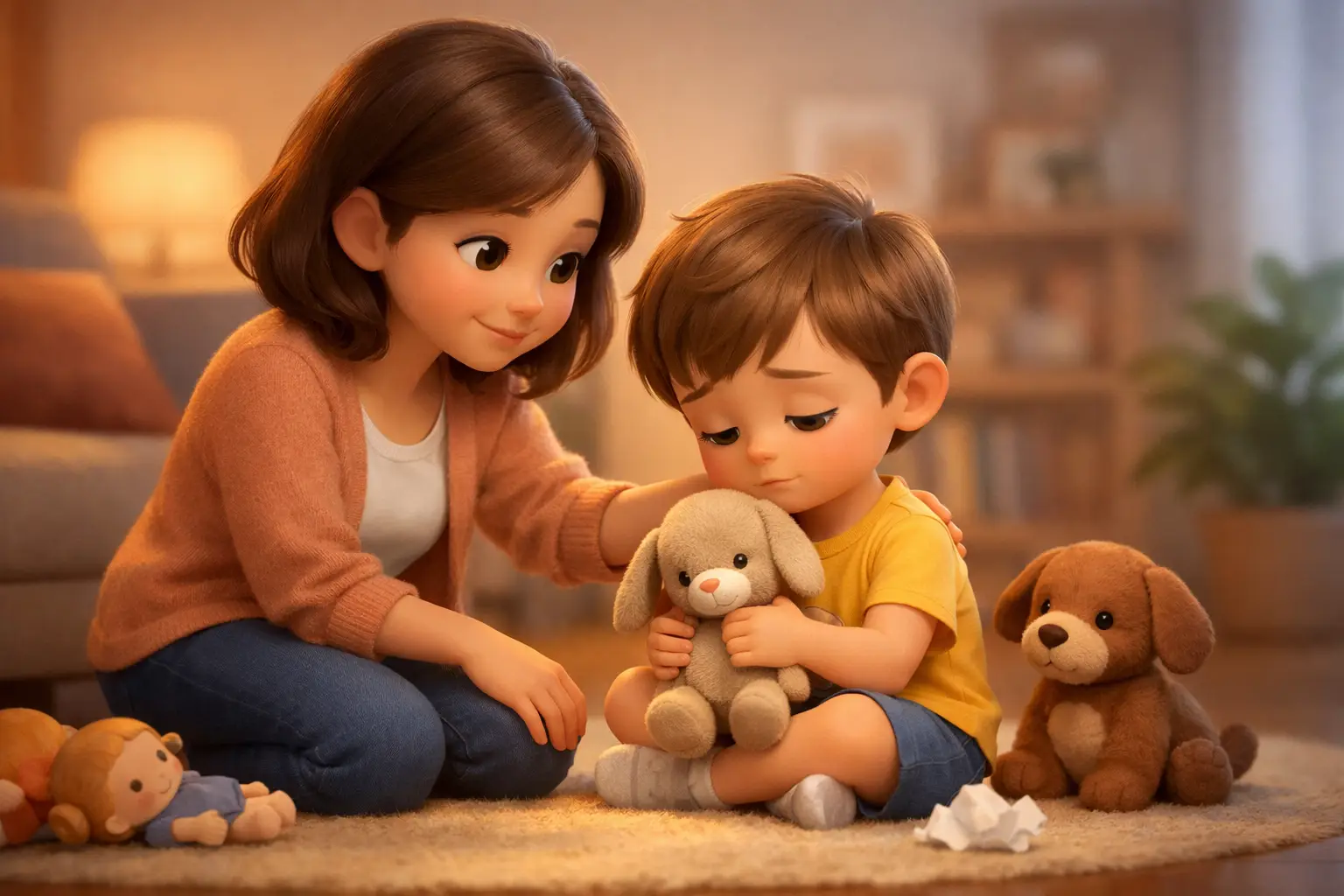
A toddler grabs the last blue cup, and suddenly breakfast feels very big. One child is crying, another is defending their choice, and you are left trying to help both of them feel seen. If you have ever wondered how to teach kids empathy, these small daily moments are often the best place to begin.
Empathy does not usually arrive as a polished skill in early childhood. For kids ages 3 to 6, it grows slowly through repetition, warm guidance, and simple language they can hold onto. Young children are still learning that other people have feelings separate from their own. That is a big idea. They do not need a lecture. They need practice, calm support, and many chances to notice what another person might be feeling.
What empathy looks like in young children
In adults, empathy can sound complex. In young children, it often looks small and tender. A child pats a crying friend on the arm. They bring a stuffed animal to a sibling who is upset. They pause when you say, "Look at her face. She seems sad." These are early signs that they are beginning to connect another person’s feelings with their own actions.
It also helps to remember what empathy is not. It is not instant sharing, perfect manners, or always agreeing. A preschooler can understand that someone is sad and still feel upset about giving up a toy. That does not mean the lesson failed. It means two real feelings are happening at once.
This is where many parents feel discouraged. They explain kindness clearly, but their child still snatches, yells, or refuses. That is normal. Empathy is a growing skill, especially when a child is tired, hungry, overwhelmed, or still learning self-control.
How to teach kids empathy without forcing it
The gentlest path is usually the strongest one. Children learn empathy best when they feel emotionally safe themselves. If a child is flooded with shame or fear, it becomes much harder for them to think about how someone else feels.
That does not mean ignoring hurtful behavior. It means responding with steadiness first, then teaching. You might say, "I won’t let you hit. Your brother is hurt. Let’s check on him." This protects the child who was hurt while also guiding the child who caused the harm back toward connection.
Forcing an apology too quickly can sometimes create performance instead of understanding. A child may say "sorry" because they feel pressured, not because they truly grasp what happened. Sometimes it is more helpful to slow down and say, "Look at Mia’s face. She is crying because the block tower got knocked down. What could help her feel better?" A real act of repair, even a very small one, teaches more than a rushed word.
Start with naming feelings
Before children can respond to another person’s emotions, they need words for feelings. This is one of the simplest ways to build empathy at home.
Name feelings during calm moments, not only during conflict. "Your cheeks look frustrated." "Daddy seems disappointed that the rain changed our park plan." "That baby is crying. I wonder if she is tired or scared." These gentle observations teach children to notice emotional cues in voices, faces, and bodies.
Keep the language simple. Preschoolers do not need long explanations. They do well with clear feeling words such as happy, sad, mad, worried, lonely, excited, and disappointed. Over time, those words become bridges. A child who can recognize sadness in themselves is more able to recognize it in someone else.
Use stories to help children step into another heart
Stories are one of the kindest tools for teaching empathy because they let children practice from a safe distance. A child may resist talking about their own behavior, but they will often eagerly talk about a bear who feels left out or a rabbit who made a mistake.
As you read, pause and wonder out loud. "How do you think she felt when no one saved her a spot?" "What do you think he hoped his friend would say?" "Have you ever felt that way?" These questions do not need perfect answers. Their purpose is to help your child imagine another point of view.
Gentle, character-led stories work especially well for children ages 3 to 6 because they make feelings manageable. When the pace is calm and the emotional lesson is clear, children have space to absorb what happened. This is part of why emotionally supportive books, songs, and story videos can be so useful at home. At Cozy Pebble Stories, that soft repetition is part of the teaching. Children hear the same caring message more than once, and that is often how it begins to stick.
Practice empathy in play
Pretend play gives children a natural way to rehearse caring behavior. A stuffed bunny falls down and needs comfort. A doll is nervous at bedtime. A toy fox feels left out when the others run ahead. Through play, children can try on helping, noticing, and repairing without the pressure of a real conflict.
You can join lightly by narrating what you see. "Oh no, the little bear is crying. I wonder what would help." Then let your child lead. Sometimes they will offer a blanket, a song, or a hug. Sometimes they will not know what to do right away. That is fine too. The point is to give them repeated chances to think about care.
Role-play can also help after hard moments. If your child struggled at the playground, you might later act it out with figures and keep the tone easy. "This friend wanted the shovel too. What could they say?" When children are calm, they are much more open to learning.
Let your child see empathy in you
Children learn empathy by being on the receiving end of it. When you respond to their feelings with warmth and limits, you are showing them what empathy feels like.
That might sound like, "You really wanted more time before bed. It is hard to stop when you are having fun." Or, "You are angry your block tower fell. I am here." This does not mean giving in to every demand. It means acknowledging the feeling before moving forward.
It also helps to model empathy in your everyday relationships. Let your child hear you say, "Grandma sounded tired today. I think I will call her later." Or, "Our neighbor dropped her groceries. Let’s help." These ordinary moments teach children that caring attention is part of family life, not just a rule for them.
Teach repair, not perfection
Children will hurt feelings. They will interrupt, grab, laugh at the wrong time, or miss a social cue completely. That is part of learning. The goal is not to raise a child who never gets it wrong. The goal is to raise a child who learns how to notice harm and take small steps to mend it.
Repair can be simple and concrete. A child can hand back a toy, help rebuild a tower, draw a picture for someone they upset, or ask, "Are you okay?" These actions make empathy active. They show children that when relationships feel wobbly, there is often something gentle we can do next.
This is also where age matters. A 3-year-old may need a great deal of coaching. A 6-year-old may begin to offer ideas on their own. Progress will not be even. Some children are naturally more observant, while others need more practice reading faces and slowing their impulses. It depends on temperament, developmental stage, and the moment itself.
When your child does not seem empathetic
Sometimes parents worry because their child laughs when someone cries, ignores a friend’s feelings, or seems unmoved after hurting someone. Often, this is not a sign of a cold heart. It can mean the child is overwhelmed, embarrassed, impulsive, or unsure what to do.
Start by staying calm and specific. "He is crying because that hurt." "She looks disappointed because she was still using that." Keep drawing the connection between actions and feelings. Over time, many children who seem indifferent are actually still building the skills to notice and respond.
If your child is highly sensitive, the challenge may look different. Some children feel others’ emotions so strongly that they shut down or become distressed themselves. In that case, teaching empathy also means teaching boundaries and regulation. You can say, "Your friend is sad, and we can be kind. Let’s bring her a tissue." A small action helps the feeling become less overwhelming.
How to teach kids empathy in everyday routines
The most lasting lessons usually happen in ordinary places - at snack time, in the car, during bath time, while reading before bed. Ask simple noticing questions. "How do you think your sister felt when you saved her a seat?" "What did your friend’s face look like when you shared the crayons?" These small reflections help children connect kindness with real human feelings.
Praise can help, but keep it grounded. Instead of broad labels like "You are the best helper ever," try, "You noticed he was sad and brought his blanket. That was caring." This kind of feedback teaches children what empathy looks like in action.
And when they miss the mark, as all children do, come back to the same steady message. Feelings matter. People matter. Mistakes can be repaired. Children do not need us to teach this with perfect words. They need us to live it with them, again and again, until kindness starts to feel like home.