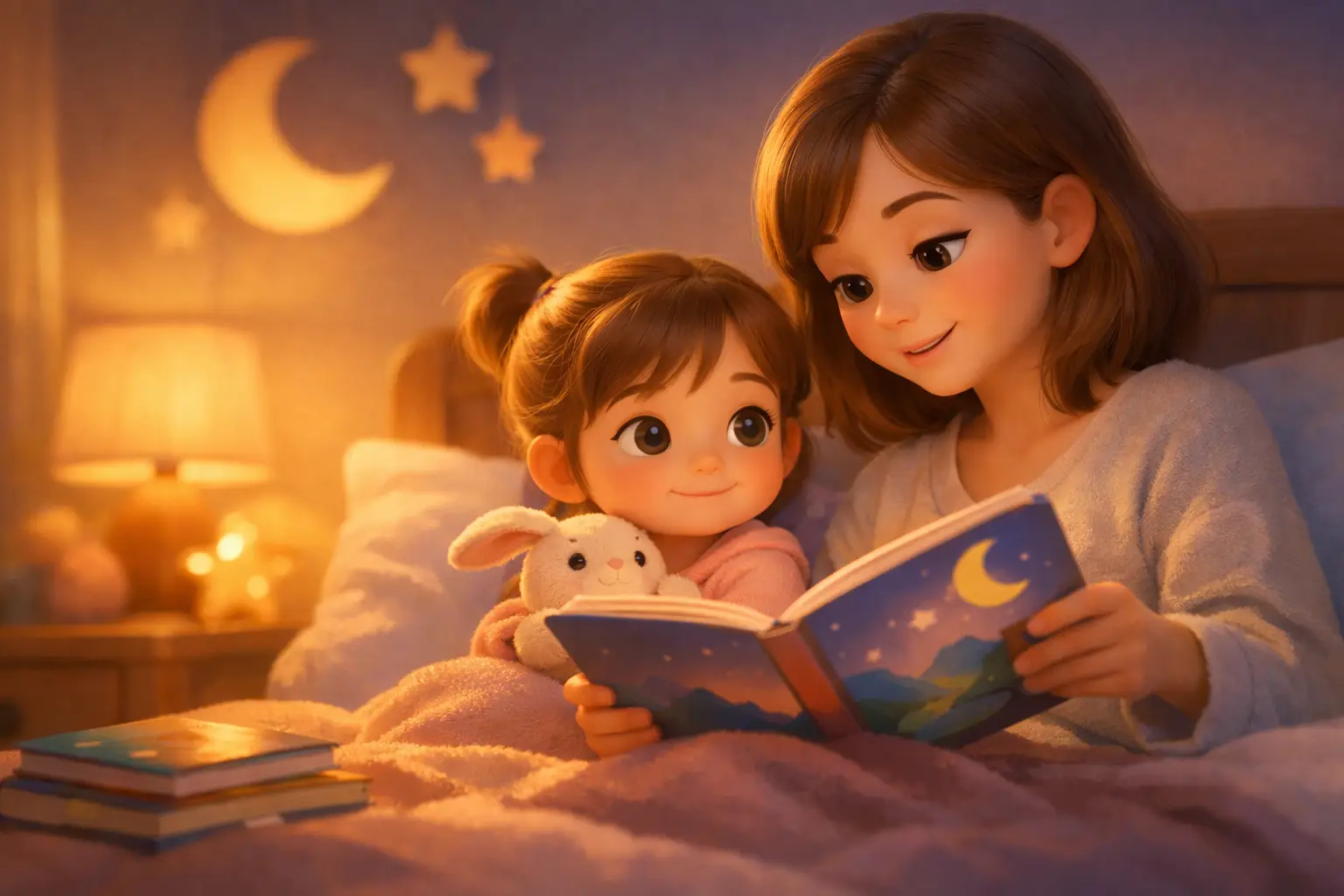
Some nights, bedtime feels tender and easy. Other nights, your child is suddenly thirsty, worried, wiggly, or full of questions that only appear when the lights go low. That is where preschool bedtime books can do something quietly powerful. The right story does more than fill a few minutes before sleep. It helps a young child feel safe, seen, and gently guided from the busy day into rest.
For preschoolers, bedtime reading is rarely just about the plot. Children ages 3 to 6 are listening for rhythm, reassurance, and emotional clues. They are noticing whether the story feels calm or tense, whether the ending settles softly, and whether the characters make room for feelings they recognize in themselves. A bedtime book can become part comfort object, part ritual, and part gentle language lesson for emotions that are still hard to name.
Why preschool bedtime books matter so much
At this age, children are building their sense of security through repetition. They thrive on knowing what comes next. A familiar book read in a familiar voice can signal, again and again, that the day is ending safely. That predictability matters, especially for children who feel deeply, resist transitions, or carry small worries into the evening.
Good bedtime stories also slow the pace of interaction between parent and child. During the day, so much family communication is practical - put on shoes, wash hands, clean up toys, hurry to the car. Bedtime books invite a different kind of closeness. You sit down. You soften your voice. You stay in one place together. Even before the story begins, that change in rhythm helps many children regulate.
There is also an emotional layer that parents often notice over time. Books can say things a child is not yet ready to say directly. A character who misses a friend, fears the dark, makes a mistake, or needs help being brave gives your child a safe little mirror. That can turn bedtime into a moment of connection instead of correction.
What makes the best preschool bedtime books
A beautiful book is not always a good bedtime book. Some stories are wonderful for daytime reading but too stimulating before sleep. The best preschool bedtime books usually share a few qualities that help children settle rather than rev up.
A calm emotional arc
Children do not need stories with zero conflict. In fact, a small problem often keeps them engaged. But bedtime is usually better served by gentle tension and a soothing resolution. A lost toy that is found, a nervous feeling that eases, or a lonely moment that ends in comfort works better than high stakes danger or loud comedy right before sleep.
If your child is especially sensitive, this matters even more. A story with one scary page may linger in their mind long after the book is closed. For some families, even books labeled as sweet or classic can feel too intense at bedtime. It depends on the child.
Soft, simple language
Preschoolers respond well to language they can follow without effort. Repetition, comforting phrases, and shorter sentences all help. This does not mean the writing has to be flat. It just means the book should feel easy to receive when your child is tired.
Gentle repetition can be especially helpful for children who like predictability. Hearing the same phrase each night often becomes part of the comfort. They may even begin saying it with you, which gives them a small sense of control during the bedtime transition.
Illustrations that soothe instead of overstimulate
Pictures matter. Bright, busy pages can be fun at 10 a.m. and a little activating at 7:30 p.m. For bedtime, many children respond better to softer colors, open space on the page, and expressions that feel warm and reassuring.
This is not a strict rule. Some kids can settle with almost anything if they love the story. Still, when you are choosing between two books, the one with a calmer visual mood often works better at night.
Themes that support emotional safety
The strongest bedtime books for preschoolers often center on belonging, reassurance, friendship, courage, rest, or everyday resilience. These themes meet children where they are. They remind them that mistakes can be repaired, feelings can be managed, and grown-ups stay close.
That emotional safety is part of what makes certain stories worth reading again and again. A child is not always looking for novelty at bedtime. Often, they are looking for confirmation that the world becomes gentle again before sleep.
How to choose books for your own child
The most helpful question is not, What are the most popular bedtime books? It is, What helps my child exhale?
Some preschoolers want books that are almost lullabies in story form. Others need a story that names their worry first, then helps it shrink into something manageable. A child who struggles with separation at night may love stories about connection and return. A child with a big imagination may prefer cozy animal characters rather than realistic stories that feel too close to home.
It helps to notice your child in the ten minutes after a book ends. Do they curl closer and get quieter? Do they start asking a lot of energized questions? Do they seem relieved by the story, or bothered by one page or one idea? Their response tells you more than any bestseller list can.
You can also think in small categories. Most families do well with a mix: one very predictable comfort book, one feelings-focused book, and one light, cozy story that is simply pleasant to hear. Rotating between a few trusted choices keeps bedtime from feeling stale without losing the security of familiarity.
When bedtime books are not working
Sometimes the issue is not reading itself. It is the timing, the length, or the energy around it.
If your child gets silly during stories, they may already be overtired. If they keep requesting more and more books, the book may have become part of bedtime delay rather than bedtime comfort. In that case, it can help to set a loving boundary before you begin: two books, one song, one hug. The predictability can be reassuring, even if they protest at first.
If stories seem to stir up fears, try shifting the content rather than dropping the routine. Choose books with lower emotional intensity and clearer reassurance. For some children, books about nighttime fears are helpful. For others, those books introduce ideas they were not dwelling on before. It really does depend on temperament.
There are nights when even the best book will not fix a hard bedtime. A child may be dysregulated, overstimulated, or carrying a bigger feeling from the day. On those nights, the goal does not need to be a magical transformation. It can simply be one steady, comforting moment together.
Building a bedtime reading ritual that feels safe
The story works best when the rest of the routine supports it. A rushed, noisy lead-in can make even the sweetest book less effective. A calmer sequence gives the story room to do its work.
Try keeping the reading spot consistent, whether that is on the bed, in a rocking chair, or under a favorite blanket. Use a softer voice than your daytime reading voice. Let the pace slow. If your child likes participation, invite a quiet kind of participation, like whispering a repeated phrase or pointing to a sleepy detail in the picture.
Rereading is not a problem to solve. For preschoolers, repetition is often the point. The same book night after night can become part of emotional regulation. Familiar words land differently when a child is tired, vulnerable, or trying to settle their body. What seems repetitive to an adult can feel deeply organizing to a child.
This is one reason brands like Cozy Pebble Stories resonate with families looking for calmer evenings. Gentle storytelling, soft emotional themes, and repeatable lessons tend to support bedtime better than fast-paced entertainment.
A quiet standard to use when choosing preschool bedtime books
If you are unsure whether a book belongs in your bedtime basket, ask yourself one simple question: after this story, is my child more likely to feel held or stirred up?
The best preschool bedtime books do not need to be flashy or clever. They need to be trustworthy. They need to make room for tenderness, for little worries, for ordinary courage, and for the comfort of hearing a loving voice at the end of the day. A good bedtime book does not rush a child toward sleep. It walks with them there, one calm page at a time.
And when you find a story that helps your child's shoulders drop and their breathing slow, keep it close. That book is doing more than entertaining them. It is helping bedtime feel like a safe place to land.