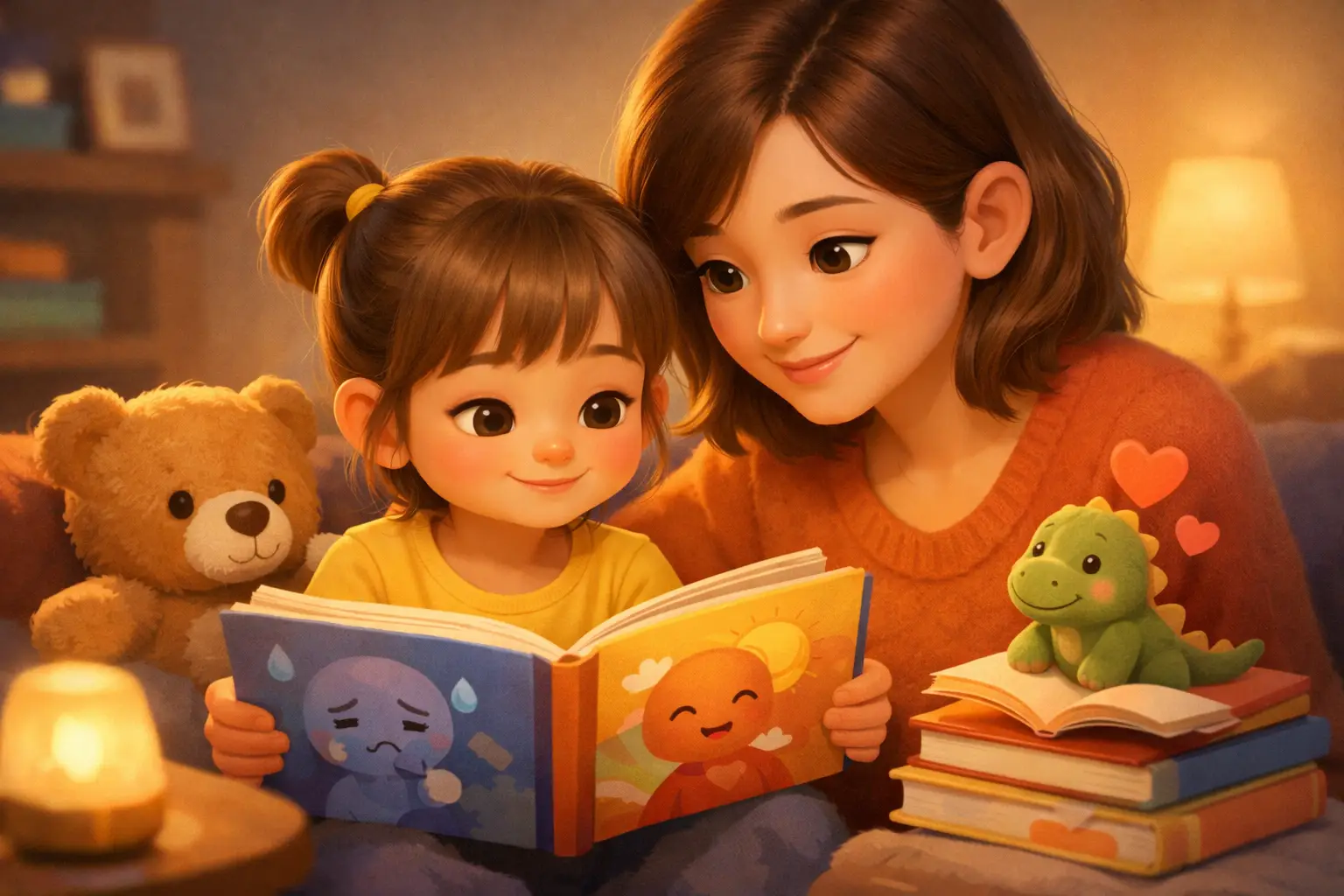
A preschooler melting down over the wrong color cup is not really upset about the cup. A child who suddenly clings at bedtime may not have words for worry yet. This is where feelings picture books can be so helpful. They give young children a safe little place to see sadness, anger, fear, jealousy, and relief outside themselves, then slowly recognize those same feelings in their own day.
For children ages 3 to 6, emotions often arrive faster than language. They feel everything in their bodies first - tight shoulders, tears, stomping feet, a hiding face - and only later begin to name what is happening. A gentle picture book can bridge that gap. It says, without pressure, You are not the only one who feels this way. And just as important, it shows that big feelings can move, soften, and pass.
Why feelings picture books matter so much in early childhood
In the early years, emotional learning is not separate from the rest of development. It sits right beside language, behavior, sleep, friendship, and confidence. When children can begin to identify what they feel, they are often better able to ask for help, recover from disappointment, and make sense of social moments that once felt overwhelming.
That does not mean a book fixes every hard moment. Sometimes a tired child still cries. Sometimes a worried child still needs extra cuddles, extra time, or a very quiet evening. But stories can give families a shared language. After reading about a character who feels left out, a parent can say, “Was your day a little like that?” That is often easier for a child than answering, “How are you feeling?” out of nowhere.
The best books for this age group do not rush children past emotion. They do not shame anger, dismiss fear, or insist on a cheerful ending that feels too neat. Instead, they offer something steadier. They let the feeling exist, make it understandable, and then show support, repair, or comfort.
What makes good feelings picture books work
A strong emotional picture book usually does a few quiet things very well. First, it keeps the child’s experience manageable. The story may center on a lost toy, a scary storm, a friendship bump, or first-day nerves - problems that feel very real to small children without becoming too intense.
Second, the illustrations do a lot of the emotional work. Young children read faces, posture, color, and space before they follow every sentence. A hunched little character, a dim bedroom, or a soft hand reaching in can tell the story of worry and reassurance all at once. This is part of why watercolor-style art feels so comforting for many families. It leaves room to breathe.
Third, the language is simple enough to remember. A good line from a picture book often becomes something a child repeats later: “I feel wiggly-mad,” or “My heart feels tight,” or “I can be brave and still need help.” That kind of language matters because children borrow words before they fully own them.
Finally, the story offers emotional truth rather than a lecture. Children can feel when a book is trying too hard to teach. They respond better when the lesson lives naturally inside the character’s experience.
Not every book needs to name every feeling
Some parents look for books that directly label emotions, and those can be very useful. Others are drawn to stories where the feeling is shown more gently through the plot. Both approaches have value.
A very direct book may help a child build vocabulary quickly. A softer story may help a sensitive child approach a hard feeling without becoming flooded by it. It depends on the child, the day, and the feeling itself. A child dealing with frequent frustration may benefit from clear naming, while bedtime anxiety may call for a quieter, more soothing story.
Choosing feelings picture books for ages 3 to 6
At this age, less is often more. A book does not need to cover every emotional skill in one sitting. In fact, books that try to teach too many lessons at once can feel busy or diluted. One feeling, one challenge, and one reassuring arc is often plenty.
Look for stories with developmentally appropriate stakes. Young children connect most deeply with situations they know: separating from a parent, making a mistake, hearing a loud noise, feeling shy in a group, or wishing things had gone differently. If the emotional challenge is too abstract, the child may not stay with it.
It also helps to notice your child’s temperament. Some children like playful books that make room for laughter around big feelings. Others need stories that are especially calm and tender. Sensitive children often do best with books that move slowly, repeat comforting phrases, and end with a clear sense of safety.
Parents sometimes wonder whether to choose books that mirror a child’s exact struggle or books that gently widen the lens. Both can help. A child afraid of the dark may feel seen by a bedtime worry story. That same child may also benefit from a book about courage in a different setting, because it teaches bravery without getting too close to the fear.
How to read feelings picture books so they actually help
The way a book is shared matters almost as much as the book itself. If reading starts to feel like a lesson during a tense moment, many children pull away. But when a story arrives during connection - at bedtime, after preschool, or during a quiet reset - it becomes easier to receive.
Try reading with curiosity instead of correction. Rather than saying, “See, this is why you should calm down,” you might say, “That rabbit looks frustrated,” or “I wonder what helped her feel safe again.” This keeps the child from feeling watched or judged.
Pause when your child wants to linger on a page. Sometimes the most important part of reading is not finishing the story. A child may return again and again to one picture of a character hiding, crying, or being comforted. That pause is part of the learning.
It can also help to connect the story gently to real life, but not too quickly. If your child had a hard drop-off at school, you do not need to force the comparison. A light touch works better: “That little bear missed home too.” If your child wants to say more, they will.
Repetition is not a problem
Many adults get tired of reading the same book ten nights in a row. Children usually repeat stories for a reason. Repetition helps them rehearse emotional understanding in a safe and predictable way.
When a child asks for the same feelings-focused book again and again, they may be practicing mastery. They know what happens. They know the worried character will be helped. They know the hard part does not last forever. That predictability can be deeply regulating.
Feelings picture books and everyday family life
These books are most useful when they become part of a family rhythm, not just something pulled out during a crisis. A basket of emotion-centered stories near the couch or bedtime area can quietly invite conversation. Over time, children begin to absorb the idea that all feelings are welcome, even when not all behaviors are.
This is one reason emotionally supportive storytelling matters so much. It creates a home language around repair, comfort, and resilience. A child who has heard many stories about mistakes may be a little less crushed by spilling the juice. A child who knows characters get scared too may find it easier to whisper, “I don’t want to sleep alone tonight.”
For families who want calm, character-led emotional learning, this kind of storytelling can become a steady companion. Brands like Cozy Pebble Stories build around that gentle idea - helping children meet big feelings in manageable, comforting ways instead of turning emotion into noise or spectacle.
There is also a quiet benefit for parents. Reading these stories can soften the pressure to say exactly the right thing in the moment. Sometimes the book says it first. Sometimes the character opens the door. And sometimes sitting close together with a tender story is the support.
When a book is helpful, and when a child needs more
Picture books are wonderful tools, but they are still tools. If a child’s fear, sadness, anger, or shutdowns feel persistent, intense, or hard to recover from, a book may be one piece of support rather than the whole answer. Some children need extra co-regulation, school support, or guidance from a pediatrician or child therapist.
That does not make the books less valuable. It simply means stories work best as part of a wider circle of care. They can validate, model, soothe, and invite conversation. They cannot replace rest, routine, attachment, and help when help is needed.
A good feelings picture book does something beautifully simple. It meets a child where they are, stays close, and reminds them that feelings do not have to be faced alone. Sometimes that is exactly what a small heart needs most.