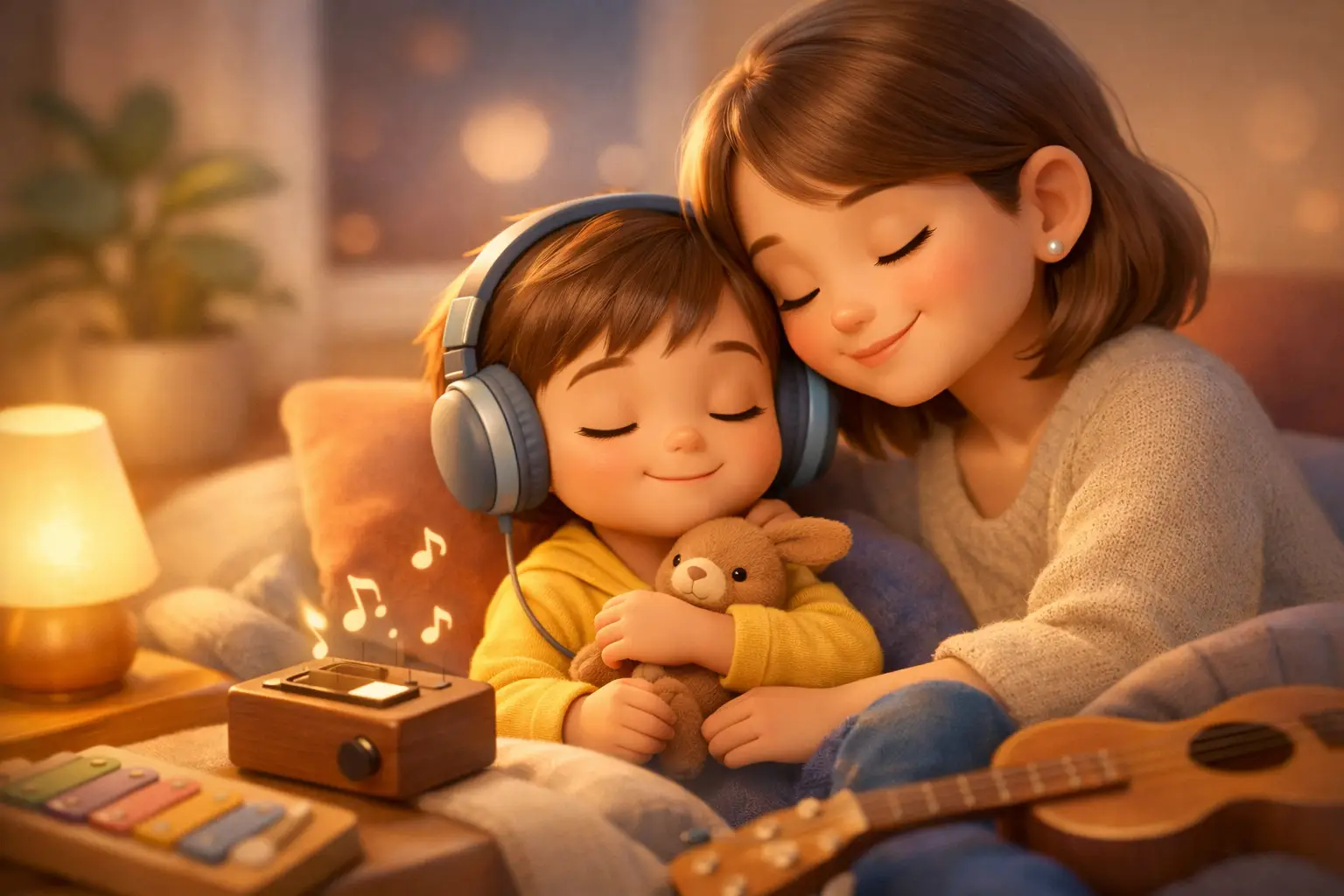
The hardest part of bedtime is not always getting into pajamas. Sometimes it is the worry that arrives when the lights grow low, the disappointment of a day that did not go as planned, or the burst of energy that seems to appear just as a child needs rest. Gentle kids music can offer a small, steady place to land in those moments. A familiar melody tells a child: you are safe, your feelings make sense, and we can slow down together.
For children ages 3 to 6, music is more than pleasant background sound. It can become part of how they practice words for big feelings, remember a comforting routine, and feel connected to the people caring for them. The right song does not need to fix every hard moment. It can simply make that moment feel less lonely.
Why gentle kids music matters
Young children are still learning what feelings are called and what to do when those feelings become loud. They may know that their tummy feels tight, that they miss someone, or that they do not want to take turns, without knowing how to explain it. A calm song gives them language they can borrow.
Simple phrases such as taking a breath, asking for help, or trying again can stay with a child because music makes them easy to remember. When a child later feels frustrated by a fallen block tower or nervous before preschool, that familiar line may return. It becomes a gentle reminder that feelings can move through, and that support is nearby.
This is one reason softer music can be especially meaningful at home. It leaves room for a child to listen, hum, cuddle, or talk. Fast, exciting songs have a place for dance breaks and celebrations, of course. But when a family is trying to transition, reconnect, or settle, a quieter pace often better matches what a young nervous system needs.
What makes music feel gentle to a young child?
Gentleness is not only about turning down the volume. A song can be soft in sound and still feel confusing if its message is too complicated or its mood changes too quickly. For preschoolers, gentle music usually has a clear emotional center, an unhurried rhythm, and words that are easy to understand.
Repetition matters, too. Adults may hear the same chorus many times, but repetition is one of the ways young children learn. A familiar refrain can become a little ritual. It lets a child join in before they know every word, and it creates the reassuring feeling of knowing what comes next.
Look for songs with warm, steady vocals and simple instrumentation that does not compete with the message. Acoustic guitar, piano, light percussion, and soft harmonies can all work beautifully. The best choice depends on the child. Some children relax with lullaby-like music, while others need a gentle beat or a cheerful melody before they can settle.
The message deserves just as much attention as the sound. Songs about friendship, courage, mistakes, missing someone, or bedtime worries can help children see their own experiences reflected with care. A song does not have to promise that everything will be perfect. It is often more comforting when it says something truer: this feels hard, and you do not have to face it all by yourself.
Choosing gentle kids music for different moments
A helpful family music collection has room for more than sleep songs. Children move through many transitions in a day, and each one can benefit from a slightly different kind of support.
For morning routines
Mornings can become rushed quickly, especially when a child is tired or reluctant to leave home. Choose a bright but unhurried song for getting dressed, brushing teeth, or packing a bag. Music can give the routine a beginning and an end without making it feel like a string of commands.
A short song works well here. When it ends, a child knows it may be time for shoes or a goodbye hug. This is not about using music to hurry children along. It is about creating a rhythm they can trust.
For big feelings
When tears, anger, or disappointment arrive, start with connection before pressing play. Sit nearby, offer a hand, and name what you notice in a calm voice. Then, if your child is open to it, a familiar feelings song can help bring the temperature down.
Avoid expecting music to work like a switch. Some children want quiet when upset, and that is okay. Others may sing along after a few minutes, even through tears. The goal is not to make the feeling disappear. It is to show that feelings are welcome and manageable.
For quiet play and rest
Soft music can make a lovely companion for coloring, building, looking at books, or resting after a busy outing. In these moments, instrumental tracks or songs with fewer lyrics may be best. They create a peaceful atmosphere without pulling a child away from their own imaginative play.
If your child becomes more energized when any music is on, choose silence instead. Gentle routines should fit the child in front of you, not an ideal version of what calm is supposed to look like.
For bedtime
Bedtime music works best when it is predictable. Try using the same two or three songs after bath time, during cuddles, or while tucking in stuffed animals. Over time, those songs can signal that the day is slowing down.
Keep the volume low enough that you can still speak softly over it. You might sing along, change a lyric to include your child’s name, or pause after the song to ask one simple question: What was one feeling you had today? There is no need to turn every bedtime into a lesson. A warm answer, or even a sleepy shrug, is enough.
Make music a shared comfort, not another demand
The most meaningful part of a song is often what happens around it. A child may remember being held during a quiet chorus, watching a caregiver sway while making dinner, or hearing the same reassuring words after a difficult day. These small moments build emotional safety because they are repeated with care.
Let your child have a little choice when possible. You can offer two calm options: Would you like the cozy song or the brave song? Choice gives young children a sense of agency without making the routine feel overwhelming. If they ask for the same song every night for two weeks, that is not a problem. Familiarity is doing important work.
It can also help to keep music free from pressure. Children do not need to sing correctly, sit perfectly still, or explain what every lyric means. They can hum, wiggle, listen, or simply be close. The lesson is carried by the experience of being accepted as they are.
Gentle songs can open small, honest conversations
A song about being scared, sharing with a friend, or trying after a mistake can give adults an easier way into a conversation. Rather than asking a child to explain a difficult experience directly, you might wonder aloud whether a character in the song felt nervous. Children often answer more freely when the focus begins somewhere safe and imaginary.
From there, keep questions light. You could ask whether your child has ever felt that way, what helps their body feel cozy, or who they like to ask for help. If they do not want to talk, let the song be enough. Emotional learning does not always look like a conversation. Sometimes it looks like a child quietly humming a line about being brave while they hold your hand.
At Cozy Pebble Stories, we believe gentle stories and songs can make space for these everyday moments of connection. Not because childhood should be free of tears, fears, or mistakes, but because children deserve steady reminders that they can meet those feelings with care.
The next time your child needs a softer landing, try one familiar song, one calm breath, and your nearby presence. That small ritual may become a comfort they carry long after the music ends.