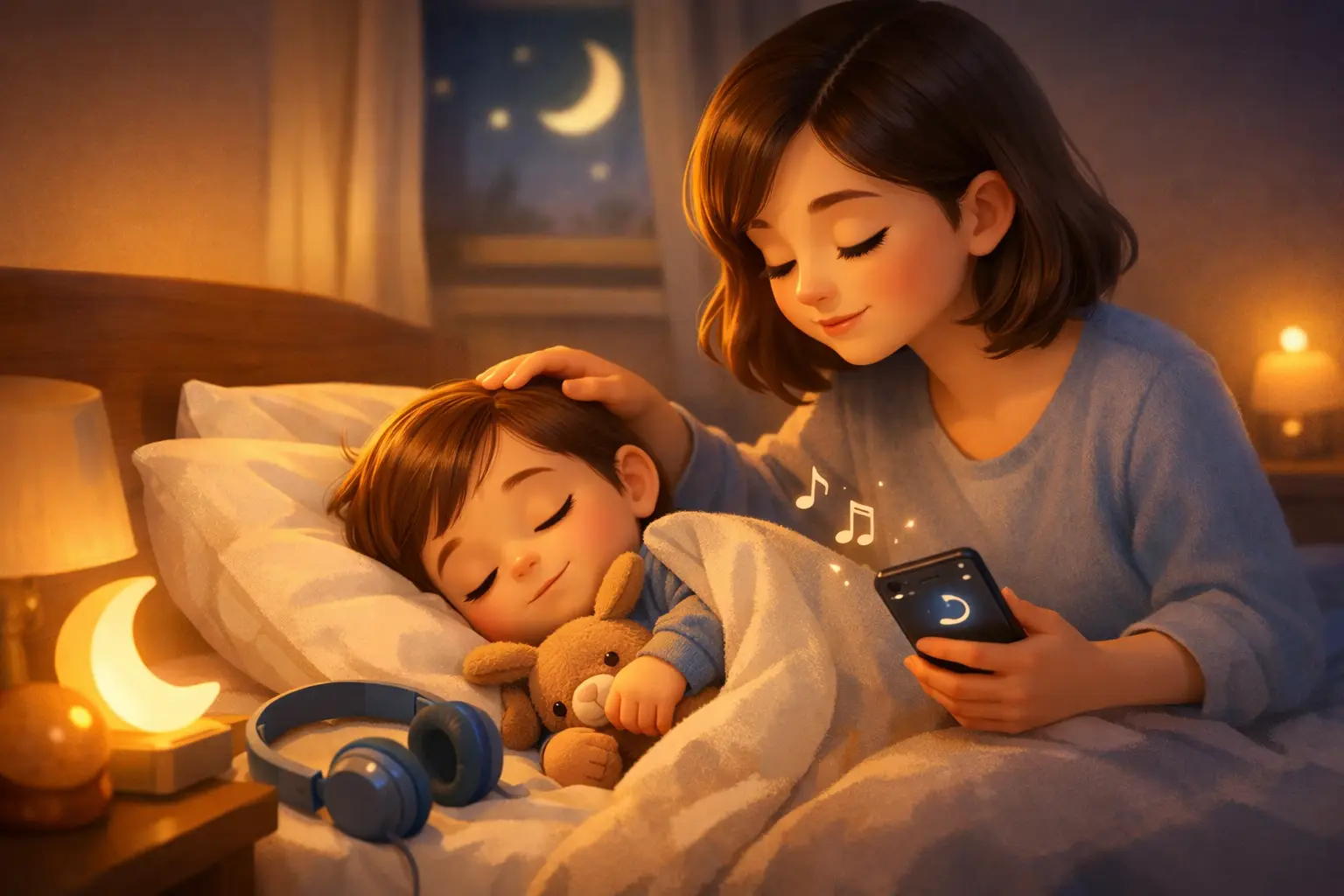
Some nights, bedtime feels tender and easy. Other nights, your toddler is rubbing tired eyes while still insisting on one more story, one more sip of water, one more question about the moon. That is often when calming songs for toddlers bedtime can do something words alone cannot. A soft melody gives the body a cue, the heart a place to settle, and the moment a rhythm that feels safe.
For children ages 3 to 6, bedtime is not only about getting sleepy. It is also a daily transition away from play, noise, light, and closeness. Even happy children can feel a little wobbly at the edge of night. Music helps because it offers repetition, predictability, and emotional warmth. It does not rush a child into sleep. It gently walks beside them.
Why calming songs for toddlers bedtime work so well
Toddlers and preschoolers are still learning how to move from big stimulation to quiet rest. Their bodies may be tired, but their minds can stay busy. A familiar bedtime song gives them a simple pattern to follow. The breath slows. The voice softens. The room begins to feel smaller and calmer.
There is also something deeply reassuring about hearing the same soothing melody night after night. Repetition tells a young child, "We have done this before. You are safe here. You know what comes next." That matters, especially for children who feel nighttime worries, separation anxiety, or that common bedtime burst of second wind.
The best bedtime music is not just slow. It feels emotionally steady. A song can be quiet and still feel uneasy if it has sharp changes, dramatic vocals, or lyrics that stir up too much excitement. What helps most is gentle pacing, soft instrumentation, and a simple message a child can hold onto.
What to look for in bedtime songs for little ones
When parents search for sleep music, it is easy to focus only on whether a song is labeled "lullaby." But labels do not always tell you how a song will land with your child. Some toddlers relax best with humming and very few words. Others settle more easily when the lyrics reassure them directly.
A good bedtime song for this age usually has a slow, even tempo and a melody that does not leap around too much. Softer instruments like piano, acoustic guitar, or light music box tones tend to feel less stimulating than heavy beats or bright electronic sounds. Voices matter too. A calm, warm voice often works better than a theatrical or overly animated one.
Lyrics can be surprisingly important. Songs about stars, moonlight, cuddling, breathing, resting, or being loved often help children settle. Songs about adventure, counting games, or silly surprises may be sweet during the day but too engaging at bedtime. If your child starts asking questions halfway through the song, it may not be the right fit for the last part of the evening.
It also helps to notice your child’s temperament. Sensitive children sometimes do best with songs that are very soft and plain. Imaginative children may enjoy gentle story-songs that help them picture a peaceful scene. A child with bedtime worries may need words that name the feeling and offer comfort, such as reminders that home is safe and grown-ups are near.
Building a gentle bedtime routine around music
Music works best when it is part of a pattern, not a rescue plan pulled out only on hard nights. If bedtime songs always arrive after pajamas, brushing teeth, and one final story, they start to become a cue. Your child learns that when this song begins, the day is finishing.
That does not mean the routine needs to be long. In fact, toddlers often respond better to a short, predictable sequence than an elaborate one. A bath, a cuddle, a story, and two or three calming songs can be enough. The key is consistency. The same order each night gives the nervous system fewer surprises.
Volume matters more than many parents expect. Bedtime music should sit in the background, almost like a soft blanket for the room. If the music is loud enough to compete with your own voice, it is probably too much. Dim light helps too. A calming song in a bright room often loses some of its sleepy magic.
If your child resists bedtime, music can ease the transition before they are fully in bed. Try starting the first song while they are putting on pajamas or snuggling into the chair for a story. For some children, the hardest part is not lying down. It is letting go of the day. Music can help begin that release earlier.
When bedtime songs do not seem to help
Sometimes a carefully chosen lullaby still does not work, and that does not mean you are doing anything wrong. A child who is overtired, sick, overstimulated, or worried may need more than music in that moment. They may need extra connection first.
If your toddler seems more awake once the music starts, the song may be too interesting. If they become clingy or tearful, the music may be signaling separation before they feel ready. In that case, it can help to sing together while rocking, back-rubbing, or sitting close beside the bed. Your presence is often the most calming part.
There is also an it-depends piece here with playlists. Long playlists can be helpful for some families, especially if they create an unbroken calm atmosphere. But for other children, too many songs keep bedtime dragging on. A shorter set of two to five familiar songs may create a clearer ending.
If your child asks for the same song every night, that is usually a good sign. Familiarity is doing its job. Young children often use repetition to feel secure. You do not need to keep introducing new songs unless your current routine has stopped working.
A few song styles that often support sleep
Instead of chasing a perfect title, it can be more useful to think in categories. Soft lullabies with simple, loving lyrics are often the easiest fit. Gentle nature songs about rain, stars, clouds, or nighttime animals can also help, as long as they stay peaceful and not playful.
Breathing songs are especially helpful for preschoolers who carry tension into bedtime. A song that invites a child to breathe in slowly, breathe out gently, and relax their shoulders can support co-regulation in a natural way. You are not turning bedtime into a lesson. You are wrapping a calming skill inside a melody.
Quiet story-songs can work beautifully too, especially for children who need help shifting from imagination into rest. A soft song about a sleepy bear, a bunny in a burrow, or a little lantern glowing low gives the mind something peaceful to picture. Cozy Pebble Stories often centers this kind of emotional safety in music and storytelling because many children settle more easily when comfort has a character and a shape.
Instrumental tracks can be useful, but they are not always better. Some children relax with wordless music. Others feel more secure hearing a human voice. If your child is going through a clingy phase or nighttime fears, lyrics about love, closeness, and rest may land more deeply than instrumental sound alone.
Making bedtime music feel personal
The most effective songs are often the ones tied to connection. A parent singing softly, even off-key, can be more calming than a polished recording. Your child is not grading your voice. They are listening for warmth, rhythm, and nearness.
You can make any bedtime song more personal by adding your child’s name, favorite stuffed animal, or a line that matches your family’s routine. "Mama’s near, the room is still, Bunny’s tucked beneath the quilt" may do more than a generic lyric because it belongs to your child’s world.
This is especially helpful for children with nighttime worries. Personal lyrics turn music into reassurance. They help the child feel seen, not managed. That small difference matters.
If you use recorded music, keep the playlist gentle and predictable. Avoid letting an upbeat song sneak in at the end through autoplay or mixed recommendations. Nothing breaks a sleepy mood faster than a cheerful burst of drums after three quiet lullabies.
The emotional side of sleep support
Parents sometimes feel pressure to make bedtime efficient, as if a good night means a fast night. But children are not machines, and evening emotions are real. A toddler might stall because they are overtired, but they also might be asking for reassurance in the only ways they know.
That is one reason calming songs for toddlers bedtime can be so helpful. They support sleep, yes, but they also support attachment. They give you a soft way to say, "The day is ending, and you are still held." For little children, that feeling of being held often matters as much as the song itself.
If bedtime has been tense in your home, music can help change the emotional texture without turning the routine upside down. You do not need to perform calm perfectly. A quieter voice, a slower pace, and one familiar song is enough to begin.
Some nights your child will settle quickly. Some nights they will need extra cuddles, another verse, or a few tears before rest comes. That does not mean the routine is failing. It means your child is human, and bedtime is one of the places where little feelings often come looking for comfort.
A gentle song cannot fix every hard night, but it can become a small, steady bridge between busy daytime energy and the safety of sleep. And sometimes that is exactly what a young child needs - not a perfect bedtime, just a softer way to get there.