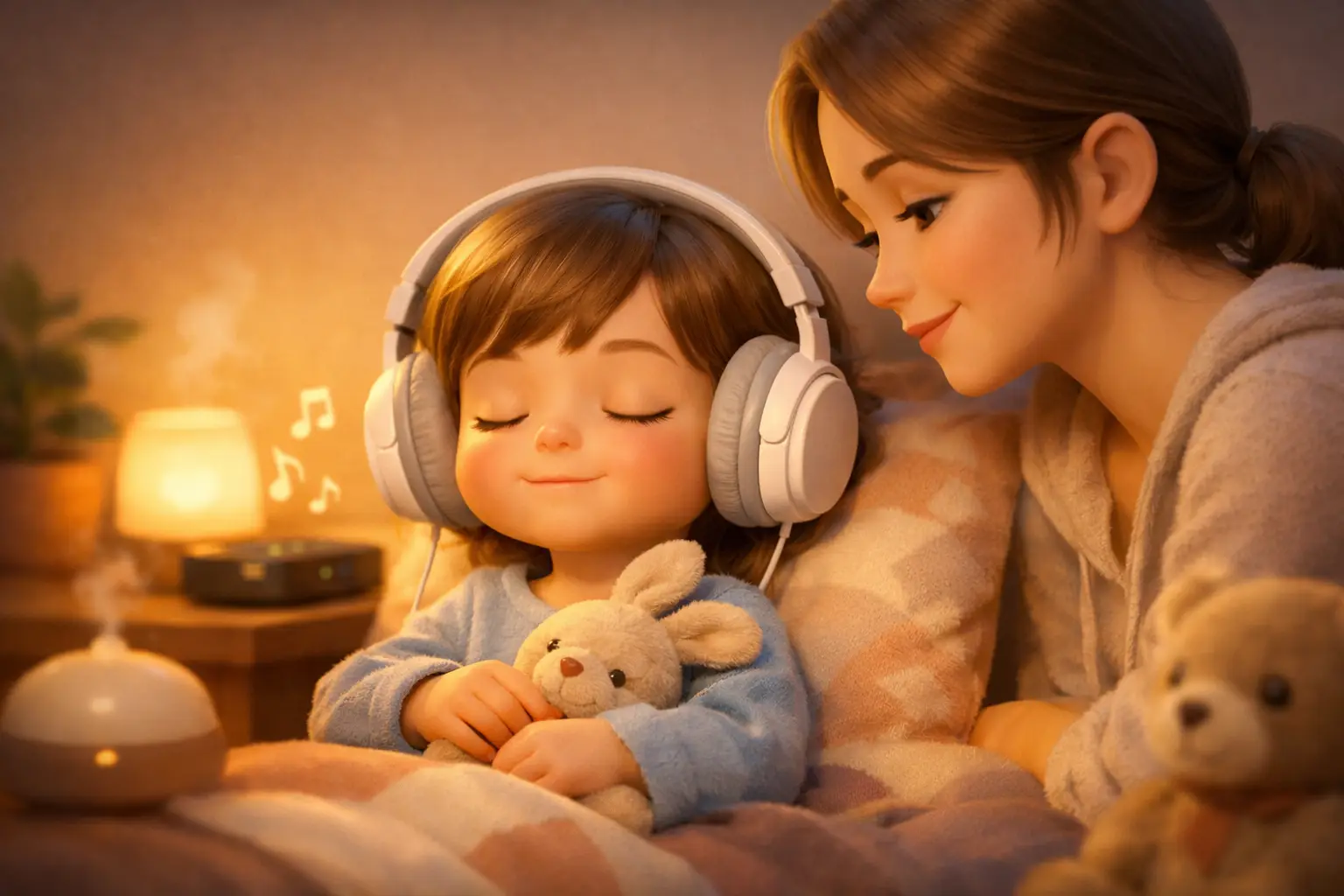
Some songs seem to hush a room almost instantly. A child who was wiggly, teary, or stuck in that late-afternoon storm of feelings begins to breathe a little slower. Their shoulders soften. The moment does not turn perfect, but it does feel safer. That is why so many parents go looking for the best calming music for kids - not for background noise, but for real comfort.
For children ages 3 to 6, calming music can do more than fill silence. It can become part of a bedtime rhythm, a reset after preschool, or a gentle bridge through disappointment, separation, or overwhelm. At this age, children are still learning how feelings move through the body. Music helps because it gives that process shape. A steady melody can say, without many words, you are safe, you can rest, and this feeling will pass.
What makes the best calming music for kids actually calming?
Not every song labeled relaxing will feel soothing to a young child. Some tracks are technically soft but still carry too much stimulation - sudden changes, dramatic vocals, bright electronic sounds, or a tempo that never fully settles. For preschoolers, the best calming music usually feels simple, predictable, and warm.
A slower pace matters. Children often respond well to songs with a gentle pulse that mirrors a calm heartbeat. Repetition matters too. When a melody repeats, kids know what is coming next, and that sense of familiarity can lower tension. Soft instruments like piano, acoustic guitar, light strings, music box tones, and quiet humming often work better than anything sharp or busy.
Lyrics can help, but only when they are clear and reassuring. A calm song with kind, simple words like breathe, rest, snuggle, or you are safe can support emotional regulation. On the other hand, lyrics that are too abstract or emotionally heavy may pull a child out of calm instead of guiding them into it.
The right kind of calming music depends on the moment
One of the most useful things parents can know is that there is no single perfect playlist for every hard moment. The best calming music for kids depends on why your child needs comfort in the first place.
At bedtime, many children do best with very soft music, minimal lyrics, and a slower tempo that does not ask for active listening. This is the kind of music that lets eyelids grow heavy. During quiet play, though, a child may enjoy gentle songs with a little more melody and warmth, especially if the music supports focus without feeling sleepy.
Big feelings are different again. If a child is upset, jumping straight to whisper-soft lullabies does not always work. Sometimes they need music that meets them in the middle first - still gentle, but emotionally present. A song that names sadness, frustration, or worry in a calm way can feel more supportive than a track that skips too quickly to total peace.
That is often the trade-off. Music that helps with sleep may be too drowsy for daytime regulation. Music that helps after a meltdown may not be ideal for falling asleep. It helps to think in small categories rather than one giant list of soothing songs.
Gentle categories to look for
Lullabies are the most familiar starting point, and for good reason. Their rocking rhythm and repeated phrases are naturally regulating. Traditional lullabies can be lovely, but newer children’s songs with the same softness can work just as well, especially if they avoid dramatic orchestration.
Instrumental music is a strong choice for children who become more alert when they hear words. Soft piano, light acoustic guitar, or mellow ambient children’s music can create a calm space without demanding attention. This can be especially helpful during coloring, cuddling, or rest time.
Nature-based calming tracks can also help, particularly for children who respond to sensory cues. Gentle rain, birdsong, ocean sounds, or a quiet stream layered under music can create a cozy atmosphere. Still, it depends on the child. Some children love rainfall. Others find certain sounds distracting, so a little trial and error is normal.
Then there are emotion-supportive children’s songs - music written specifically to help kids name feelings, breathe, and settle. These songs can be especially valuable because they do not just relax the room. They teach a repeatable skill. A child who hears the same gentle reminder again and again may begin to use that language later without prompting.
How to tell if a song is helping your child
Parents often wonder if calming music is really working or if they are just hoping it will. The signs are usually small, but meaningful. Your child may stop pacing, lean into you, lower their voice, or return to play more slowly. Their breathing may lengthen. Bedtime resistance may soften from intense protest into manageable stalling, which, honestly, is still progress.
If a track seems to make your child sillier, louder, or more wakeful, that does not mean anything is wrong with them. It simply means that song is not calming for that child in that moment. Some children are soothed by voices. Others settle more easily with instrumentals. Some love familiar songs because predictability feels safe. Others need novelty to shift their attention away from a hard feeling.
You do not need a perfect formula. You just need to notice patterns with kindness.
Building a small calming music routine at home
Calming music tends to work best when it becomes part of a rhythm your child recognizes. If music only appears when things are already very hard, it can still help, but it may not feel like a trusted cue yet. When children hear the same style of music during peaceful moments, they begin to associate it with safety.
A simple bedtime routine might include dim lights, one book, one song, and a brief cuddle. For after-school decompression, it might mean a snack, a few minutes of quiet music, and floor play before conversation. During emotional moments, you might sit nearby and play one familiar song while saying very little. Sometimes less language helps.
This is where consistency matters more than volume or variety. A short playlist with just a few dependable songs often works better than a long, shuffled mix. Young children usually prefer what they know. Repetition is not laziness. It is comforting.
When lyrics are especially helpful
There are times when words in a song can become a gentle tool for emotional learning. A child who struggles with nighttime fears may respond well to music that softly reminds them they are loved and not alone. A child moving through anger or disappointment may benefit from a song that normalizes those feelings without making them bigger.
The most helpful lyrics for this age group are usually concrete and brief. They do not lecture. They do not rush a child toward happiness. They stay close to the child’s world: breathing slowly, resting bodies, cozy rooms, loving grown-ups, brave hearts, gentle mornings.
That is one reason families often return to calm, character-led children’s music from brands like Cozy Pebble Stories. When songs are written with emotional safety in mind, they can support both the feeling and the relationship around it.
A few gentle cautions when choosing calming music
Soft does not always mean soothing. Some songs sound quiet but carry melancholy moods that sensitive children may absorb strongly. Others have twinkly, playful arrangements that are charming but too stimulating before sleep. It helps to listen once on your own before adding a song to a regular routine.
Screen-based music can also be tricky. If a child needs calm, the visual layer may pull them back into alertness, even if the song itself is gentle. Audio-only listening often works better for bedtime or regulation, while illustrated music videos may be more useful earlier in the day.
And if your child resists music altogether, that is okay too. Calm does not have to come from one source. Some children settle better with stories, rocking, quiet sensory play, or simple silence. Music is a support, not a test.
Choosing the best calming music for kids with confidence
If you are trying to choose well, start small. Pick a few songs with slow tempos, soft vocals or instrumentals, and reassuring emotional tone. Use them at the same time each day for a week. Watch what changes. Notice not just whether your child becomes quiet, but whether they seem more grounded.
The best calming music for kids is not necessarily the most popular or the most beautifully produced. It is the music that helps your child feel held. It makes the room feel gentler. It gives tired little bodies and busy little hearts a softer place to land.
Sometimes that is all a family needs - one familiar song, one calmer breath, and one small moment of peace that says, we can begin again from here.