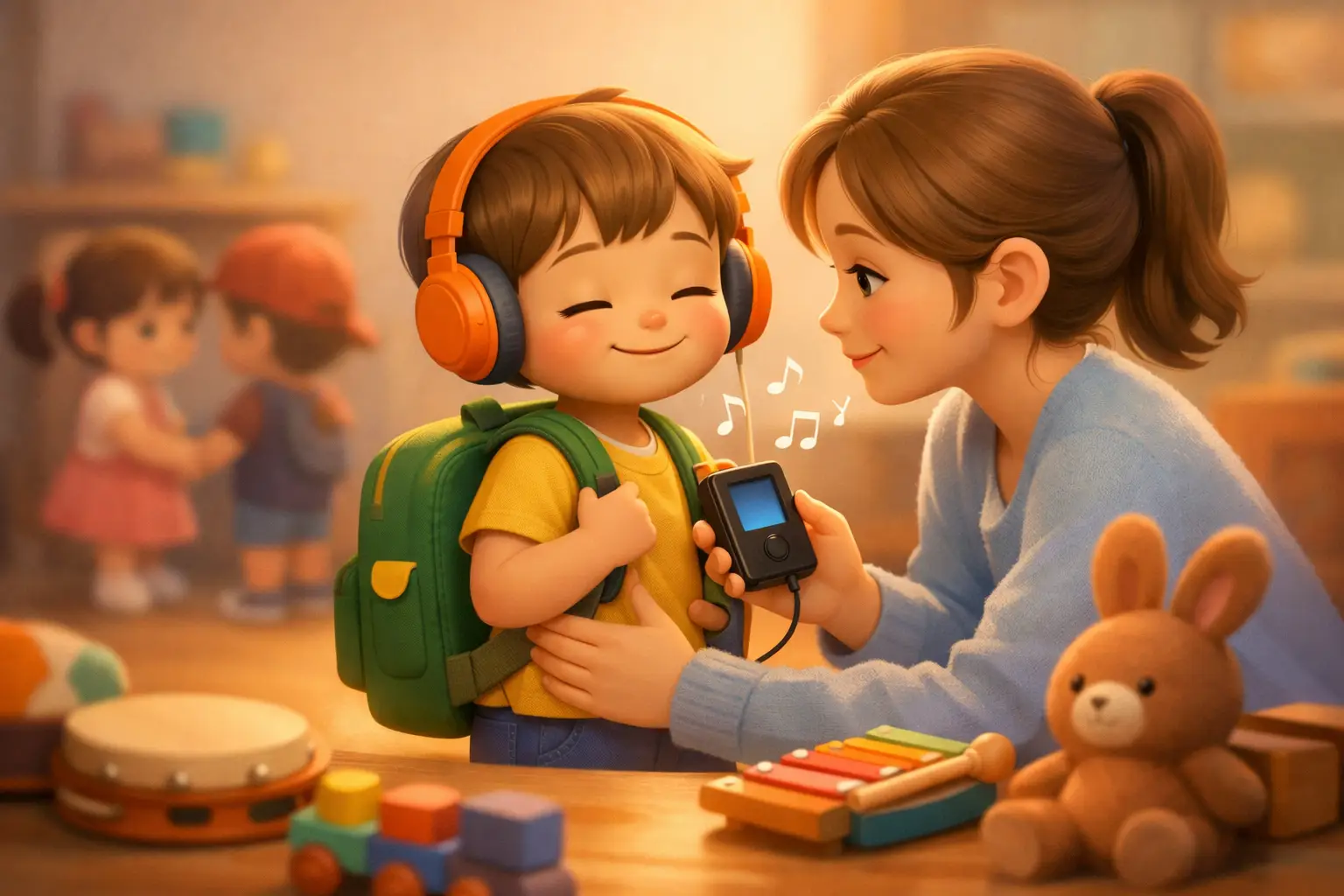
A hard moment in many homes is not the big event. It is the small shift right before it. The toy train needs to be put away. Shoes need to go on. The screen needs to turn off. For many young children, those in-between moments feel bigger than adults expect. That is why songs for preschool transitions can be so helpful. A soft, familiar song gives children a bridge from one activity to the next, and that bridge often feels safer than a spoken reminder alone.
For preschoolers, transitions are not just schedule changes. They ask a child to stop one thing, let go of it, and move toward something else without always knowing how that new moment will feel. Even easy changes can bring up resistance, sadness, or worry. Music helps because it adds rhythm, predictability, and warmth. Instead of hearing, “Time to stop,” a child hears, “I know what comes next, and I can do it.”
Why songs for preschool transitions work so well
Young children learn through repetition, and they regulate through patterns. A transition song wraps both into one simple tool. The melody stays the same. The words repeat. The body begins to recognize what happens next. Over time, the child is not only hearing a cue. They are building trust in the routine itself.
There is also something gentle about music that plain instructions sometimes lack. Spoken directions can feel abrupt when a child is deeply engaged. A song softens the edge. It slows the adult down too, which matters more than we sometimes realize. If a parent sings calmly, the whole moment often becomes calmer.
That does not mean every song works for every child. Some preschoolers need a cheerful rhythm to get moving. Others do better with a slower melody, especially during bedtime, separation, or transitions after a busy outing. The best choice depends on the moment and the child’s temperament.
What makes a good transition song
A helpful transition song is usually short, simple, and easy to repeat. Preschoolers do not need polished performances. They need familiarity. Even a tune with just one or two lines can work beautifully if it is used consistently.
It also helps when the song clearly names the next step. Vague songs can be sweet, but specific songs are often more effective. A child who hears “wash our hands, wash our hands” understands what their body is supposed to do. A child who hears “clean up, clean up” gets a direct cue tied to the action.
The emotional tone matters too. If the goal is moving from playtime to lunch, a light and steady rhythm can help. If the goal is moving from a busy day into rest, the song should feel quieter and slower. Think of the song as part message, part emotional atmosphere.
8 songs for preschool transitions to use at home
1. A cleanup song
Cleanup songs are classics for a reason. They give structure to a task many children resist. The trick is not to wait until frustration is already high. Start the song before cleanup becomes a battle. If possible, sing it the same way each time so your child begins to associate the tune with putting things back where they belong.
A cleanup song works best when the adult joins in. Preschoolers are more likely to follow when cleanup feels shared rather than assigned.
2. A hand-washing song
Hand-washing songs are useful because they do two jobs at once. They guide the transition to the sink, and they help the child stay there long enough to finish. The rhythm creates a beginning, middle, and end, which makes the task feel more contained.
This is especially helpful before meals, after outside play, or after bathroom routines. A familiar song can turn a repeated demand into a calmer ritual.
3. A shoes-on or getting-ready song
Leaving the house can feel rushed for adults and confusing for children. A simple getting-ready song can make the process more predictable. You might sing about socks, shoes, jackets, and walking to the door. The steps do not need to rhyme perfectly. What matters is that the order stays recognizable.
For children who freeze up during transitions, this kind of song can reduce the number of verbal prompts they have to process.
4. A goodbye song
Goodbye songs can be especially comforting for preschoolers who struggle with separation. Whether it is preschool drop-off, leaving grandparents’ house, or ending a playdate, a short goodbye song can acknowledge the feeling instead of brushing past it.
This kind of song works well when it includes reassurance. The message can be simple: we are saying goodbye now, and we will see each other later. That emotional clarity often matters as much as the melody.
5. A quiet body song
Some transitions are hard because the next activity asks for a different energy level. Moving from active play to story time, for example, is not only a schedule shift. It is a body shift. A quiet body song can help children slow their breathing, soften their movements, and settle into a calmer state.
These songs tend to be more effective when adults model the pace with their own voices and bodies. If the grown-up is rushing, the song loses some of its power.
6. A circle time or together-time song
A short song that signals “we are gathering now” can be useful at home too, not just in classrooms. It can be used before dinner, before reading together, or before a family activity. The comfort comes from repetition. Children begin to recognize that hearing the song means coming close and joining in.
For sensitive children, together-time songs can feel grounding because they offer connection before expectation.
7. A bedtime transition song
Bedtime often includes many small transitions. Bath to pajamas. Books to lights out. Awake to sleepy. A bedtime song should not rush that process. It should slow it down. Repeating the same gentle song each night can help children’s bodies anticipate rest, even if they still have a little resistance.
Soft songs with reassuring language work especially well here. They can make bedtime feel less like an ending and more like being lovingly carried into the next part of the day.
8. An emotions-first reset song
Sometimes the transition itself is not the whole problem. The child is already upset, tired, or overstimulated. In those moments, a direct “time to move on” song may not land well. An emotions-first reset song can help by naming the feeling before guiding the next step.
A song like this might include words about taking a breath, feeling sad, or getting help. At Cozy Pebble Stories, this gentle emotional naming is part of what makes songs feel supportive instead of demanding. When children feel understood first, they are often more able to transition second.
How to use songs for preschool transitions without making them feel forced
The most helpful transition songs are woven into real life, not performed like a lesson. If a child senses pressure, even a sweet song can become another thing they resist. Start small. Choose one tricky part of the day and add one song to that moment for a week or two.
Consistency matters more than variety at first. Adults sometimes assume children need lots of new songs to stay interested, but preschoolers often love hearing the same one again and again. Repetition helps the song become part of the routine rather than a novelty.
It also helps to begin the song before the transition point becomes urgent. If cleanup starts after everyone is already frustrated, or bedtime begins only after a child is overtired, the song has a harder job to do. Think of music as an early cue, not just a rescue tool.
If your child dislikes singing, that is okay too. Some children prefer spoken rhythm, humming, or a quiet recorded song. The goal is not performance. The goal is comfort and predictability.
When transition songs may not be enough on their own
There are days when a song will not solve the moment, and that does not mean you are doing anything wrong. Hunger, poor sleep, sensory overwhelm, and developmental stage all shape how children respond to change. A song can support regulation, but it cannot replace rest, connection, or realistic expectations.
For some children, visual cues, extra warning time, or physical closeness may need to work alongside music. A transition song is not magic. It is a gentle tool. Sometimes that gentle tool is exactly enough. Sometimes it is just one part of the support a child needs.
It can also help to watch your own tone. If the song is calm but the adult underneath it is tense, children notice. A soft voice, a hand to hold, and a familiar melody often work best together.
Choosing the right song for your child
If your child is spirited and active, a rhythmic song with clear action words may help them move from one task to the next. If your child is cautious or sensitive, they may respond better to slower songs with reassurance built into the words. Neither style is better. It depends on the child and the moment.
You do not need a perfect voice, and you do not need a music background. You only need a tune your child can recognize and a tone that says, “You are safe. I am here. We know what comes next.” That quiet kind of confidence can make everyday transitions feel much smaller.
Sometimes the gentlest parenting tools are the ones we repeat most often. A small song at cleanup, a soft melody before bed, a steady goodbye tune at the door - these simple moments can help a child feel held while the day keeps changing.