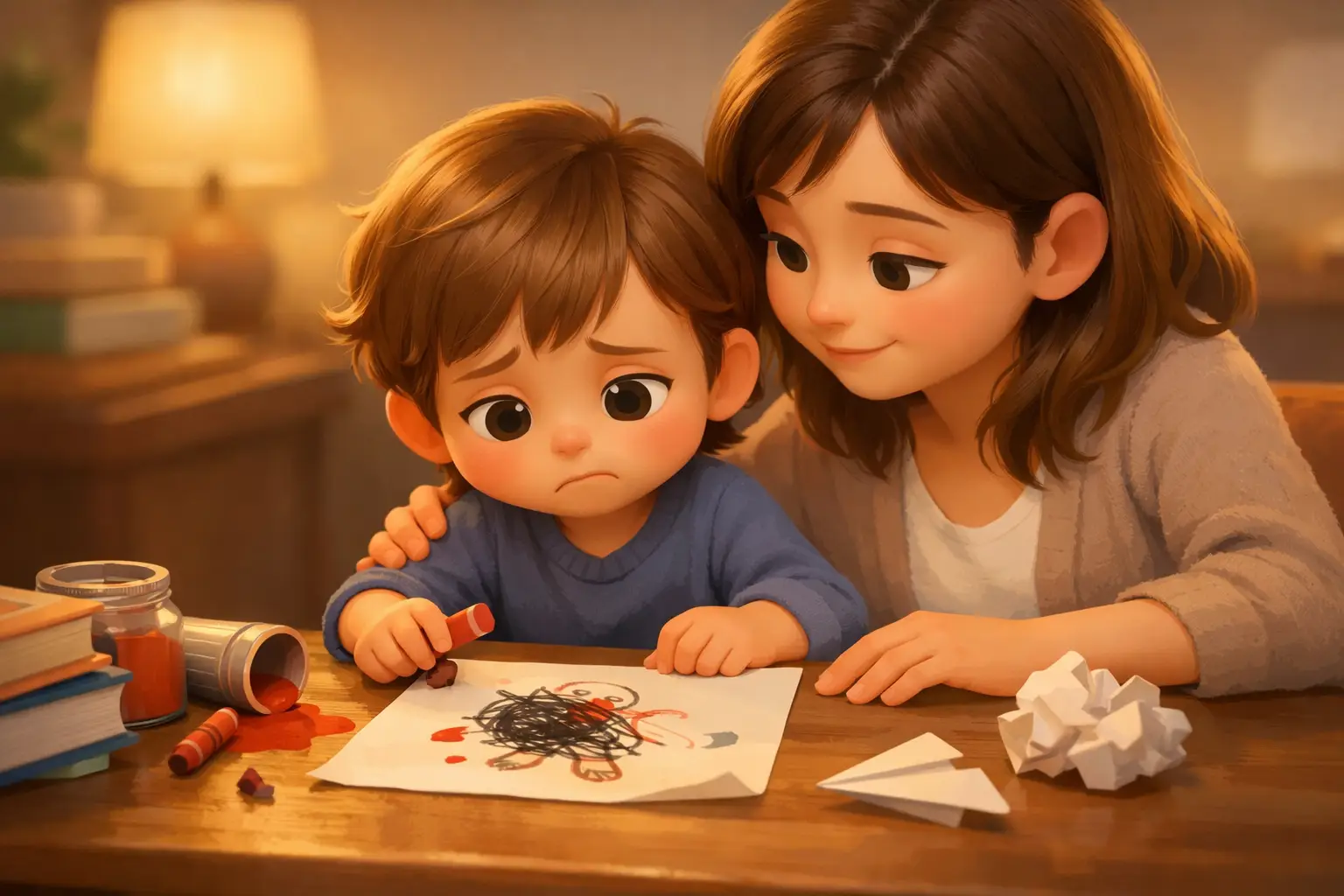
Some of the hardest moments in early childhood are very small from an adult view - spilled paint, a torn page, the wrong answer, a block tower knocked over by accident. For a young child, though, those moments can feel enormous. That is why picture books about making mistakes can be such a steady comfort. They help children see that errors are part of learning, that repair is possible, and that love does not disappear when something goes wrong.
For children ages 3 to 6, this lesson needs a soft landing. A book about mistakes works best when it does more than say, “Everyone makes them.” It should show what a mistake feels like in the body, what a caring response sounds like, and what trying again can look like in everyday life.
Why picture books about making mistakes matter
At this age, many children are just beginning to form their inner voice. They are learning whether a mistake means, “I am bad,” or “I am still learning.” That difference matters. A gentle story can help shape the second message before shame settles in too deeply.
Mistakes are also tangled up with big feelings. A child may feel embarrassed after dropping a snack, angry after drawing outside the lines, or frightened after breaking something by accident. When a book names those feelings calmly, children get a script for their own experience. They start to recognize, “I felt that way too.”
There is another quiet benefit. Stories let children rehearse repair from a safe distance. They can watch a character apologize, clean up, ask for help, or try again without the pressure of being in trouble themselves. That emotional space often makes the lesson easier to absorb.
What makes a good book about mistakes for ages 3-6
Not every well-meaning story lands gently. Some books move too quickly to the lesson and skip over the child’s distress. Others make mistakes feel silly or trivial, which can leave a sensitive child feeling unseen.
The strongest picture books about making mistakes usually do a few things well. First, they honor the feeling before fixing the problem. A child who is melting down over a crooked drawing does not need a lecture right away. They need recognition.
Second, they show a path forward that feels manageable. For preschoolers, “do better next time” is too vague. “Take a breath, ask for tape, and try again” is something they can picture.
Third, they leave room for imperfection. A comforting book does not have to end with the character becoming suddenly fearless or cheerful. Sometimes the most believable ending is simply this: the mistake happened, the feeling was big, and the child was still okay.
12 gentle picture books about making mistakes
1. Beautiful Oops! by Barney Saltzberg
This is one of the clearest examples of turning an accident into possibility. A rip becomes part of the art. A smudge becomes something new. The appeal here is immediate for young children because the concept is visual, playful, and easy to grasp.
It is especially helpful for children who freeze when something on the page does not go as planned. The message is not that every mistake is magical. It is that a mistake does not have to be the end of the story.
2. The Most Magnificent Thing by Ashley Spires
This book gently captures the frustration of trying hard and not getting it right. The child creator in the story has a clear vision, but the process is messy and disappointing. That makes it a strong fit for children who are beginning to care deeply about doing things “correctly.”
What stands out is the pause. The character steps away, calms down, and comes back with fresh eyes. That rhythm is useful for real life.
3. Ish by Peter H. Reynolds
For children who get stuck on perfection, Ish offers a softer way to think about creative work. The story shows how criticism can shrink confidence, but it also shows how freedom can return when “exactly right” becomes less important.
This one is less about accidental mistakes and more about the fear of not measuring up. For many children, that is the deeper struggle.
4. The Dot by Peter H. Reynolds
A blank page can feel like its own kind of mistake when a child believes they cannot do something well. The Dot begins with reluctance and self-doubt, then slowly opens into courage and experimentation.
It is a lovely choice for children who say, “I can’t.” The story does not push loudly. It simply invites one small start.
5. What Do You Do With an Idea? by Kobi Yamada
This title is not only about mistakes, but it can be useful for children who fear getting things wrong when they try something new. It treats uncertainty with tenderness and helps children hold onto curiosity even when they feel unsure.
If your child tends to avoid new activities because they worry about failing, this can support a gentler mindset.
6. After the Fall by Dan Santat
This story works well for older children in the 4 to 6 range because it explores recovery after a frightening setback. The emotional message is bigger than a simple mistake, but the heart of it is still about what happens after things go wrong.
Some preschoolers will connect deeply with its courage. Others may need a bit of parent support to talk through the metaphor.
7. Rosie Revere, Engineer by Andrea Beaty
Rosie’s story is especially comforting for children who love to build, invent, and experiment but feel crushed when their effort flops. The book reframes failure as part of the process of making something new.
It is a lively read, so it may suit some children better than others at bedtime. But the lesson is strong and memorable.
8. Giraffes Can’t Dance by Giles Andreae
This is another title that speaks more broadly to self-doubt and not getting something right the first way. It reminds children that struggling in front of others can hurt, and that encouragement changes things.
For kids who feel embarrassed easily, this one can open a gentle conversation about doing things in their own way.
9. I Make Mistakes by Gabi Garcia
This book is direct, simple, and emotionally useful for young children. It names mistakes plainly and pairs them with steady reassurance. That clarity can be a gift for children who need language they can repeat to themselves.
It is less story-driven than some of the others, so it works best when you want a straightforward emotional tool.
10. The Girl Who Never Made Mistakes by Mark Pett and Gary Rubinstein
This title offers a playful look at what happens when getting everything right becomes its own burden. Children who seem unusually careful, anxious, or rule-focused may find relief in its message.
The humor helps, though some younger preschoolers may connect more fully with it closer to age 5 or 6.
11. Peter’s Chair by Ezra Jack Keats
This is not a classic “mistakes” book, but it deserves a place here because it shows a child moving through uncomfortable feelings without being shamed for them. Sometimes what looks like misbehavior around a mistake is really a child feeling displaced, small, or overwhelmed.
That emotional layer matters. Repair often begins when the real feeling is understood.
12. A Perfectly Messed-Up Story by Patrick McDonnell
This one can be a wonderful fit for children who get upset when books, drawings, or crafts are not neat. The story turns interruptions and messes into part of the experience, helping children loosen their grip on perfection.
Its playful tone makes room for laughter, which can be healing after a tense day.
How to choose the right book for your child
It depends a little on what “making mistakes” looks like in your home. Some children cry when they spill. Some tear up their paper if a drawing is not right. Some become silly or defiant when they feel ashamed. The best book is usually the one that mirrors your child’s pattern closely enough that they feel recognized.
If your child struggles with art or school-like tasks, Beautiful Oops!, The Dot, and Ish are strong starting points. If they become frustrated during building or problem-solving, The Most Magnificent Thing or Rosie Revere, Engineer may fit better. If the deeper issue is perfectionism or fear of failure, I Make Mistakes or The Girl Who Never Made Mistakes can be reassuring.
It also helps to think about pacing. Some children need a quiet, simple book after a hard day. Others can handle a more imaginative or energetic story. There is no perfect choice for every child, and a book that does not click today may become just right six months from now.
Reading picture books about making mistakes in a way that helps
The book matters, but the way you read it matters too. Children often borrow our calm before they can create their own. A soft pause on a page where the character feels embarrassed can do more than rushing to the happy ending.
You might say, “Oh, that felt hard,” or “He wanted it to be perfect.” Those simple reflections help children connect feelings to actions. If your child wants to talk about their own mistakes, listen first. Resist the urge to turn it into a lesson too quickly.
After the story, gentle carryover works better than a big speech. You might remind them of a character when paint spills or a tower falls: “This feels like one of those trying-again moments.” Cozy Pebble Stories often returns to this same idea in gentle ways because children learn best through repetition, safety, and small chances to practice.
A mistake does not have to become a defining moment for a child. With the right story, it can become something quieter and kinder - a chance to feel, repair, and begin again.