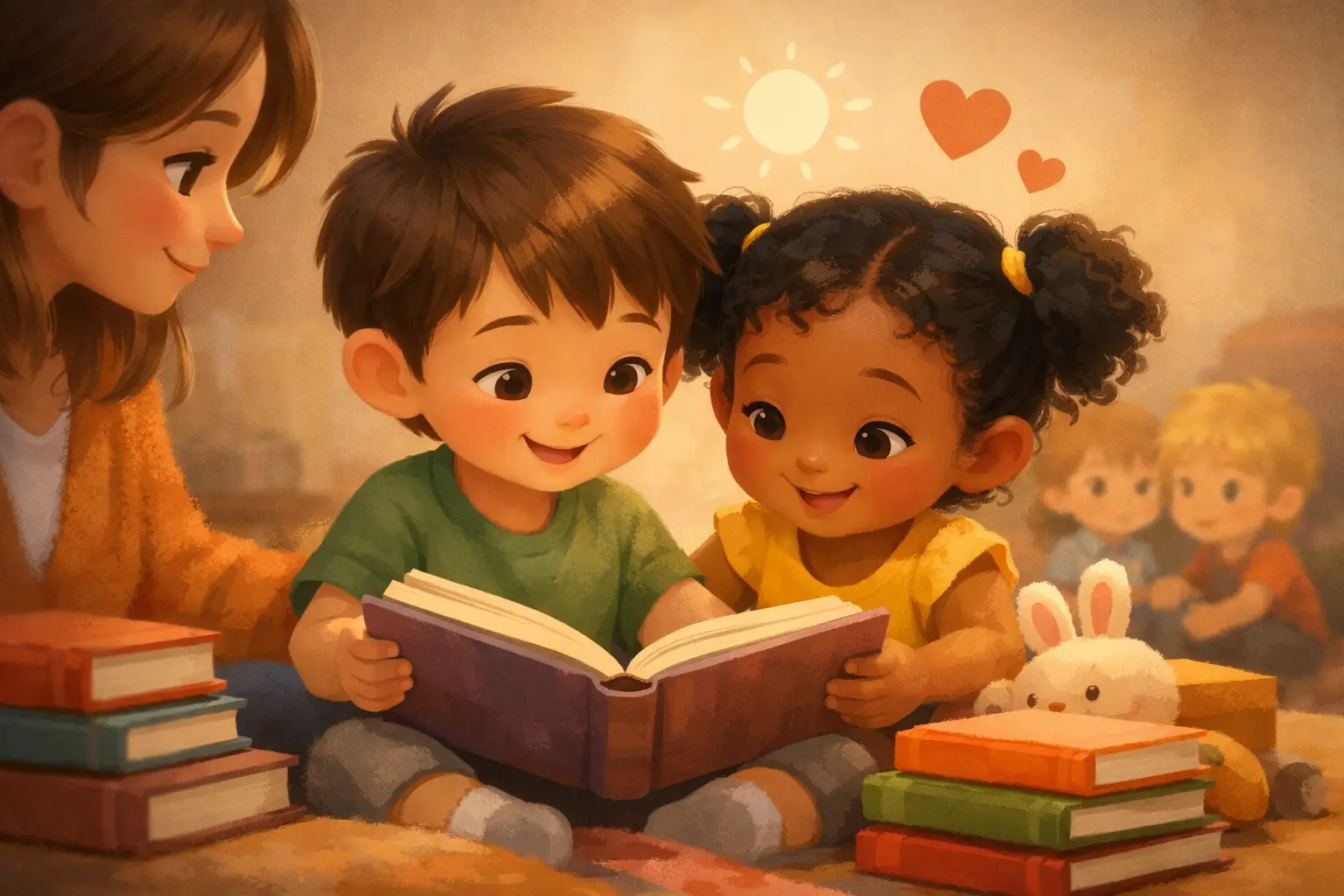
A lot can happen between morning drop-off and pickup. One child wants to play alone. Another grabs the red marker. Someone says, “You’re not invited,” and suddenly a very small problem feels very big. That is why books about friendship for kindergarten can be such a comfort. They give young children a safe, quiet way to see kindness, hurt feelings, second chances, and connection before those moments show up in real life.
At this age, friendship is still new territory. Kindergarteners are learning how to join a game, wait for a turn, notice another child’s feelings, and recover after mistakes. The best friendship stories do not preach. They simply show what friendship looks like in a way children can feel - a shared snack, a brave apology, a place to sit, a hand reaching back.
Why books about friendship for kindergarten matter
For children ages 5 and 6, friendship is both simple and surprisingly layered. A friend may be the child who shares the blocks today, then says something unkind tomorrow. That does not mean the friendship is false. It means children are practicing. Picture books help them hold that truth gently.
When a story names loneliness, jealousy, shyness, or left-out feelings, children often relax. They hear, maybe for the first time, that these experiences are normal and manageable. That matters because social struggles in kindergarten can feel confusing to kids who are still building emotional language.
A good friendship book also slows the moment down. In real life, conflict moves fast. In a story, children can pause and notice what happened. They can see a character make a poor choice, feel regret, and try again. That slower pace makes room for learning without shame.
What to look for in friendship books for kindergartners
Not every sweet-looking picture book is equally helpful for this age. Some are lovely but too abstract. Others lean so hard on the lesson that they lose the child. The most supportive books tend to do a few things well.
First, they stay close to situations kindergarteners recognize. Waiting for a turn, wanting a best friend, feeling left out, misunderstanding a classmate, or learning to include someone new are all developmentally familiar themes. Children connect more easily when the social problem feels like one they might actually face.
Second, the emotional tone matters. A little tension is useful, but stories that become too loud, chaotic, or mean-spirited can feel heavy for sensitive children. Gentle humor, warmth, and a clear path back to connection usually work better, especially for bedtime reading or after a hard school day.
Third, the best books leave room for conversation. Instead of wrapping everything up too neatly, they offer moments a parent or teacher can talk about. Why do you think that character walked away? What could they say now? Would you want to play if that happened to you?
12 books about friendship for kindergarten that truly help
1. How Do Dinosaurs Play with Their Friends? by Jane Yolen and Mark Teague
This one works beautifully for kindergartners because it keeps social rules concrete. The playful examples show exactly what friendship looks like when children are still learning group behavior. It covers sharing, taking turns, being a good sport, and using kind words without sounding stiff.
The dinosaur humor also softens the lesson. Children can laugh first, then absorb the message.
2. Enemy Pie by Derek Munson and Tara Calahan King
Few books handle early assumptions as gently as this one. It begins with a child who is sure another boy is an enemy, then slowly reveals how friendship can grow through time together.
This story is especially helpful for children who decide quickly that someone is “mean” or “not my friend.” It opens the door to talking about first impressions and how relationships can change.
3. A Sick Day for Amos McGee by Philip C. Stead and Erin E. Stead
Friendship is not always about parties and playdates. Sometimes it is about showing up quietly when someone needs care. This tender story models reliability, gentleness, and the calm comfort of mutual friendship.
For families who value soft, emotionally safe storytelling, this book has a particularly soothing feel.
4. The Invisible Boy by Trudy Ludwig and Patrice Barton
This is one of the strongest books for children who feel overlooked. Brian is quiet and often left out, and the illustrations make that feeling visible in a way young children can understand.
What makes the book so useful is its smallness. The change begins with one kind gesture. For kindergarteners, that is exactly right. Friendship often starts with making room for one child at a time.
5. Should I Share My Ice Cream? by Mo Willems
This simple, funny story gets at a surprisingly big question for young children: if I have something wonderful, what does it feel like to share it? Gerald’s indecision feels familiar to any child who has wanted to keep a treat for themselves.
It is a light book, but not a shallow one. It helps children think about generosity without pressure.
6. One by Kathryn Otoshi
This story uses colors as characters, which gives it a slightly more symbolic feel than some other choices here. Still, many kindergarteners respond well to its clear message about kindness, courage, and standing up when someone is being hurt.
Because it is a bit more abstract, it often works best with adult support and a short discussion afterward.
7. Little Blue and Little Yellow by Leo Lionni
This classic remains powerful because it is so easy for children to grasp emotionally. Two friends play, get separated, and then reunite. Along the way, the story touches identity, belonging, and connection in a very child-sized way.
It is especially lovely for discussing how friendship changes us while still letting us be ourselves.
8. Franklin’s New Friend by Paulette Bourgeois and Brenda Clark
Franklin stories are often a comfortable fit for this age group, and this one focuses on the awkwardness of meeting someone new. It helps children who want friends but do not always know how to begin.
That matters in kindergarten, where many children are still learning how to enter a group or start a conversation.
9. Will You Be My Friend? by Sam McBratney and Anita Jeram
The gentleness of this book is part of its appeal. Little Nutbrown Hare searches for a friend and keeps trying, even when things do not go quite as planned.
It is a sweet choice for shy children, or for children who are still finding their footing socially at school.
10. My Friend Is Sad by Mo Willems
Friendship is not just about having fun together. Sometimes it is about noticing when someone is sad and trying, however imperfectly, to help. Piggie’s attempts are funny, and that humor keeps the emotional theme from feeling too heavy.
This book can lead naturally into conversations about empathy and how different people need different kinds of comfort.
11. Bear Says Thanks by Karma Wilson and Jane Chapman
Gratitude and friendship go hand in hand, and this cozy story captures that beautifully. Bear worries because he has nothing to offer his friends, but the story gently reminds children that presence, welcome, and appreciation matter too.
For families who want stories with warmth and a sense of emotional safety, this is an easy favorite.
12. Strictly No Elephants by Lisa Mantchev and Taeeun Yoo
This book speaks directly to belonging and inclusion. A child and his tiny elephant are excluded, then create a space where everyone is welcome.
Kindergarteners understand rules very literally, so the emotional clarity here is helpful. The story says, in a way children can feel, that friendship makes room.
How to choose the right friendship book for your child
It depends a little on what your child is carrying right now. If they are having trouble with sharing or turn-taking, a humorous, direct book may help most. If they are feeling left out, a quieter story with a tender emotional center may land more deeply.
Temperament matters too. Some children love books with bold conflict and a strong resolution. Others, especially sensitive kids, do better with soft stories where the problem is manageable and the repair feels safe. There is no single perfect friendship book for every kindergartner.
It can also help to choose books that match the season your child is in socially. The first months of school may call for stories about meeting new friends. Midyear can bring more conflict around inclusion, jealousy, or group play. Near the end of the year, children may be ready for richer conversations about loyalty, empathy, and making things right.
Making the most of books about friendship for kindergarten
The reading itself matters, but the moment after the story often matters more. You do not need a long lesson. One or two gentle questions is enough. You might ask, “Have you ever felt like that?” or “What helped the characters become friends again?”
If your child has had a rough social day, resist the urge to turn the book into a correction. Children listen best when they feel safe, not analyzed. Let the story do some of the work. Sit close. Read slowly. If they want to talk, talk. If they just want the comfort of hearing the same gentle message again, that counts too.
For some families, it also helps to revisit the same friendship book more than once. Repetition is not a problem at this age. It is often how emotional learning settles in. The first read may be about enjoying the pictures. The third or fourth may be when your child suddenly says, “That happened to me at school.”
At Cozy Pebble Stories, we believe the calmest stories can sometimes do the deepest work. A child does not need a big speech to learn about friendship. Often they just need a kind character, a familiar feeling, and a soft reminder that even hard moments can be mended.
When you choose a friendship book for kindergarten, you are not only filling story time. You are giving your child language for the playground, comfort for the lonely moments, and a gentle picture of how people can care for one another. That is a small gift with a long life.