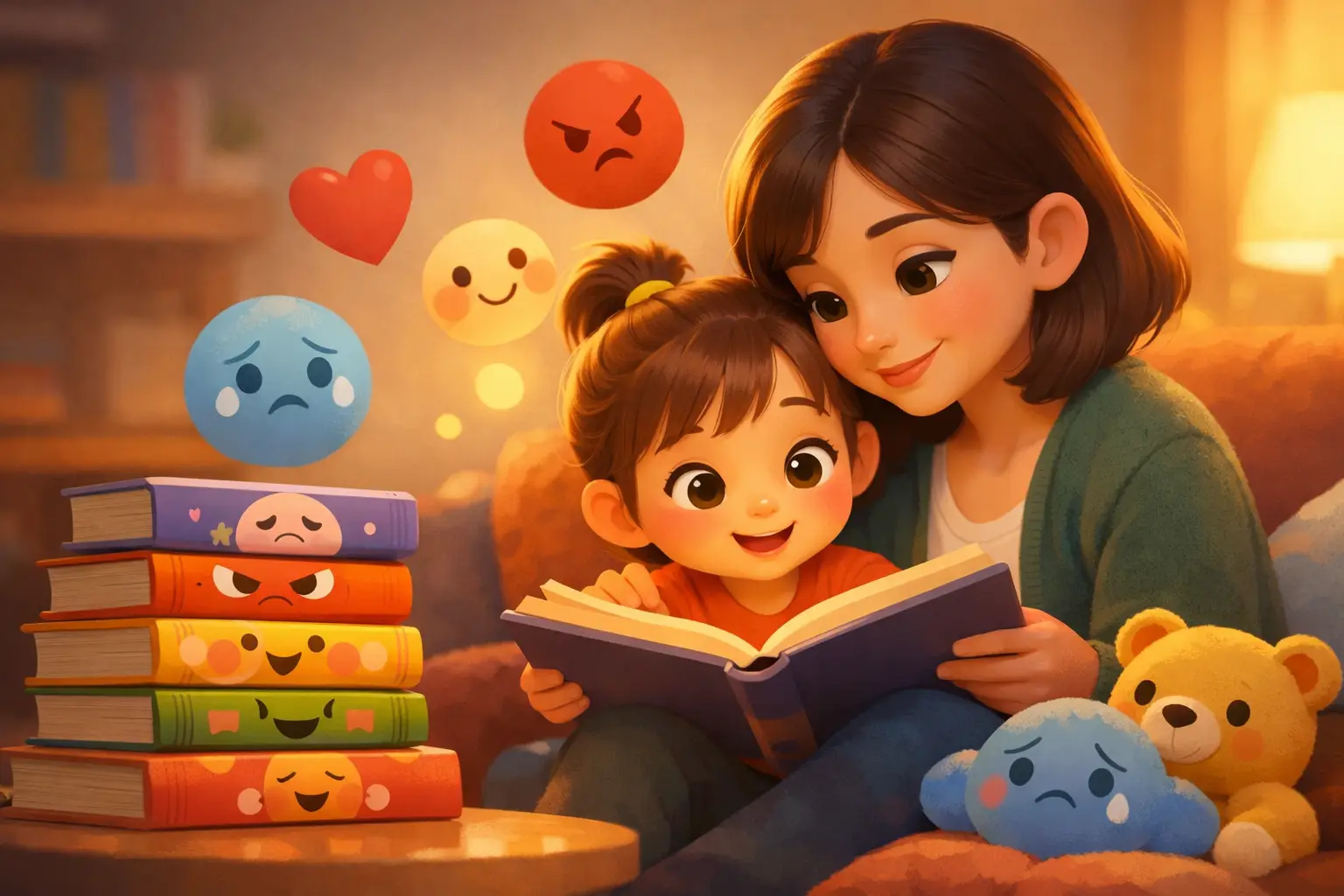
Some days, a preschooler melts down because the banana broke. Other days, they go quiet after drop-off, or burst into tears because a block tower fell. To adults, the trigger may look small. To a child ages 3 to 6, it can feel huge. That is why books about big feelings preschool children can understand are so helpful. A gentle story gives a child somewhere safe to place what feels overwhelming.
The best books do not rush children past their feelings. They do not turn sadness into a lesson too quickly or treat anger like bad behavior in disguise. Instead, they help children notice what is happening inside, feel less alone, and begin to trust that hard moments can pass. For parents and caregivers, that kind of story can open a door that conversation alone sometimes cannot.
What makes books about big feelings preschool-friendly?
At this age, children need emotional language that is clear, concrete, and warm. A strong preschool feelings book usually stays close to a child’s daily life - family routines, friendship bumps, fears at bedtime, frustration during play, or worries about making mistakes. When the setting feels familiar, the feeling does too.
It also helps when the story does not become too crowded. Preschoolers do best with one main emotional thread at a time. A book about anger might work best if it shows what anger feels like in the body, what caused it, and one or two simple ways to calm down. If a story tries to tackle every emotion at once, young children can lose the thread.
Illustration style matters more than many adults expect. Soft facial expressions, readable body language, and calm page design can make an emotional story feel safer. Even a very good message can miss the mark if the pictures feel busy or intense. Sensitive children often respond best to books that leave room to breathe.
10 books about big feelings preschool families return to
1. The Color Monster by Anna Llenas
This book is often a first favorite because it makes emotions visible. Feelings are sorted by color, which gives preschoolers a simple way to begin naming what is going on inside. That simplicity is its strength.
The trade-off is that real feelings are not always tidy. Some children may take the color system very literally. Still, for ages 3 to 5, it can be a lovely starting point, especially if your child is just learning words like calm, sad, angry, and scared.
2. The Way I Feel by Janan Cain
This one names a wide range of emotions in direct, child-friendly language. It works well for families who want a book that says plainly, yes, children feel proud and silly and shy and frustrated too.
Because it moves through many feelings, it is less of a story and more of an emotional vocabulary builder. That can be useful if your goal is naming emotions, though it may feel less soothing at bedtime than a more narrative-centered book.
3. When Sophie Gets Angry - Really, Really Angry by Molly Bang
Anger can be frightening for young children, especially if they do not yet know what to do with it. This book does a beautiful job of showing anger as real and intense without making Sophie seem bad or unsafe.
What makes it especially helpful is that the calming process feels believable. Sophie moves through her anger instead of snapping out of it. For preschoolers, that pacing matters. It tells them strong feelings can soften with time and support.
4. Llama Llama Mad at Mama by Anna Dewdney
Public meltdowns are part of many preschool years, and this book meets that moment with understanding. Shopping frustration, overstimulation, and impatience are all familiar to young children, even if they cannot explain them yet.
This title is especially useful for parents because it reflects both sides of the experience. The child feels overwhelmed, and the grown-up is trying to hold the day together. There is comfort in seeing both without shame.
5. Grumpy Monkey by Suzanne Lang
Some children wake up out of sorts and do not know why. This story gives them permission to feel grumpy without forcing a cheerful turnaround too quickly. That is a message many sensitive children need.
For some families, the humor is what makes this book work. For others, the monkey’s social interactions may feel a bit sharp. It depends on your child. If they enjoy playful exaggeration, this can be a gentle way to talk about mood and self-acceptance.
6. The Rabbit Listened by Cori Doerrfeld
When children are upset, adults often rush to fix things. This quiet, beautiful book offers another idea: first, listen. The story is simple, but its emotional wisdom runs deep.
It is one of the best books for teaching empathy to both children and adults. If your child has recently faced disappointment, hurt feelings, or a mistake that felt big, this book can be especially comforting.
7. In My Heart by Jo Witek
This book describes feelings in vivid, sensory ways. That makes it a strong fit for preschoolers, who often understand emotions better through images and body sensations than abstract definitions.
Its language is lyrical, which many families love. If your child prefers very literal storytelling, they may need a little support connecting the metaphors to their own experiences. Even so, it is a lovely read for building emotional awareness.
8. Ruby Finds a Worry by Tom Percival
Worry can be hard to spot in preschoolers because it does not always look like fear. Sometimes it shows up as clinginess, irritability, or sudden tears. This book makes worry visible and manageable in a way young children can grasp.
It is particularly helpful before new experiences like preschool starts, doctor visits, or social events. The message is reassuring without pretending worries disappear forever.
9. The Kissing Hand by Audrey Penn
Separation anxiety can bring very big feelings to ordinary moments. This classic remains popular because it offers comfort that children can carry with them after the book closes.
Its emotional focus is narrow, and that is a good thing. If your child struggles with goodbyes, school drop-off, or sleeping away from home, this story speaks directly to that ache.
10. When Sadness Is at Your Door by Eva Eland
This title is a softer, quieter choice for children who need space with sadness instead of a fast fix. It helps children see sadness as something to notice and care for, not fear.
Some preschoolers may need help following the gentler emotional tone, especially if they are used to more plot-driven books. But for calm reading moments with a thoughtful child, it can be deeply reassuring.
How to choose the right feelings book for your child
The best book is not always the most popular one. It is the one your child sees themselves in. If your preschooler has intense frustration, start with anger. If they are having a hard time with drop-off, choose separation. If they often say, “I don’t know what’s wrong,” begin with broad emotional vocabulary.
It also helps to think about your child’s temperament. Some children like humor when feelings are hard. Others need softness and predictability. A bold, silly book about mood may help one child relax, while another may do better with a slow, tender story and quiet pictures.
Repetition matters too. A book about feelings often works best on the fourth or fifth read, not the first. Preschoolers use repetition to build mastery. They may not talk much the first time, then suddenly point to a page a week later and say, “That’s how I felt.”
How to read books about big feelings preschool children are still learning to name
Try reading these stories before the hard moment, not only during it. A child in the middle of a meltdown usually cannot absorb much language. But during a calm part of the day, a book can gently build the emotional map they will need later.
Pause sometimes, but not on every page. Too many questions can make a child feel tested. One simple observation often works better: “He looks disappointed,” or “Her body looks tight and angry.” That gives children language without pressure.
You do not need to turn every book into a lesson. Often the most helpful thing is simply reading with warmth and letting the story settle. A child who feels safe beside you is already learning something important about big feelings - that they can be felt in connection, not alone.
If you want to extend the moment, keep it very simple. You might ask, “Have you ever felt like that?” or “What helps when your feelings get big?” Then follow your child’s lead. Some will want to talk. Some will want to cuddle and turn the page.
At Cozy Pebble Stories, we believe children do not need perfect words or perfect behavior to deserve comfort. They need stories that meet them gently, right where they are.
Big feelings are part of preschool life. So are repair, closeness, and the quiet relief of being understood. The right book cannot make every hard moment disappear, but it can help a child feel seen, and sometimes that is where calm begins.